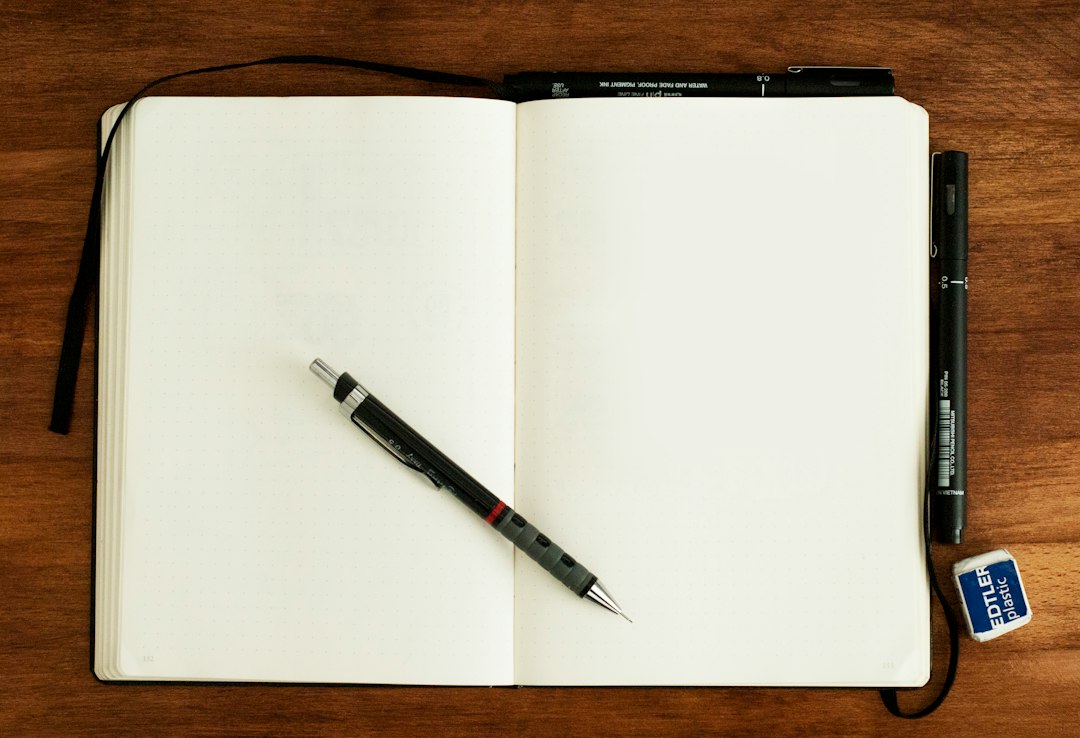
Quick verdict: Choose dot-grid pages when you want a flexible mix of writing, habit trackers, diagrams and hand-drawn layouts. Choose lined pages when most of your notebook is straightforward writing. A dot grid is not automatically better or more premium; the right ruling is the one you will actually use.
It’s easy to fall for beautiful planner spreads online and then discover that designing every page takes more time than using the planner. Paper ruling changes how much effort you spend setting up your notes. For a daily journal, meeting book or creative planning system, that’s often more important than the cover.
At a Glance
| Feature | Dot-grid notebook | Lined notebook |
|---|---|---|
| Best for | Custom page layouts, diagrams, trackers | Long-form writing, class notes and lists |
| Writing guidance | Light dots guide horizontal and vertical spacing | Clear horizontal guides |
| Setup | Flexible but can take extra effort | Ready to write immediately |
| Potential drawback | Dots can be faint, distracting or hard to see | Lines restrict freeform charts and drawings |
When Dot Grid Is the Better Buy
Dot-grid notebooks offer enough alignment for tidy columns without dividing the entire page into strong horizontal bands. That makes them practical for bullet-journal-style spreads, reading logs, simple tables and sketches. If you like creating a weekly layout that changes with your schedule, dots can be genuinely useful.
Spacing matters. Many notebooks use roughly 5 mm grids, but sizes and print contrast vary. Check the listing’s photographed pages or the manufacturer’s specifications, especially if you write large or need high-contrast guides. Thin, pale dots may disappear under warm lighting; bold dots may show through decorative pages.
Skip dot grid if: You mostly record full paragraphs and resent spending time drawing boxes, calendars and headings. A plain lined book gets out of your way.
When a Lined Notebook Wins
Lined notebooks excel at uninterrupted notes: class lectures, recipes, work meetings, personal reflections and draft writing. Each page is ready to use, and familiar line spacing makes your handwriting rhythm easier to maintain. For a writer who fills many pages, that low-friction experience can outweigh layout flexibility.
Pay attention to line width: narrow ruling packs more words onto a page, while wider ruling gives larger handwriting room to breathe. Also check whether the lines are faint or dark enough for your vision and pen colour. If you annotate with little diagrams, you can still draw between the lines; you simply have less visual freedom.
Skip lined if: You regularly create vertical schedules, charts, habit trackers and irregular page structures. The ruling can make those layouts harder to read.
Paper Quality Matters More Than the Grid
Neither pattern guarantees that fountain pens, felt tips or highlighters will behave well. Paper weight, coating, absorbency and the particular ink determine whether you see feathering, bleed-through or ghosting. A heavier sheet isn’t proof of universal fountain-pen friendliness. Look for credible pen tests on the exact notebook, ideally showing both sides of the page.
If you draw with markers, test on a spare sheet or buy paper designed for that medium. Alcohol markers in particular can bleed through many ordinary journals regardless of their page layout.
Buying Checklist
- Choose page ruling based on your usual task, not social-media aesthetics.
- Check page size (A5 and B5 are different) and whether the notebook lies flat.
- Verify ruling spacing and contrast using real inside-page photographs.
- Match paper performance to your own pen or marker.
- Consider page count, binding strength, portability and price per usable page.
Is Paying More Worth It?
A premium notebook earns its keep when it opens flatter, survives frequent carrying, uses paper that suits your pens, or makes your preferred workflow easier. A higher price buys little if all you need is a place to write a grocery list. For many people, a good inexpensive lined notebook is the most practical purchase. For people who actively maintain custom layouts, the dot grid’s flexibility is worth a modest premium.
FAQs
Can I use dot-grid paper for regular writing?
Yes. The dots create enough horizontal guidance once you get used to them, though some people find lines faster to follow.
Are dot-grid notebooks always bullet journals?
No. A bullet journal is a planning method; dotted paper is merely one page format you can use for it.
Which is better for fountain pens?
Neither ruling predicts ink performance. Compare the specific paper and pen combination instead.
Related Reading
Choosing paper for ink? Read Rhodia vs Clairefontaine for fountain pens and our guide to notebook pen loops.
Final Verdict
Dot grid wins for flexible personal systems; lined wins for writing-first simplicity. The best notebook is the one that lets you use its pages instead of constantly planning how to use them.
Shop the Options — USA and Canada
Choose your country and the option that fits your needs.
Shop dot grid journal A5 notebook — Amazon USA Shop dot grid journal A5 notebook — Amazon Canada
Shop lined hardcover journal notebook — Amazon USA Shop lined hardcover journal notebook — Amazon Canada
Affiliate disclosure: Scribblet may earn a commission from qualifying Amazon purchases through U.S. and Canadian links, at no extra cost. This is buying guidance, not a claim of firsthand product testing.