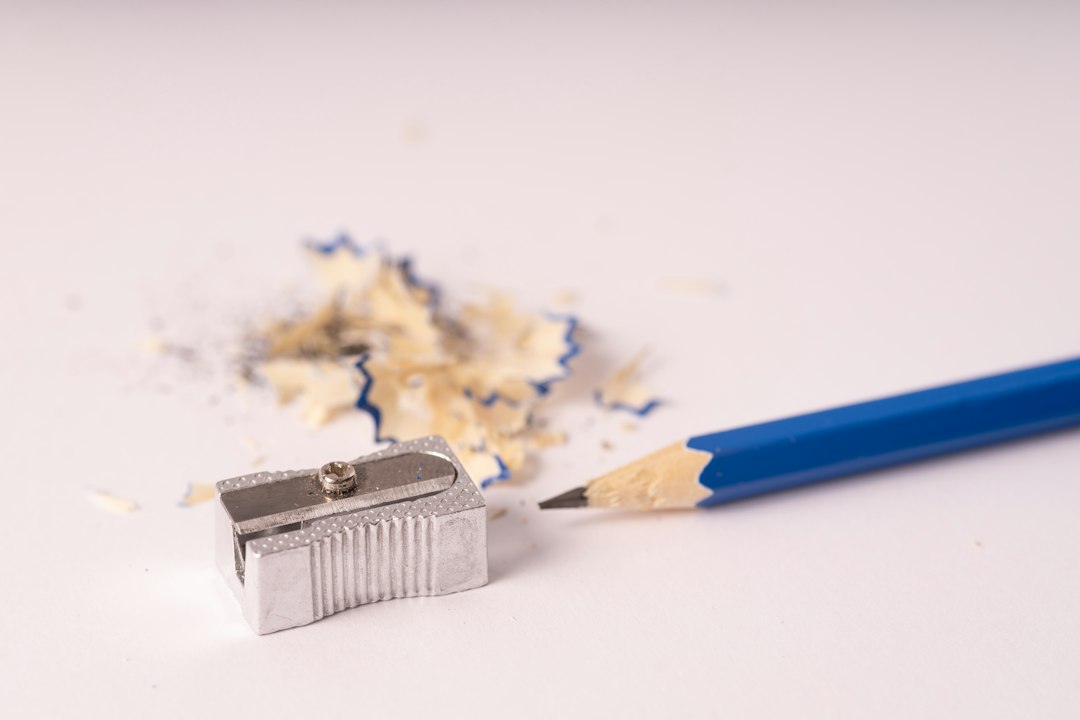
Quick verdict: A good manual sharpener is the better-value choice for occasional writing, schoolwork and a small pencil kit. Choose an electric sharpener when you regularly sharpen many standard graphite pencils and want less repetitive effort. For soft artist pencils, coloured-pencil cores or unusual barrel sizes, compatibility and control matter more than motor power.
A sharpener looks simple until it repeatedly snaps leads, chews through expensive coloured pencils or leaves uneven points. The best purchase depends on how many pencils you use, their diameter, and whether you need a delicate fine point or a durable classroom-style one.
Manual vs Electric: The Important Differences
| Consideration | Manual | Electric |
|---|---|---|
| Best fit | Occasional sharpening and portable kits | Shared desks, classrooms and heavy daily use |
| Control | Easy to stop and inspect the point | Varies; automatic stop is useful when supplied |
| Power | None required | Outlet, USB or batteries depending on model |
| Maintenance | Empty shavings, clean or replace blades | Empty bin and follow motor/cutter maintenance instructions |
| Trade-off | More hand effort | Higher cost, noise and more parts to fail |
When a Manual Sharpener Makes More Sense
For a student, journal keeper or casual sketcher, a compact manual sharpener with a clean, replaceable blade can be all you need. It travels easily, costs less to replace and lets you stop as soon as the point has the shape you want. A small shavings container avoids mess in a pencil case.
Artists using softer graphite or coloured pencils may appreciate a slower, lighter touch. A dull blade can pull and break delicate cores, however, so cheap construction is not automatically a bargain. Check whether the manufacturer specifies your pencil barrel size; jumbo and triangular pencils often need a different opening.
Who should skip it: Anyone sharpening dozens of pencils in one sitting, or someone who finds repeated twisting uncomfortable, may benefit more from a well-selected electric model.
When an Electric Sharpener Earns Its Price
Electric models reduce repetitive turning. That can be genuinely worthwhile in a classroom, shared studio or busy workspace. Look for a stable base, a shavings bin that’s easy to remove, and a clearly documented automatic-stop or overheat-protection feature. Not all models have those protections, so don’t assume they are standard.
An electric sharpener is not necessarily gentler on delicate art pencils. Fast or aggressive cutters can remove more wood than expected, and a jam may be frustrating to clear. Check the maker’s supported pencil types and avoid feeding very short pencils or nonstandard barrels unless the manual expressly permits them.
Who should skip it: Occasional users and people with just one or two favourite artist pencils usually gain little from buying a motorized unit.
What About Coloured Pencils?
Coloured pencils deserve special attention because cores can be wax-based or oil-based and are not identical to ordinary graphite. A sharp blade, appropriate opening and controlled pressure help reduce breakage. Some electric sharpeners are marketed specifically for coloured pencils, while others exclude them in their instructions. Always read the actual model documentation rather than relying on a marketplace search headline.
When a coloured-pencil point repeatedly breaks, examine the pencil itself too: a dropped pencil can have fractured core sections inside its wooden casing. Switching sharpeners will not necessarily cure that.
Five Things to Check Before Buying
- Pencil diameter: Verify standard, jumbo or triangular fit instead of trusting “universal” claims.
- Blade or cutter: Sharpness and accessible maintenance matter more than extra features.
- Point shape: Fine tips suit detailed writing; broader, shorter points can survive heavy pressure better.
- Waste container: Look for a secure bin and easy emptying, especially for a shared desk.
- Power and noise: For an electric model, assess cable placement, batteries, motor noise and duty-cycle guidance.
Is the Upgrade Worth It?
Start with a dependable manual sharpener if your needs are modest. Upgrade when the same inconvenience keeps recurring: many pencils to sharpen, uncomfortable hand movement, or a classroom that needs a dedicated station. Spend extra for a feature that solves your problem—not for a large feature list. A reliable midrange electric unit may be a sensible shared-workspace purchase, but it is unnecessary equipment for a lightly used notebook.
FAQs
Do electric sharpeners break pencil leads?
They can, especially if a core is already cracked, the cutter is dull, or the model is unsuitable for that pencil. A manual sharpener can also break cores. Compatibility and blade condition matter most.
Should I buy a sharpener specifically for coloured pencils?
If coloured pencils are your main medium, look for explicit compatibility from the manufacturer. A careful manual sharpener is often a simple starting point.
Are battery-operated sharpeners as good as plug-in models?
There is no universal answer: cutter design, motor strength and battery condition vary by model. Compare the actual specifications and credible long-term owner reports.
Related Reading
For pencil-selection guidance, see jumbo triangular pencils vs standard HB pencils and HB vs 2B mechanical pencil lead.
Final Verdict
Best value for most individuals: manual. Best for repeated group use: electric, provided it accepts your pencils and has practical maintenance features. If you use expensive art pencils, choose the sharpener for the pencil—not the other way around.
Shop the Options — USA and Canada
Choose your country and the option that fits your needs.
Compare manual pencil sharpeners with container — Amazon USA Compare manual pencil sharpeners with container — Amazon Canada
Compare electric pencil sharpener auto stop — Amazon USA Compare electric pencil sharpener auto stop — Amazon Canada
Affiliate disclosure: Scribblet may earn a commission on qualifying Amazon purchases made through U.S. or Canadian links, at no additional cost to you. This is a researched buying guide, not a claim of firsthand testing.