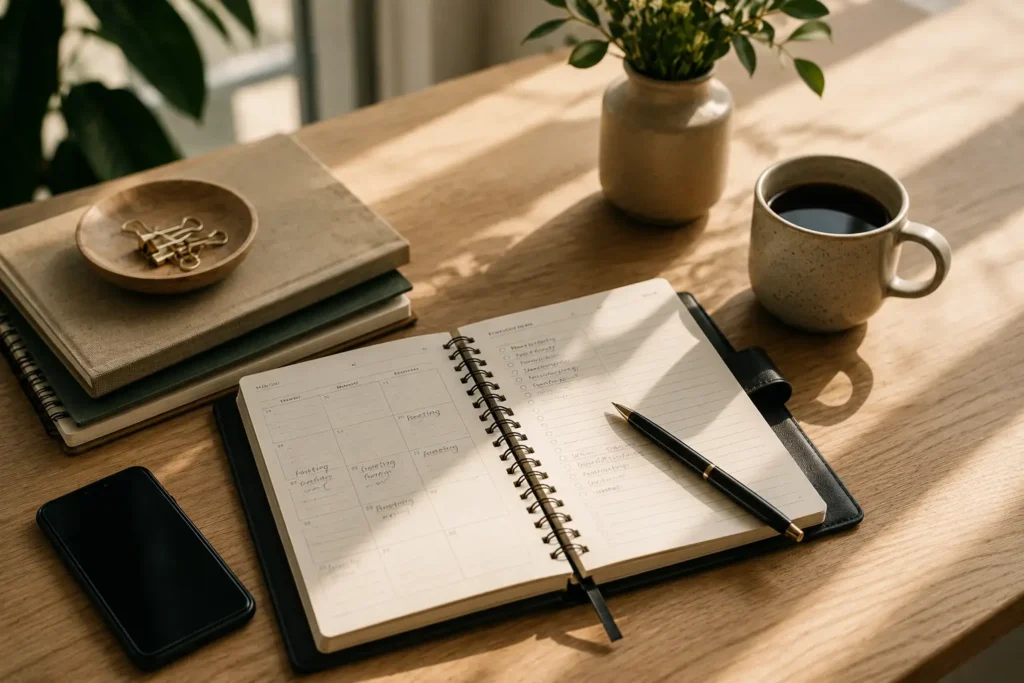
For a while, it felt like paper planners were disappearing completely 📱💭 Everything moved onto phones, tablets, apps, reminders, calendars, and productivity tools that promised to organize every second of our lives. People started replacing notebooks with notifications and handwritten schedules with endless digital tabs.
But lately, something interesting has been happening.
Paper planners are quietly making a comeback.
And honestly, I completely understand why.
There’s a different feeling that comes from physically writing things down ✍️📓 It slows your brain down in a good way. Instead of constantly jumping between apps, social media, emails, and alerts, a paper planner creates a small moment of focus. It’s simple. Calm. Personal.
I think a lot of people are getting exhausted from screens. Students spend hours staring at laptops. Creators bounce between editing software, analytics, emails, and social media all day long. Even regular day-to-day planning now feels tied to notifications and distractions.
Paper planners feel different because they pull you away from that noise.
There’s something satisfying about opening a planner in the morning with a coffee beside you ☕✨ Looking at your week written out on actual paper somehow feels more real than seeing tiny calendar blocks on a phone screen. Goals feel clearer. Tasks feel more manageable. Ideas feel more grounded.
I’ve also noticed that paper planners help creativity flow differently. Digital apps are efficient, but they can feel rigid. A notebook gives you freedom. One page might become a to-do list. The next turns into random brainstorming, sketches, blog ideas, reminders, or even personal reflections.
That flexibility matters.
For students, paper planners can be surprisingly powerful during stressful semesters 📚 Instead of constantly checking multiple apps, assignments and deadlines stay visible in one place. Crossing tasks off by hand also feels oddly rewarding in a way that tapping a checkbox on a screen never fully matches.
Creators are returning to paper planning too 🎥💡 A lot of content creators now use physical journals alongside digital tools because it creates a better balance. Sometimes the best video ideas or blog concepts start as messy handwritten notes during quiet moments away from screens.
Another reason paper planners are returning is because people are craving intentional routines again 🌅 Digital life moves fast. Paper planning slows things down just enough to help people feel more present and organized instead of constantly overwhelmed.
And honestly, planners don’t need to be expensive.
Some of the best planners are simple, affordable, durable notebooks that fit easily into a backpack or desk drawer. You don’t need complicated systems, aesthetic handwriting, or expensive accessories to make planning useful.
You just need a place to think.
That’s probably why paper planners are surviving — and maybe even thriving again — in a world that’s becoming more digital every year.
📦 Buy on Amazon USA
📓 Daily Planner Notebook
✏️ Dotted Bullet Journal
📘 Hardcover Weekly Planner
👜 Pocket Notebook Journal
💡 Productivity Planner
🌄 Final Thoughts
I honestly think paper planners are becoming less about productivity and more about peace of mind 🌄✨ They give people a break from constantly staring at glowing screens and endless notifications. There’s something calming about physically writing your plans, goals, or thoughts onto paper and seeing everything laid out clearly in front of you.
Digital tools are obviously useful, and most people still rely on them every day. But paper planners bring a more human feeling back into organizing life. They feel slower, more intentional, and strangely comforting in a world that moves too fast sometimes.
And maybe that’s why so many people are returning to them again 📓💭 Not because technology failed — but because people still need quiet spaces for their thoughts, creativity, and routines.