Modern Desk Solution
Modern Desk Solution

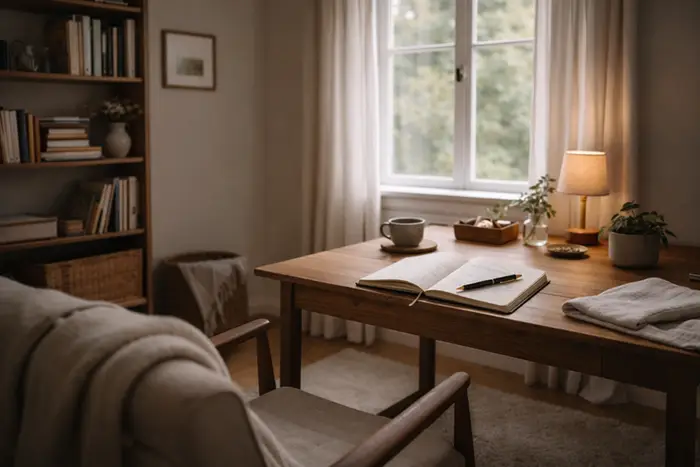
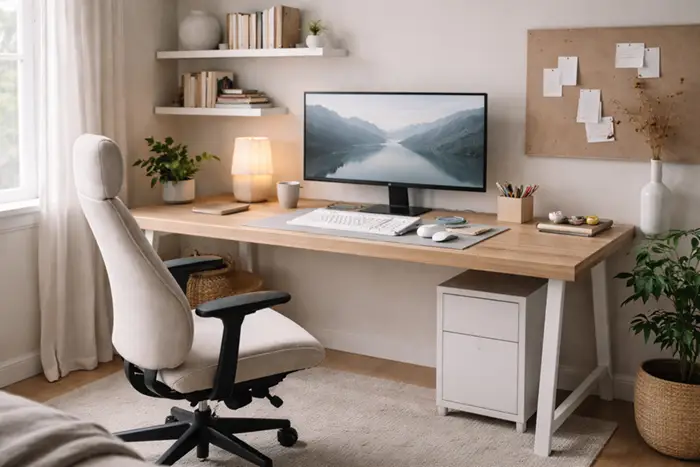
I didn’t realize my desk was the problem until I cleared it. Not in a dramatic, minimalist-before-and-after way — just small shifts. Fewer piles. A clearer surface. Space to rest my hands without brushing against clutter. What changed wasn’t the desk itself, but how it felt to sit down at it. The noise faded. The tension softened. The desk stopped asking for attention and started offering it back.

A modern desk solution, for me, isn’t about sharp lines or matching accessories. It’s about flow. Where things live. What stays within reach and what gets gently pushed away. When the essentials are intentional — notebook, pen, light — the desk becomes a place you return to rather than endure. I noticed I was sitting down more often without bracing myself first. That small hesitation I used to feel before starting work quietly disappeared.

There’s something grounding about surfaces that aren’t overcrowded. A clean desk doesn’t rush you. It doesn’t suggest urgency or unfinished business. It gives your thoughts somewhere to land. I found that writing felt calmer when there was nothing competing for my attention in my peripheral vision. Even short sessions felt complete instead of fractured.

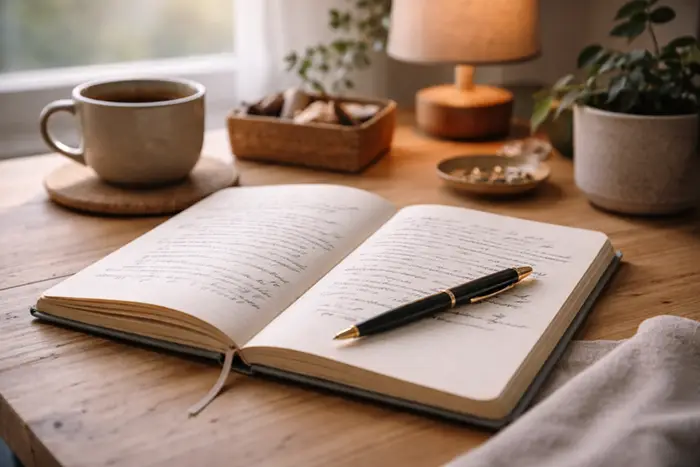
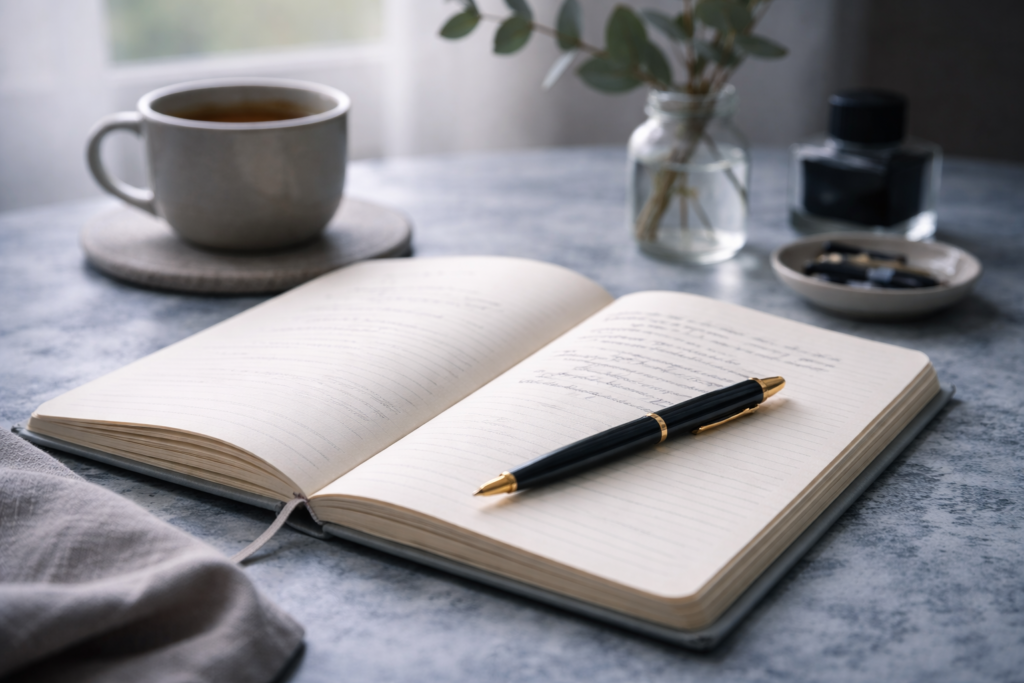
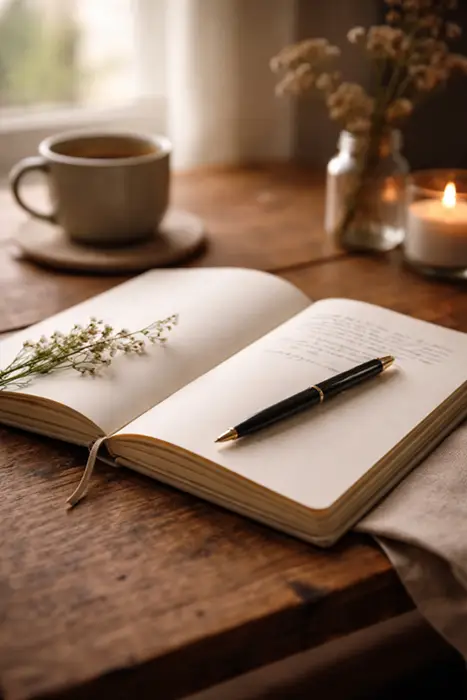
What surprised me most was how quickly the desk became part of a ritual rather than a workstation. Morning tea placed in the same spot. Notebook opened to the next blank page. Pen returned to its place instead of left wherever it landed. These weren’t rules — they were comforts. The desk stopped being a container for tasks and became a quiet partner in thinking. I didn’t realize how much I needed this until I slowed down long enough to use it.

A modern desk solution isn’t about doing more. It’s about removing friction so you can do less, better. Less reaching. Less adjusting. Less mental clutter. And in that calm, work — especially writing — starts to feel possible again.


📦 Buy on Amazon USA

Minimal Desk Organizer Tray

LED Desk Lamp with Warm Light

Leather Writing Desk Pad


🌿 Final Thoughts

A desk doesn’t need to be perfect to be supportive. It just needs to feel intentional. When the space in front of you is calm, your thoughts often follow without being asked.

Modern desk setups work best when they disappear into your day — when they hold your tools quietly and don’t compete for attention. That kind of simplicity is less about style and more about ease.

If your desk feels heavy lately, it might not need replacing or redesigning. It might just need a few thoughtful changes that give your mind more room to breathe.


📦 Buy on Amazon Canada

Minimal Desk Organizer Tray

LED Desk Lamp with Warm Light

Leather Writing Desk Pad

The Quiet Power of a Fresh Notebook Page — Why Blank Space Inspires Better Ideas

There’s something soothing about opening a notebook and landing on a page that hasn’t been touched yet — a soft, clean sheet that feels like an exhale. Whenever I flip to that blank space, I can feel my mind slow down just a little, like it’s relieved to finally be somewhere quiet. Blank pages have this calming energy that digital screens can never quite match. There’s no glow, no noise, no distraction — just a quiet invitation to start wherever I want. And that feeling alone seems to boost my creativity before I even pick up my pen. It reminds me that ideas don’t have to arrive fully formed; they just need space to land.

When I rest my hand on the paper, that little bit of texture always grounds me. It’s such a tiny thing, but it somehow pulls me into the moment. Then the first pen stroke happens — slow, wandering, unsure — and suddenly my thoughts begin to stretch out in ways they won’t when I’m typing on a keyboard. There’s something more human about the rhythm of handwriting. The pace, the imperfections, the way my words loop and drift — it all feels more natural. Blank space lets me explore ideas gently, without pressure, without structure, without rules. That’s where the best ideas usually start for me: in the quiet, unhurried space between the lines.

Over time, I’ve realized that blank pages don’t intimidate me the way they do some people — they actually comfort me. I like that sense of possibility. I like the moment before the ink touches the page. I like not knowing exactly where the writing will go. A fresh notebook page becomes a small doorway into whatever I’m thinking about that day, even if it starts with just a scribble or a half-formed sentence. Blank space doesn’t ask for perfection — it simply gives me permission to begin.


📦 Buy on Amazon USA

📓 Moleskine Classic Notebook

🖊️ MUJI 0.5mm Gel Pen

🗒️ Minimalist Tear-Off Daily Planner

📚 Leuchtturm1917 Softcover Notebook

✏️ Pentel Mechanical Pencil (0.7mm)


Final Thoughts

Every time I turn to a fresh page, I feel like I’m being given a small reset — a gentle invitation to slow down and reconnect with myself. There’s a softness to that moment that I’ve come to appreciate more as life gets busier. Blank space feels like quiet permission to breathe, reflect, and start again, even if the rest of the day feels messy. 🌿

I love the way blank pages carry possibility without expectation. They don’t demand brilliance or perfection; they simply offer room. Room for ideas, room for wandering thoughts, room for doubts and sparks and half-ideas that eventually turn into something meaningful. The freedom of that space is what keeps me coming back to notebooks over and over. 💭✨

And maybe that’s the quiet magic of it: a blank page becomes whatever I need it to be in that moment. Sometimes it’s a place to untangle my thoughts. Sometimes it’s a place to dream. Sometimes it’s just a space to slow down. But it always opens the door to a version of myself I don’t always get to hear. That’s why blank space inspires better ideas — because it gives them room to breathe before anything else. 📓🕊️


📦 Buy on Amazon Canada

📓 Moleskine Classic Notebook

🖊️ MUJI 0.5mm Gel Pen

🗒️ Minimalist Tear-Off Daily Planner

📚 Leuchtturm1917 Softcover Notebook

✏️ Pentel Mechanical Pencil (0.7mm)

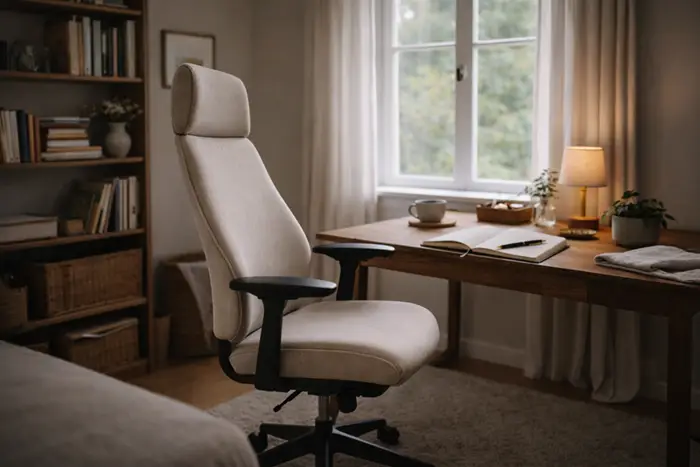
The Office Chair That Quietly Fixed My Workdays

I didn’t go looking for a better chair because I was uncomfortable. That’s the strange part. Nothing hurt enough to feel urgent. But there was a constant low-level restlessness in my mornings — shifting, leaning forward, adjusting my posture without realizing I was doing it. It wasn’t pain. It was friction. And once I noticed it, I couldn’t un-notice it.

What surprised me was how much a mid-level chair changed the pace of my workday. Not in a dramatic, productivity-hack way — but in a quieter, more personal one. Sitting felt settled instead of temporary. My shoulders dropped. I stopped bracing myself against the desk. The chair didn’t demand attention or constant adjustment; it simply held me where I was. That kind of support fades into the background, and that’s exactly what made it effective.

There’s something grounding about a chair that meets you halfway. Not overly rigid, not plush to the point of distraction. Just enough structure to remind your body it doesn’t need to work so hard to stay upright. I noticed it most during writing sessions. I stayed longer. I fidgeted less. My thoughts felt less interrupted by small physical discomforts I’d previously accepted as normal.

The real shift came later in the day. When I stood up, I didn’t feel drained or stiff. The chair hadn’t solved my work — it had simply stopped getting in the way of it. I didn’t realize how much I needed this until I slowed down long enough to use it.

A good mid-level chair doesn’t announce itself. It doesn’t feel like a luxury purchase or a statement piece. It just makes sitting feel easier — and sometimes, that’s the difference between pushing through your day and moving through it calmly.


📦 Buy on Amazon USA

SIHOO M57 Ergonomic Office Chair

Branch Ergonomic Chair

Union & Scale FlexFit Hyken Chair


🌿 Final Thoughts

Comfort at a desk doesn’t need to be extravagant to be meaningful. When a chair supports your body quietly, it creates space for your attention to stay where it belongs — on the work, the writing, the thinking.

There’s a particular relief in realizing you don’t have to “upgrade everything” to feel better day to day. Sometimes one thoughtful, well-balanced choice removes more friction than a dozen small tweaks ever could.

If your workdays feel heavier than they should, it might not be your routine or your focus that needs fixing. It might simply be the place you sit while you’re doing the thinking.


📦 Buy on Amazon Canada

SIHOO M57 Ergonomic Office Chair

Branch Ergonomic Chair

Union & Scale FlexFit Hyken Chair

How a Simple Writing Ritual Changed My Mornings

My mornings used to feel like something to push through. Coffee first, then screens, then a low-level rush that followed me into the day. Nothing was wrong exactly — it just felt scattered. The writing ritual didn’t start as a fix. It started as a pause. A cup of tea instead of refilling coffee. A cleared corner of the desk. One notebook opened to the next blank page, waiting without expectation.

What changed wasn’t the amount I wrote, but the way the morning held together afterward. Sitting down with pen and paper before anything else created a soft edge to the day. The kettle clicking off. Steam rising. The quiet scratch of ink on paper. Those few minutes anchored me. They didn’t demand productivity or insight — they simply marked the beginning of the day as something intentional instead of reactive.

The ritual stayed simple on purpose. Same mug. Same pen. Same notebook. Repetition made it easier to show up without thinking about it. Some mornings I wrote a paragraph. Other mornings it was a sentence or two. Occasionally it was just a list of things I didn’t want to forget. What mattered was the consistency of the act, not the content. Writing became less about expression and more about orientation — a way of checking in before moving outward.

I noticed the effect later in the day. Fewer rushed decisions. Less mental noise. A quieter sense of direction. The morning writing didn’t solve problems, but it softened them. It reminded me that I didn’t need to earn clarity — sometimes it arrives simply by slowing down. I didn’t realize how much I needed this until I slowed down long enough to use it.

Now the ritual feels less like a habit and more like a kindness I offer myself each morning. A small, steady moment that doesn’t ask for improvement — just presence.


📦 Buy on Amazon USA

Leuchtturm1917 Medium Dotted Notebook

Midori MD Notebook A5

Pilot Metropolitan Fountain Pen


🌿 Final Thoughts

A writing ritual doesn’t need to be elaborate to be meaningful. Its power comes from repetition and gentleness — from returning to the same quiet moment each morning without pressure to perform or produce.

There’s comfort in starting the day with something tactile and slow. Tea cooling. Paper waiting. Words forming at their own pace. That calm often carries forward, shaping the rest of the day in subtle ways.

If your mornings feel rushed or unfocused, you don’t need a complete overhaul. Sometimes all it takes is one small ritual that reminds you the day is yours before it belongs to anything else.


📦 Buy on Amazon Canada

Leuchtturm1917 Medium Dotted Notebook

Midori MD Notebook A5

Pilot Metropolitan Fountain Pen

Why I Keep One Notebook That No One Will Ever Read

Why I Keep One Notebook That No One Will Ever Read

There’s one notebook I never leave out on my desk. It doesn’t get stacked neatly with the others or opened casually when someone’s nearby. The cover is plain, the pages uneven, and there’s nothing about it that asks to be seen. I didn’t choose it for aesthetics or organization — I chose it because it felt private the moment I touched it. Like it understood the assignment before I did.

The pages inside are messy in a way I don’t allow anywhere else. Sentences trail off. Handwriting changes depending on the day. Some thoughts repeat themselves because I clearly wasn’t done with them yet. There’s no structure to impress, no future version of me judging whether it was “worth writing down.” That freedom is the point. When I open that notebook, I don’t perform clarity — I let confusion exist.

What surprised me most was how honest my writing became once I knew it would never be shared. Without the possibility of an audience, even an imagined one, the words softened. I stopped explaining myself. I stopped trying to sound insightful. The page became a place where half-formed thoughts were allowed to breathe instead of being corrected or cleaned up too soon.

There’s a physical comfort in that kind of privacy. The way the paper absorbs ink without caring what it says. The quiet rhythm of writing something only for yourself. It feels like closing a door — not to shut the world out, but to give your thoughts a room of their own. I didn’t realize how much I needed this until I slowed down long enough to use it.

That notebook doesn’t make me a better writer in any obvious way. But it makes me more honest. And that honesty spills quietly into everything else I write, even the things that will be read.


📦 Buy on Amazon USA

Midori MD Notebook A5

Leuchtturm1917 Plain Notebook

Clairefontaine Classic Staplebound Notebook


🌿 Final Thoughts

Not every notebook needs to be productive or presentable. Some exist purely to hold what doesn’t fit anywhere else — the thoughts you’re still working through, the feelings you don’t want feedback on, the words that aren’t ready to be shaped.

There’s a deep relief in knowing that a page doesn’t require permission to be honest. When writing is freed from sharing, it often becomes more truthful, more grounding, and more useful in quiet ways that are hard to measure.

If you’ve ever felt stuck trying to write the “right” thing, it might help to keep one place where nothing has to be right at all. A notebook no one will ever read can be one of the safest places you give your mind.


📦 Buy on Amazon Canada

Midori MD Notebook A5

Leuchtturm1917 Plain Notebook

Clairefontaine Classic Staplebound Notebook

The Pen That Slowed My Thoughts Down (In a Good Way)

I didn’t set out to change how I think — I just wanted a pen that felt nice to use. Something balanced. Something that didn’t scratch or rush or skip when my hand moved faster than my thoughts. But the first time I wrote with it, I noticed something subtle shift. My hand slowed. My letters rounded out. The space between words grew just a little wider, and with it, my thoughts stopped tripping over each other.

Ink flow has a rhythm, and this pen asked for patience without demanding it. The ink didn’t flood the page, but it didn’t hesitate either. It moved steadily, like it trusted me to keep up. That steadiness changed the way sentences formed. Instead of racing to get ideas down before they vanished, I found myself staying with each word a beat longer. The pen made thinking feel less urgent and more deliberate.

The grip mattered more than I expected. Not soft, not rigid — just enough resistance to remind me my hand was doing something physical. That slight pressure grounded the act of writing. My fingers relaxed. My wrist stopped tensing. Writing stopped feeling like a task and started feeling like a motion I could settle into, the way you settle into a familiar chair.

There was resistance too — not friction, but presence. The pen didn’t glide so easily that it disconnected me from the page. I could feel the paper responding, just enough to keep me anchored. That feedback slowed my internal pace. Thoughts didn’t disappear; they lined up. One at a time felt sufficient. I didn’t realize how much I needed this until I slowed down long enough to use it.

Now, when I reach for that pen, it feels like choosing a quieter speed. Not slower in a limiting way — slower in a listening way. Writing with it doesn’t just record what I’m thinking. It shapes how I think in the first place.


📦 Buy on Amazon USA

Uni-ball Jetstream Retractable Pen

Pilot Metropolitan Fountain Pen

Pentel EnerGel Deluxe Gel Pen


🌿 Final Thoughts

We often underestimate how much our tools influence our internal rhythm. A pen that writes too fast can pull thoughts forward before they’re ready. One that resists just enough can invite patience, clarity, and a gentler pace.

There’s comfort in discovering that slowing down doesn’t require effort — sometimes it just requires the right object. A pen that feels steady in the hand can become a quiet signal to breathe, pause, and stay present with what’s unfolding on the page.

If your thoughts have been racing lately, it might not be your mind that needs fixing. It might simply be time to choose a tool that lets you move through them more slowly — and more kindly.


📦 Buy on Amazon Canada

Uni-ball Jetstream Retractable Pen

Pilot Metropolitan Fountain Pen

Pentel EnerGel Deluxe Gel Pen

I Bought This Journal for “Productivity”—But I Ended Up Using It for Thinking

I bought the journal with good intentions. The cover was clean, the pages structured just enough to suggest order, and I told myself this would be the place where plans finally stayed put. It was meant for lists, goals, maybe a habit tracker or two. Something practical. Something tidy. But almost immediately, it became something else — quieter, less organized, and somehow more honest.

The first few pages followed the plan. Bullet points. Headings. A sense of control. Then one day, without really deciding to, I wrote a sentence that didn’t belong to any system. It wasn’t actionable or efficient. It was just a thought I didn’t want to lose. After that, the journal stopped feeling like a tool and started feeling like a place. The structure loosened. The pressure softened. The pages became less about what I needed to do and more about what I needed to understand.

What surprised me was how much relief there was in that shift. Productivity always feels like it’s facing forward — next steps, outcomes, progress. Thinking feels different. It circles. It pauses. It lets ideas sit unfinished. The journal held space for that in a way no app or planner ever really has. The paper didn’t rush me. The margins didn’t ask for conclusions. I didn’t realize how much I needed this until I slowed down long enough to use it.

Now, when I open that journal, I don’t feel behind. I feel present. Some pages are messy. Some are nearly empty. Others hold a single line that mattered in the moment. And that feels enough. The journal didn’t make me more productive — it made me more aware. And that, it turns out, was the thing I’d been missing.


📦 Buy on Amazon USA

Leuchtturm1917 Medium Ruled Notebook

Midori MD Notebook A5

Moleskine Expanded Notebook


🌿 Final Thoughts

It’s easy to believe every notebook needs a purpose, a system, a measurable outcome. But some of the most useful pages never produce anything at all — they simply help us think more clearly. A journal that allows that shift can quietly become one of the most supportive things on your desk.

There’s something grounding about giving your thoughts a physical place to land. Not to fix them or organize them perfectly, but to let them exist without pressure. Over time, those pages start to feel less like records and more like companions.

If your journal has drifted away from productivity and into reflection, that isn’t failure. It’s a sign that it’s doing deeper work — the kind that doesn’t show up on a checklist, but changes how you move through your day.


📦 Buy on Amazon Canada

Leuchtturm1917 Medium Ruled Notebook

Midori MD Notebook A5

Moleskine Expanded Notebook

Why the Right Notebook Makes You Want to Write Again

There’s a quiet hesitation that creeps in when you haven’t written for a while. You open a drawer, see old notebooks half-filled or abandoned mid-thought, and suddenly the distance feels bigger than it is. I’ve noticed that the hardest part isn’t the writing itself — it’s the invitation back. And more often than not, that invitation comes from the notebook in your hands. The weight of it. The way it opens flat. The sense that it isn’t asking for perfection, only presence.

Paper quality plays a bigger role than we like to admit. Smooth paper slows the pen just enough to feel intentional, while slightly textured pages give the ink something to settle into, like it belongs there. When the paper feels good, mistakes don’t feel like failures — they feel temporary. I’ve found that my hand relaxes more quickly when the page doesn’t fight back, when the pen glides instead of scratches. That physical ease turns into mental ease faster than expected.

Size matters too, but not in a productivity way. Smaller notebooks feel forgiving. They don’t stare back demanding full essays or deep insights. They invite fragments, half-sentences, thoughts that don’t know where they’re going yet. Larger pages can feel expansive, but sometimes they ask too much when you’re just trying to return. I tend to reach for notebooks that leave a little white space — not empty, just open — like they’re saying there’s room for whatever shows up.

What surprises me most is how quickly the ritual forms again. The sound of pages turning. The moment before the pen touches down. Writing doesn’t announce its return with fireworks — it comes back quietly, often through texture and habit rather than motivation. I didn’t realize how much I needed this until I slowed down long enough to use it.

The right notebook doesn’t push you to write more. It simply makes writing feel possible again. And sometimes, that’s more than enough.


📦 Buy on Amazon USA

Leuchtturm1917 Medium Dotted Notebook

Moleskine Classic Softcover Notebook

Rhodia Webnotebook A5


🌿 Final Thoughts

Writing doesn’t disappear when we stop — it just waits patiently for the right conditions to return. A notebook with the right feel can soften that return, removing pressure and replacing it with familiarity. It becomes less about output and more about showing up.

There’s comfort in knowing you don’t have to force creativity back into your life. Sometimes it comes back through small, thoughtful choices — paper that feels good, pages that don’t judge, a size that fits easily into your day.

If writing has felt distant lately, it might not be a lack of ideas holding you back. It might simply be that you haven’t found the page that invites you in yet.


📦 Buy on Amazon Canada

Leuchtturm1917 Medium Dotted Notebook

Moleskine Classic Softcover Notebook

Rhodia Webnotebook A5

Why My Best Ideas Never Start on a Screen

I’ve noticed a pattern over time, and it’s one I can’t ignore anymore. My best ideas never show up when I’m staring at a screen. They don’t arrive while I’m typing, scrolling, or trying to organize my thoughts digitally. Screens seem to demand structure too early. They ask me to decide what something is before I’ve even figured out what it’s becoming.

When I sit in front of a screen, my mind shifts into editing mode almost immediately. I reread sentences before they’re finished. I delete things before they’ve had a chance to breathe. Even when I’m alone, the act of typing feels like I’m preparing something for later use. The idea never gets to be raw. It’s filtered too soon.

Paper gives me a different kind of space. When I write by hand, thoughts arrive unfinished and slightly awkward, and that’s exactly how they need to arrive. There’s no cursor blinking at me, no temptation to clean things up mid-thought. The pen moves slower than my impulses, and that slowness gives ideas room to stretch out and reveal themselves.

I’ve also realized that ideas don’t like being rushed into usefulness. On paper, they’re allowed to wander. A sentence can drift into a margin. A thought can trail off and pick up again later. That looseness often leads me somewhere unexpected. By the time an idea is ready for a screen, it already knows what it wants to be.

Screens are great for building and refining. Paper is where things begin. It’s where ideas feel safe enough to show up incomplete. And for me, that’s the only way they ever turn into something worth keeping.


📦 Buy on Amazon USA

📓 Simple Lined Notebook
📓 Minimalist Writing Journal
🖊️ Smooth Writing Pen (Black Ink)


🌱 Final Thoughts

I’ve stopped trying to force ideas to appear where they don’t belong. Screens are efficient, but efficiency isn’t where creativity starts for me. It starts in a slower, quieter place.

Paper gives my thoughts weight before they have direction. It lets me explore without committing. That freedom has made all the difference in how ideas form and grow.

Now, when something matters, I don’t open an app. I reach for a notebook. That’s where my ideas still feel most honest.


📦 Buy on Amazon Canada

📓 Simple Lined Notebook
📓 Minimalist Writing Journal
🖊️ Smooth Writing Pen (Black Ink)

The Quiet Comfort of a Half-Used Notebook

There’s something reassuring about a notebook that’s already been started. Not fresh, not perfect, not asking for intention. Just open somewhere in the middle, with pages already bent slightly, ink already uneven, thoughts already lived in. A half-used notebook feels like permission. It doesn’t expect anything from me except to continue.

New notebooks always come with a strange kind of pressure. Clean pages invite ambition. They make me think about consistency, about whether what I’m writing is worth the space. A half-used notebook has already crossed that threshold. The first pages did their job. The notebook has proven itself useful. Now it’s just there to be used again.

I like how the earlier writing fades into the background. I don’t reread it much. Sometimes I flip past a page and catch a line that reminds me where my head was weeks ago, but mostly it stays quiet. The notebook becomes less about documentation and more about presence. It’s no longer a record — it’s a companion.

There’s also comfort in knowing the notebook won’t last forever. The remaining pages feel finite but not urgent. I don’t rush to fill them, and I don’t worry about running out. I write when I need to, skip days when I don’t, and let the notebook age naturally. The wear builds slowly, and somehow that makes it feel more personal.

A half-used notebook sits comfortably beside me in a way a new one never quite does. It blends into the day. It doesn’t announce itself. It simply exists, ready when I am. And that quiet availability is exactly what keeps me coming back to it.


📦 Buy on Amazon USA

📓 Softcover Lined Notebook
📓 Minimalist Everyday Journal


🌱 Final Thoughts

A half-used notebook reminds me that usefulness matters more than beginnings. There’s no ceremony left, no expectations to manage — just space that’s already been claimed once and can be claimed again.

I’ve come to appreciate tools that carry a bit of history. They feel less demanding, more forgiving. This notebook doesn’t need to be treated carefully anymore, and that makes it easier to be honest inside it.

Sometimes comfort isn’t about something new. Sometimes it’s about returning to something that already knows you’ve been here before.


📦 Buy on Amazon Canada

📓 Softcover Lined Notebook
📓 Minimalist Everyday Journal