The Calming Stationery I Reach for When My Mind Won’t Slow Down

There are evenings when my thoughts won’t line up neatly. They loop. They overlap. They hum louder than they should. On those days, I’ve learned not to fight it with more screens or more noise. I reach for paper instead — not just any paper, but the kind that feels steady in my hands.

I used to think stationery was neutral. Functional. Interchangeable. But I’ve noticed something over time: certain tools calm me down faster than others. A smooth pen that doesn’t skip. Thick paper that doesn’t buckle under ink. Colors that feel muted instead of urgent. It sounds small — but small sensory cues shape how your nervous system responds.

The first thing I reach for is a pen with effortless glide. If the tip drags or scratches, my thoughts get sharper. When the ink flows smoothly, my handwriting softens. There’s less tension in my grip. My breathing slows without me consciously trying. It becomes a physical release as much as a mental one.

Paper weight matters more than I expected. Thin sheets that ghost or bleed through make me feel rushed, like I have to hurry before the page fails me. Thicker, creamy paper feels secure. Stable. I can press down a little harder without worrying about ruining the next page. That subtle reassurance changes how freely I write.

Then there’s color. I avoid neon when I’m anxious. I gravitate toward soft sage, dusty blue, pale lavender — tones that don’t demand attention. Even my planner pages feel gentler when the palette is calm. It’s not about aesthetic trends. It’s about lowering visual intensity. Bright contrast can feel stimulating. Muted tones feel grounding.

Sometimes I don’t even write full sentences. Just single words. Or small lines that trail off. I didn’t realize how much I needed this until I slowed down long enough to use it.

The act itself is simple: pen to paper, thoughts externalized. But when the materials cooperate instead of distract, the effect is amplified. The tools don’t solve anxiety — they create a softer landing place for it.


📦 Buy on Amazon USA

Zebra Sarasa Clip Gel Pens (Fine Point)

Leuchtturm1917 Medium A5 Notebook (Ivory Paper)

Archer & Olive Thick Paper Notebook (160gsm)

Zebra Mildliner Highlighters (Muted Set)


🌿 Final Thoughts

Calm doesn’t always come from big interventions. Sometimes it comes from sensory cues that signal safety and steadiness. Smooth ink. Sturdy pages. Gentle color. Those details create an environment where your mind can loosen its grip.

Stationery won’t replace therapy or deep rest. But it can become a small anchor — something tactile and predictable when your thoughts feel scattered.

If your mind won’t slow down, try changing the surface you write on. The shift might be quieter than you expect — and more effective than you realize.


📦 Buy on Amazon Canada

Zebra Sarasa Clip Gel Pens (Fine Point)

Leuchtturm1917 Medium A5 Notebook (Ivory Paper)

Archer & Olive Thick Paper Notebook (160gsm)

Zebra Mildliner Highlighters (Muted Set)

The 15-Minute Sunday Desk Reset That Changes Your Whole Week

Sunday evenings used to feel heavy to me. Not dramatic — just a low hum of unfinished thoughts and the quiet pressure of Monday waiting in the background. My desk would sit there cluttered from the week, pens scattered, pages half-used, sticky notes curling at the edges. Nothing catastrophic. Just messy enough to make starting again feel harder than it needed to be.

Then I started giving myself fifteen minutes.

Not to overhaul everything. Not to reorganize my entire life. Just to reset the desk.

I clear the surface first. Every notebook stacked neatly. Loose papers either tucked inside or recycled. I wipe the desk slowly, almost deliberately, as if I’m erasing the mental static of the week along with the dust. The space immediately feels lighter. There’s something calming about seeing clean lines again.

Then I open my pen case. I test each pen on a scrap page — quick loops and lines. If one is running dry, it gets replaced. If the ink color feels tired, I swap it out. Sometimes I move from black ink to a deep navy or a muted brown just for the change in tone. That small shift alters the mood of my writing more than I expect. Fresh ink feels like a fresh start.

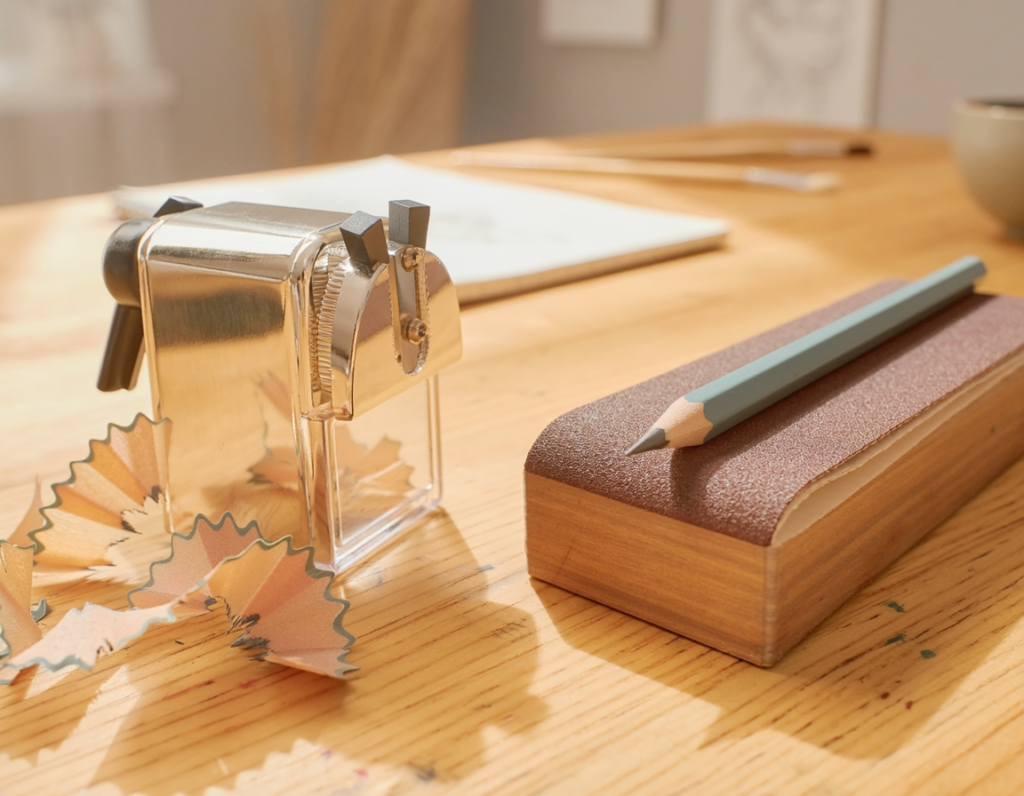
I sharpen pencils next. The quiet grind of the blade. The clean point revealed. There’s something grounding about that sound. It’s such a small, tactile act, but it signals care. Intention. A readiness to begin again.

Highlighters get lined up. Sticky tabs restocked. My main notebook moved to the center of the desk instead of buried under other things. It’s subtle staging — but it matters. I didn’t realize how much I needed this until I slowed down long enough to use it.

By the time those fifteen minutes are up, nothing dramatic has changed. My goals haven’t shifted. My responsibilities haven’t vanished. But the energy around them feels different. Monday doesn’t feel like a collision. It feels like an opening.

This ritual isn’t about perfection. It’s about signaling to yourself that your thoughts deserve a clean surface to land on.


📦 Buy on Amazon USA

Leuchtturm1917 Medium A5 Notebook (Ivory Paper)

Zebra Sarasa Clip Gel Pens (Fine Point)

Zebra Mildliner Highlighters (Muted Set)

Metal Pencil Sharpener (Dual Size)


🌿 Final Thoughts

Rituals work because they create rhythm. When something repeats gently and predictably, it lowers resistance. The Sunday desk reset isn’t productivity theater. It’s a quiet reset that makes showing up easier.

Fifteen minutes won’t transform your entire week — but it can soften the way it begins. A clean desk. Refilled pens. Sharpened pencils. Those small acts compound into calm momentum.

Sometimes the difference between dread and readiness is simply a clear space and a fresh page waiting in the center of it.


📦 Buy on Amazon Canada

Leuchtturm1917 Medium A5 Notebook (Ivory Paper)

Zebra Sarasa Clip Gel Pens (Fine Point)

Zebra Mildliner Highlighters (Muted Set)

Metal Pencil Sharpener (Dual Size)

The Ultimate Stationery Starter Kit for Adults Who Want to Journal Again

There’s a certain kind of quiet that only comes from sitting down with a notebook and realizing no one is grading you anymore. No assignments. No deadlines. No red ink in the margins. Just you and a blank page. The first time I picked up a notebook again as an adult, it felt strangely vulnerable — like reopening a door I’d quietly shut years ago.

Getting back into journaling isn’t about productivity. It’s about rediscovery. The smell of paper. The slow drag of a pen across a fresh page. The small pause before the first sentence. It doesn’t need to be perfect. It just needs to feel inviting.

If you’re starting again, the key isn’t buying everything — it’s choosing a few pieces that feel intentional. A notebook with creamy, forgiving pages. Nothing overly structured. Something that welcomes messy thoughts. When the paper is too bright or too thin, I hesitate. But when it feels warm and substantial, I lean in.

A pen matters more than people admit. Too scratchy, and you stop mid-sentence. Too inky, and the page feels chaotic. A smooth gel pen or a fine ballpoint with steady flow creates rhythm. That rhythm builds momentum. You stop thinking about the tool and start thinking about the words.

A simple pencil pouch or tray helps too — not for aesthetics alone, but for ritual. When everything has a place, sitting down feels deliberate. A soft highlighter in a muted tone can mark a sentence that surprised you. A sticky tab can flag a page you want to revisit. These are small details, but they make journaling feel like something you return to, not something you squeeze in.

I didn’t realize how much I needed this until I slowed down long enough to use it.

The biggest surprise wasn’t what I wrote — it was how I felt afterward. Lighter. Clearer. Less mentally crowded. The notebook became less of a “project” and more of a quiet companion. And that shift made all the difference.


📦 Buy on Amazon USA

Leuchtturm1917 Medium A5 Notebook (Ivory Paper)

Moleskine Classic Notebook (Ruled)

Zebra Sarasa Clip Gel Pens (Fine Point)

Zebra Mildliner Highlighters (Muted Set)


🌿 Final Thoughts

Starting again as an adult carries a different kind of weight. There’s history. Hesitation. Maybe even the feeling that you should be “past” something as simple as journaling. But writing isn’t childish. It’s grounding.

The right stationery doesn’t make you a better writer — it makes you more willing to show up. And showing up is where the change happens. A smooth pen. Warm paper. A quiet corner of the day. That’s enough.

You don’t need an elaborate system. Just a small kit that makes you want to open the page again tomorrow.


📦 Buy on Amazon Canada

Leuchtturm1917 Medium A5 Notebook (Ivory Paper)

Moleskine Classic Notebook (Ruled)

Zebra Sarasa Clip Gel Pens (Fine Point)

Zebra Mildliner Highlighters (Muted Set)

Is Expensive Paper Worth It? I Tested Luxury vs Budget Notebooks

There’s something quietly persuasive about a beautiful notebook. The weight of it. The texture of the cover. The subtle cream tone of the pages. I’ve stood in front of shelves more than once, holding a premium notebook in one hand and a budget one in the other, wondering if I’d actually feel the difference — or if I just wanted to.

So I tested it.

I bought a higher-end notebook — thick, ivory-toned pages, stitched binding, the kind that feels almost too nice to “waste” on everyday notes — and I paired it with a simple budget option. Nothing fancy. Clean. Functional. Affordable. Then I used them both the same way for a week. Morning pages. To-do lists. Random thoughts. Same pen. Same desk. Same lighting.

The first difference I noticed wasn’t dramatic — it was subtle. The premium paper had a softness to it. My pen didn’t drag. It glided. There was a gentle resistance that felt controlled, almost cushioned. The budget paper was thinner, brighter white, and just slightly more textured. Not rough — but not buttery either. It wasn’t unpleasant. Just… different.

Bleed-through was the real test. With gel pens and slightly heavier ink, the luxury notebook handled it beautifully. Minimal ghosting. No visible dots on the reverse side. The budget notebook held up surprisingly well, but under heavier strokes I could see shadowing. Not enough to ruin the page — but enough that I probably wouldn’t use both sides with wetter pens.

Texture matters more than I expected. The premium pages felt warmer in tone, easier on the eyes. Writing for longer stretches felt less tiring. The budget paper was perfectly usable, especially for quick notes or planning, but when I slowed down and wrote reflectively, I preferred the thicker stock. I didn’t realize how much I needed this until I slowed down long enough to use it.

But here’s the honest part: the difference isn’t always about quality — it’s about intention. When I picked up the luxury notebook, I wrote more carefully. I thought longer before putting words down. It felt deliberate. The budget notebook felt free. Low pressure. Messy was okay. Crossing things out didn’t sting.

So does expensive paper matter? Yes — if the sensory experience motivates you. If pen glide, tone, and minimal bleed-through genuinely improve how you feel at your desk. But if you just need a place to think, plan, and capture ideas, a budget notebook does the job more than well enough.

In the end, I realized I don’t need every notebook to be luxurious. But I do like having at least one that feels special.


📦 Buy on Amazon USA

Leuchtturm1917 Medium A5 Notebook (Ivory Paper)

Moleskine Classic Notebook (Ruled)

Amazon Basics Classic Notebook (Ruled, 240 Pages)

Zebra Sarasa Gel Pens (Fine Point)


🌿 Final Thoughts

Paper isn’t just paper when you spend time with it. It shapes how your pen moves, how your eyes rest, and how long you stay at your desk. That difference may be small — but small things add up over time.

Luxury notebooks aren’t necessary. But they can change the tone of your writing sessions in ways that are hard to quantify and easy to feel. Budget notebooks, on the other hand, remove hesitation. They give you permission to be imperfect.

Maybe the real answer isn’t choosing one over the other. Maybe it’s knowing when you want softness and when you want freedom — and keeping both within reach.


📦 Buy on Amazon Canada

Leuchtturm1917 Medium A5 Notebook (Ivory Paper)

Moleskine Classic Notebook (Ruled)

Amazon Basics Classic Notebook (Ruled, 240 Pages)

Zebra Sarasa Gel Pens (Fine Point)

Soft Productivity: Building a Calm, Aesthetic Writing Desk That Makes You Want to Work

There was a time when my desk felt like a command center — sharp lighting, harsh lines, stacked reminders of everything I hadn’t finished. It worked, technically. But it didn’t feel good. Lately, I’ve been drawn toward something softer. A desk that invites me in instead of demanding output. A space that whispers instead of shouts. Soft productivity isn’t about doing less — it’s about creating an environment that feels gentle enough to return to every day.

Muted highlighters were the first shift. Not neon. Not loud. Just subtle washes of dusty rose, sage, pale lavender. When I underline something now, it doesn’t scream for attention — it glows quietly. Pair that with a creamy paper notebook, the kind where the pages are warm rather than stark white, and the whole experience changes. The pen glides differently. The contrast is easier on the eyes. The page feels inviting, not intimidating.

Lighting might be the biggest transformation. I swapped a bright overhead bulb for a warm desk lamp that pools light onto the page instead of flooding the room. The edges of the desk fade softly into shadow. It creates a small world — just me, the paper, and the task at hand. There’s something about warm light that slows your breathing without you noticing. It makes the work feel less urgent and more intentional.

Pastel planners complete the atmosphere. Soft covers, rounded corners, layouts that don’t overwhelm with rigid grids. Instead of packing every square with obligations, I leave space. Margins. Breathing room. The goal isn’t to optimize every minute. It’s to create a rhythm I can sustain. I didn’t realize how much I needed this until I slowed down long enough to use it.

Soft productivity doesn’t mean you stop caring about getting things done. It means you design a space that makes you want to sit down again tomorrow. And the next day. And the next.


📦 Buy on Amazon USA

Zebra Mildliner Double-Ended Highlighters (Muted Set)

Leuchtturm1917 Medium A5 Notebook (Ivory Paper)

Simple Warm LED Desk Lamp (Adjustable Brightness)

Papier Pastel Daily Planner


🌿 Final Thoughts

A desk doesn’t need to look dramatic to be effective. Sometimes the quietest setups are the ones that last. Soft tones, warm light, creamy paper — these details don’t shout for attention, but they subtly shape how you feel when you sit down to work.

What surprised me most is how much resistance faded when the space felt kinder. I stopped negotiating with myself about starting. I simply sat down. That alone felt like progress.

If productivity has started to feel heavy, maybe the solution isn’t pushing harder. Maybe it’s softening the environment around you — and letting that gentle shift carry the momentum forward.


📦 Buy on Amazon Canada

Zebra Mildliner Double-Ended Highlighters (Muted Set)

Leuchtturm1917 Medium A5 Notebook (Ivory Paper)

Simple Warm LED Desk Lamp (Adjustable Brightness)

Papier Pastel Daily Planner

The One Stationery Upgrade That Made Writing Feel Fun Again

For a while, writing felt flat. Not hard — just dull. I still showed up, still filled pages, but the spark was gone. The words came out fine, yet the experience itself felt thin, like I was going through the motions instead of enjoying the act. I didn’t realize how much that mattered until something small shifted.

The upgrade wasn’t dramatic. No elaborate system, no aesthetic overhaul. It was simply switching to a pen and paper combination that felt good again. The kind that makes you notice the glide, the sound of ink settling into paper, the subtle rhythm of writing slowing your thoughts down. Suddenly, writing wasn’t just a means to an end — it was the point.

What surprised me most was how quickly a sense of nostalgia crept in. It reminded me of earlier years, when writing felt playful and unguarded, when I didn’t worry about usefulness or output. The right stationery brought that feeling back without trying to recreate the past. It just made the present feel lighter.

I found myself writing longer than planned. Lingering on sentences. Turning the page without checking the time. Fun returned not because I forced it, but because the tools stopped getting in the way. They invited me back into the habit instead of demanding discipline.

I didn’t realize how much I needed this until I slowed down long enough to use it.

📦 Buy on Amazon USA

Smooth Gel Pen with Consistent Ink Flow

Cream Paper Lined Notebook (Softcover)

Comfort-Focused Everyday Writing Pen

🌿 Final Thoughts

Fun doesn’t disappear from writing — it just gets buried under friction. When the tools feel right, that quiet enjoyment resurfaces naturally, without needing motivation or structure.

A small stationery upgrade can reconnect you with why you started writing in the first place. Not to optimize, not to perform, but to enjoy the feeling of pen meeting paper.

It’s a gentle rediscovery, but a meaningful one — the kind that makes you want to come back tomorrow.

📦 Buy on Amazon Canada

Smooth Gel Pen with Consistent Ink Flow

Cream Paper Lined Notebook (Softcover)

Comfort-Focused Everyday Writing Pen

The Stationery I Pack When I Leave the House “Just in Case”

I don’t leave the house expecting to write, but I like knowing I could. There’s a quiet reassurance in having a few familiar tools tucked away, ready for the moment when a thought shows up unannounced — on a bench, in a café, while waiting somewhere longer than expected. It’s not about productivity. It’s about readiness without pressure.

What I pack is intentionally small. A notebook thin enough to forget about, but substantial enough to feel real when I pull it out. A pen that won’t leak, skip, or ask me to test it before trusting it. These are objects chosen to disappear into my bag and reappear only when needed, without ceremony or fuss.

I’ve noticed that portability changes how I think about writing. When the tools are light and familiar, the barrier to starting drops. I don’t hesitate. I don’t overthink whether the moment is worth it. I write a few lines, capture the thought, and move on. The writing fits into life instead of interrupting it.

There’s also something comforting about knowing the tools are there, even if I never use them. It makes the day feel a little more open-ended, like creativity isn’t confined to my desk. That sense of quiet readiness stays with me longer than any single note I jot down.

I didn’t realize how much I needed this until I slowed down long enough to use it.

📦 Buy on Amazon USA

Slim Pocket Notebook (Softcover)

Reliable Click Pen for Everyday Carry

Compact Pen Case or Sleeve

🌿 Final Thoughts

Being prepared doesn’t have to mean carrying more — just carrying what earns its place. A small stationery kit creates room for thoughts without demanding that you act on them every time.

When writing tools are easy to bring along, writing itself feels less like a task and more like an option. That quiet availability can change how you move through the day.

It’s a simple habit, but one that keeps creativity close, wherever you happen to be.

📦 Buy on Amazon Canada

Slim Pocket Notebook (Softcover)

Reliable Click Pen for Everyday Carry

Compact Pen Case or Sleeve

What I Test Before I Commit to a New Pen

I’ve learned not to trust a pen just because it looks good in my hand. The real decision happens quietly, usually within the first few minutes of writing. I don’t rush it. I let the pen show me who it is, because small annoyances reveal themselves quickly when you’re paying attention.

The first thing I notice is how much effort it asks from me. If I have to press even slightly harder than feels natural, my hand tenses without me realizing it. A good pen lets the ink appear with almost no persuasion, like it’s keeping pace with my thoughts instead of chasing them.

Then there’s the line itself. I pay attention to whether it stays consistent as my writing speed changes. I don’t write evenly when I’m thinking — I pause, rush, circle back. If the pen skips or fades during those shifts, I know it’ll eventually frustrate me. Reliability matters more than smoothness alone.

I also listen to how it feels over a full page. Not just the grip, but the weight, the balance, the way my fingers settle into it. Some pens feel fine at first and exhausting later. Others disappear in the hand, which is exactly what I want. If I forget I’m holding it, that’s usually a good sign.

I didn’t realize how much I needed this until I slowed down long enough to use it.

📦 Buy on Amazon USA

Reliable Gel Pen for Everyday Writing

Smooth Rollerball Pen (Consistent Ink Flow)

Comfort-Focused Writing Pen

🌿 Final Thoughts

Testing a pen isn’t about being picky — it’s about protecting the experience of writing itself. When a pen earns your trust early, it removes doubt later, letting you focus on the page instead of the tool.

Confidence builds quietly. A pen that performs the same way every time creates a sense of ease that supports longer sessions and calmer thinking.

It’s a small moment of evaluation, but it saves a lot of friction down the line — and once you find a pen that passes the test, you tend to stick with it.

📦 Buy on Amazon Canada

Reliable Gel Pen for Everyday Writing

Smooth Rollerball Pen (Consistent Ink Flow)

Comfort-Focused Writing Pen

Why I Keep One Notebook Just for Bad Ideas

For a long time, I treated notebooks like they were meant to capture only my best thinking. Clean ideas. Clear plans. Sentences worth keeping. The problem was that most of my thoughts don’t arrive that way. They show up half-formed, awkward, or clearly wrong — and I used to stop myself from writing them down because they didn’t feel worthy of the page.

Keeping a notebook specifically for bad ideas changed that completely. The moment I labeled it that way, the pressure lifted. There was no expectation for clarity or usefulness. I could write something clumsy, rambling, or unrealistic and move on without fixing it. The page didn’t ask me to improve — it just let me unload.

What surprised me most is how freeing that permission felt. Once I stopped editing myself mid-thought, ideas started flowing more easily everywhere else too. The bad-ideas notebook became a place to warm up, to spill the noise, to let my brain stretch without judgment. It wasn’t about saving anything — it was about getting unstuck.

I don’t revisit those pages often, and that’s part of the point. The value isn’t in what stays, but in what gets released. Sometimes a useful thought sneaks in among the mess, but even when it doesn’t, the act of writing clears space for something better to follow.

I didn’t realize how much I needed this until I slowed down long enough to use it.

📦 Buy on Amazon USA

Plain Lined Notebook (No-Frills)

Cheap-but-Comfortable Writing Notebook

Simple Softcover Journal for Everyday Use

🌿 Final Thoughts

Creativity doesn’t need encouragement as much as it needs permission. A notebook dedicated to bad ideas removes the fear of wasting a page and replaces it with freedom to explore without consequence.

When nothing has to be good, everything becomes easier to start. That gentle lowering of expectations often leads to more honest thinking and a more relaxed relationship with writing.

It’s a small habit, but a powerful one — a quiet reminder that not every page has to matter for the process itself to work.

📦 Buy on Amazon Canada

Plain Lined Notebook (No-Frills)

Cheap-but-Comfortable Writing Notebook

Simple Softcover Journal for Everyday Use

The Pen That Makes My Hand Hurt the Least

I didn’t notice the discomfort at first — just a faint tightness after a few pages, a subtle ache that crept in when I wrote longer than usual. Over time, it became harder to ignore. Writing sessions shortened, pauses stretched out, and I started blaming myself for losing focus when really, my hand was just tired of fighting the tool I was using.

What made the difference wasn’t switching how I write, but switching what I write with. The pen I keep coming back to doesn’t force my grip or ask for pressure. It moves easily across the page, letting my hand stay relaxed instead of tense. The relief is quiet but immediate, like unclenching a muscle you didn’t realize you were holding.

I notice it most during longer stretches — journaling in the evening, working through ideas, or getting lost in a train of thought. When the pen doesn’t resist me, I stay present longer. My wrist doesn’t stiffen. My fingers don’t rush just to be done. Comfort turns endurance into something natural instead of something I have to push through.

There’s a kind of trust that builds when your hand stops complaining. The pen fades into the background, and the writing becomes the only thing that matters. That’s when sessions stretch on effortlessly, not because I’m disciplined, but because nothing hurts enough to pull me out of the moment.

I didn’t realize how much I needed this until I slowed down long enough to use it.

📦 Buy on Amazon USA

Ergonomic Gel Pen for Long Writing Sessions

Soft-Grip Rollerball Pen

Lightweight Writing Pen (Low Pressure Ink)

🌿 Final Thoughts

Comfort isn’t a luxury when it comes to writing — it’s what allows the habit to last. A pen that respects your hand makes space for longer thoughts, slower pacing, and fewer interruptions.

When discomfort disappears, writing feels less like effort and more like flow. That quiet consistency matters, especially if writing is part of how you think, process, or unwind.

It’s a small adjustment, but one that pays off every time you keep going instead of stopping early.

📦 Buy on Amazon Canada

Ergonomic Gel Pen for Long Writing Sessions

Soft-Grip Rollerball Pen

Lightweight Writing Pen (Low Pressure Ink)