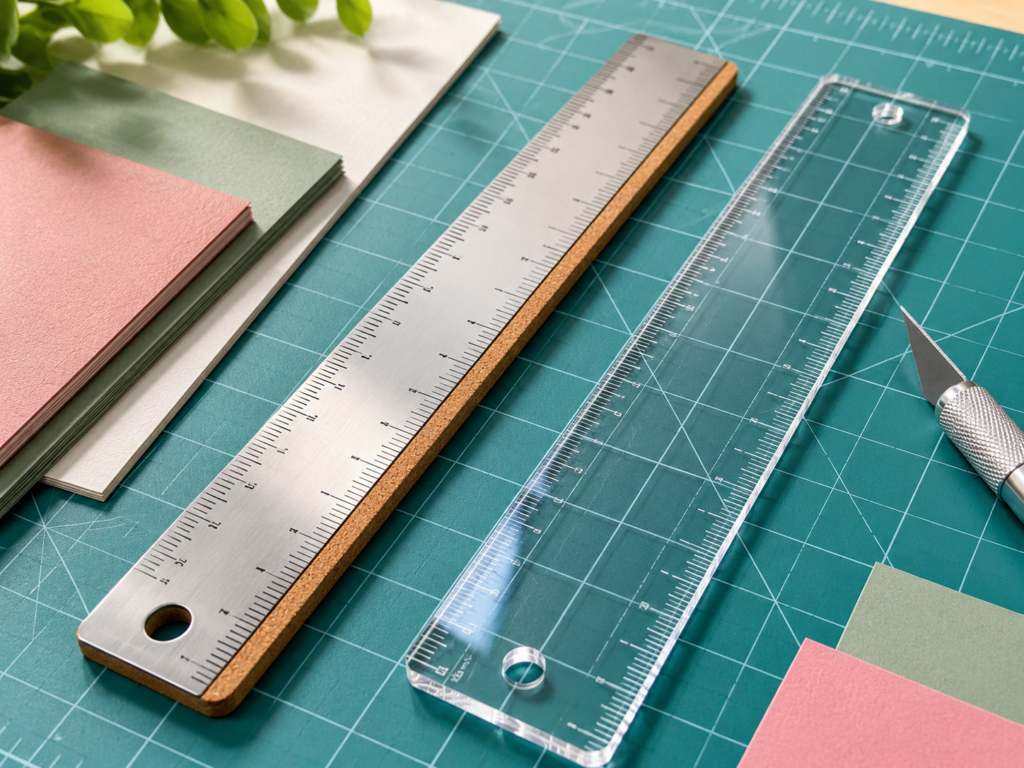
Craft Rulers: Cork-Backed Metal vs Clear Acrylic for Cutting
A cork-backed metal ruler offers a stable edge for knife work; clear acrylic is useful for aligning marks but should not be assumed safe against a blade.
A cork-backed metal ruler offers a stable edge for knife work; clear acrylic is useful for aligning marks but should not be assumed safe against a blade.
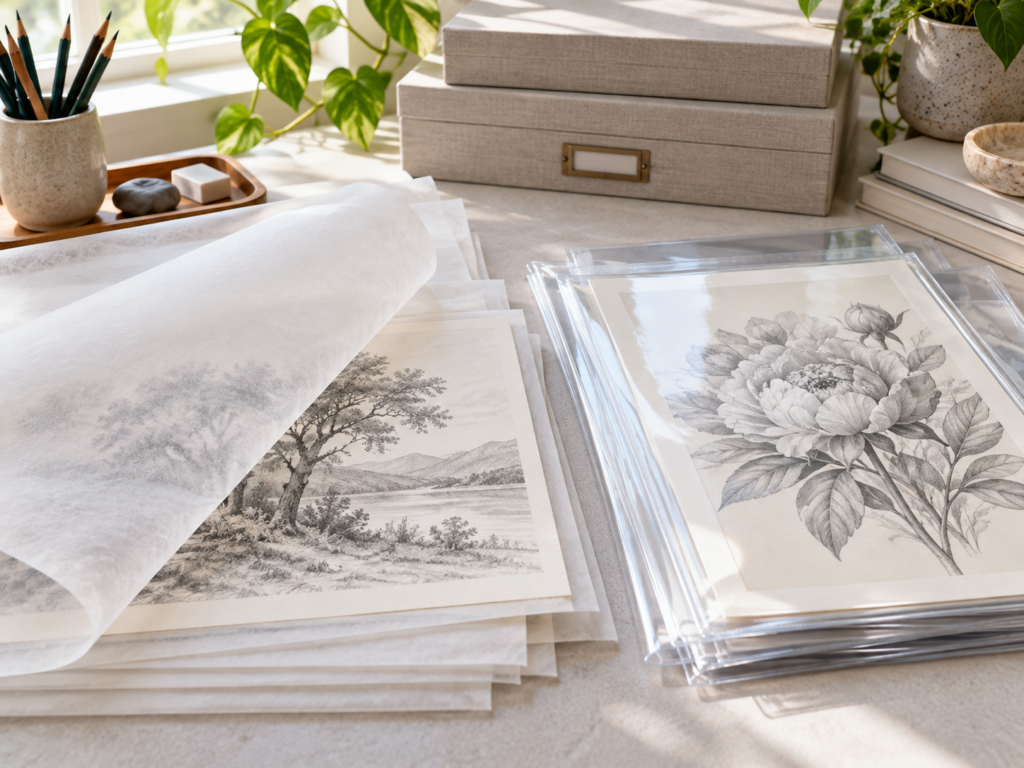
Glassine interleaving is useful for separating dry drawings; clear sleeves protect from handling and dust when the materials are genuinely archival-safe.
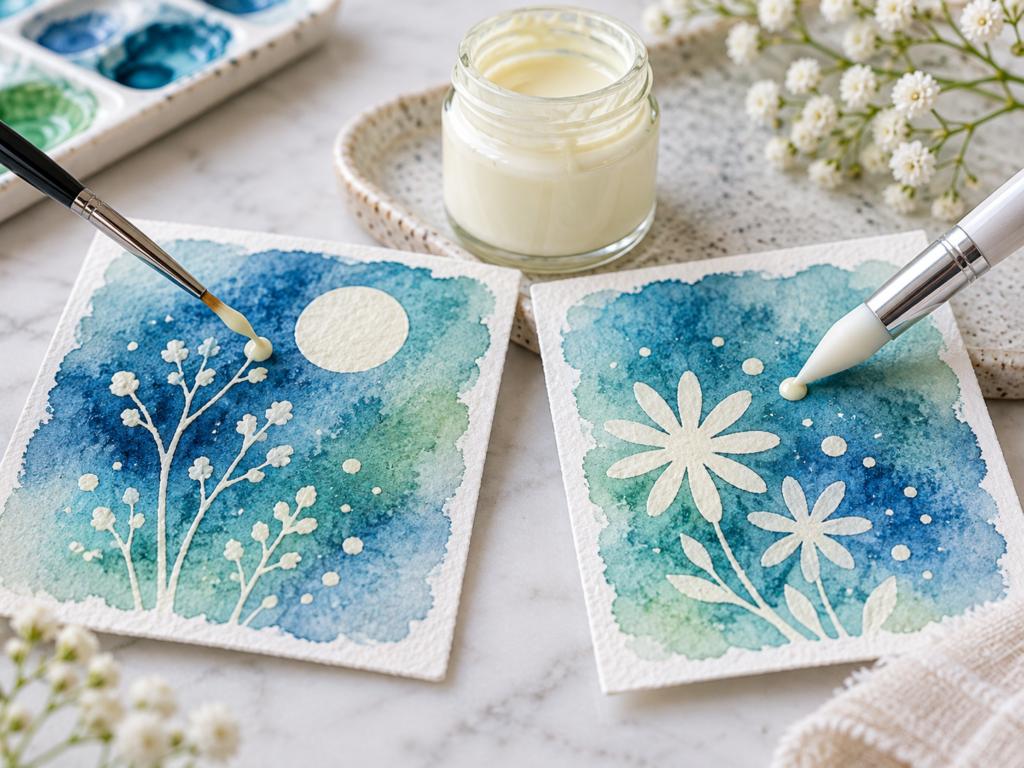
A dedicated inexpensive brush can draw flowing masked lines; a silicone tip is easier to clean and works well for small controlled marks.
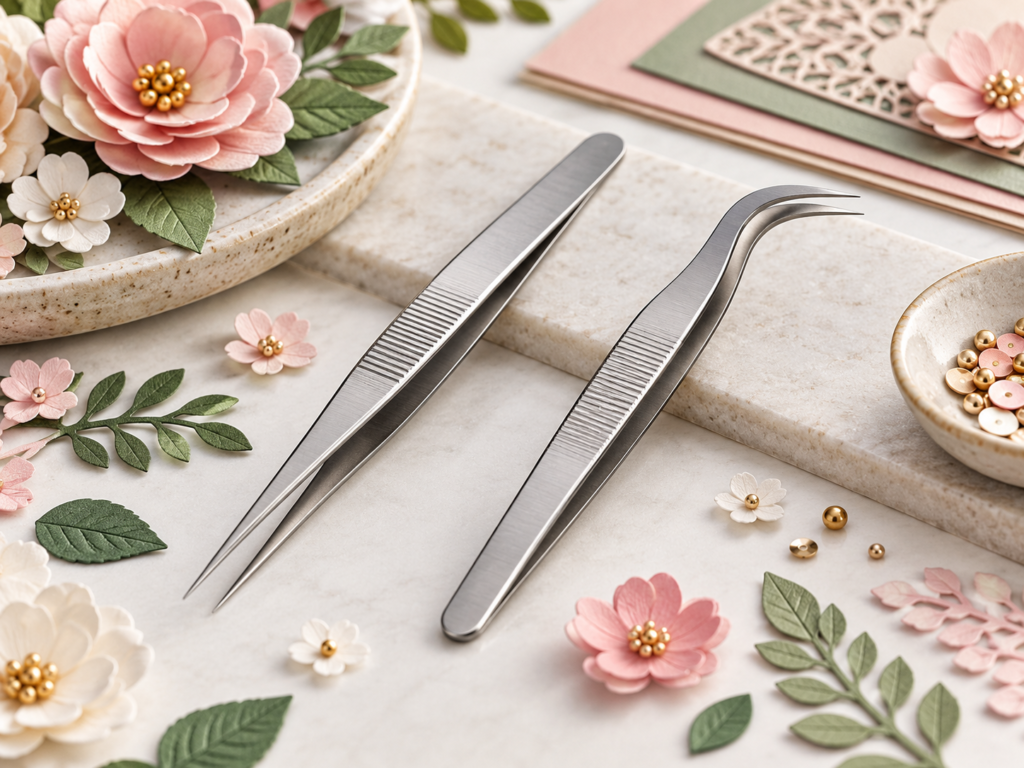
Straight tips suit precise front-facing pickup; curved tips improve access around layered embellishments and tight angles.
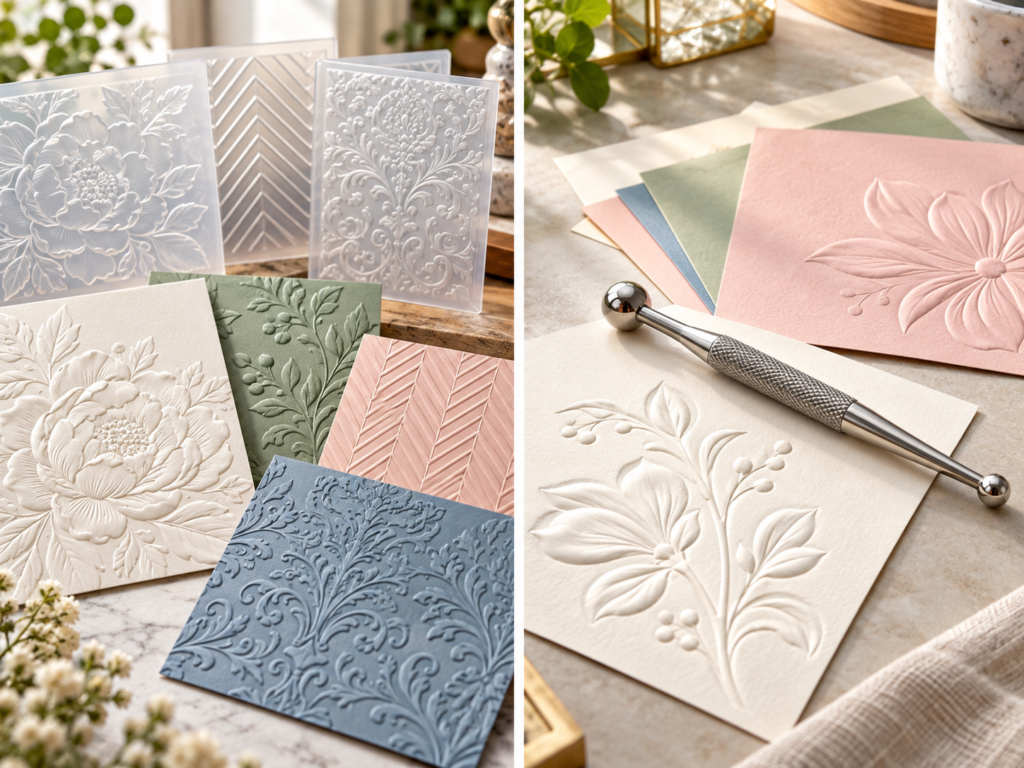
Embossing folders produce repeatable patterns if you own a compatible machine; a hand stylus costs less for occasional custom raised details.
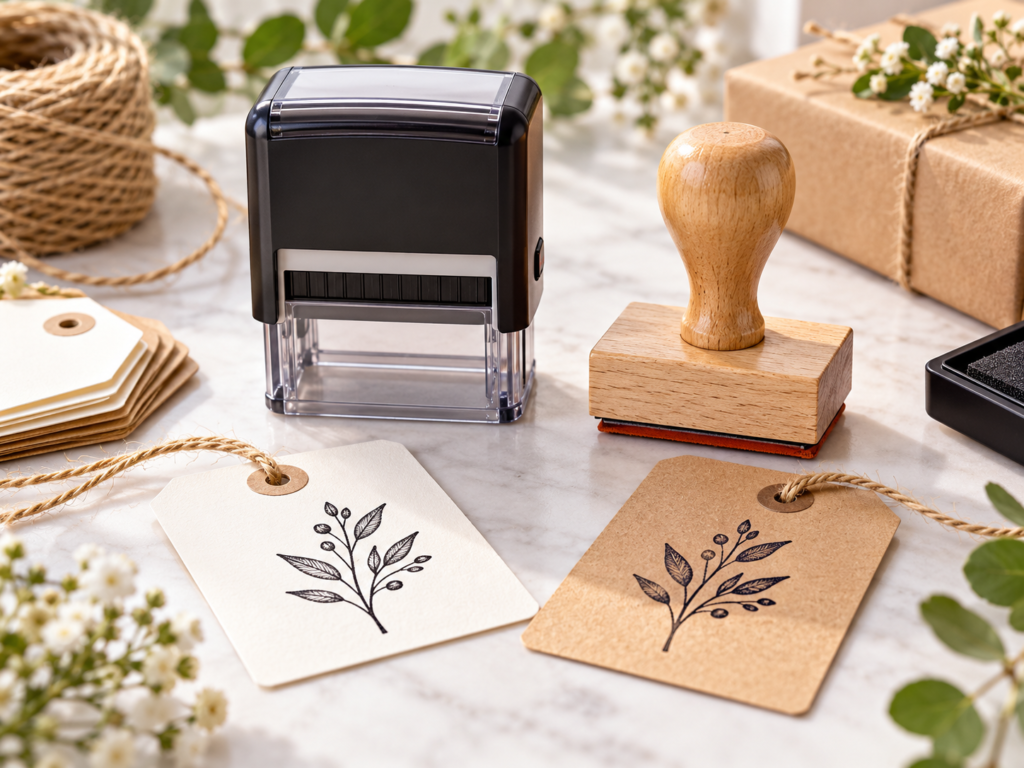
Self-inking stamps suit repeated identical labels; traditional wood-mounted stamps offer flexible ink-pad choice for occasional decorative work.
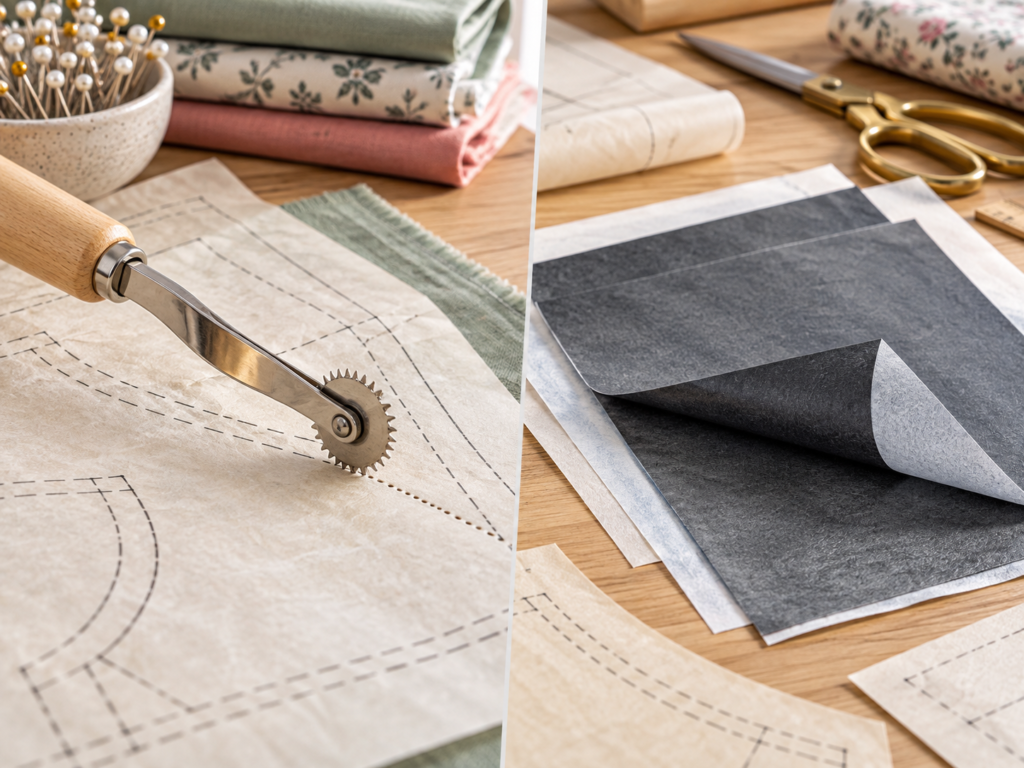
A tracing wheel works well for following long pattern lines with the right transfer medium; graphite transfer sheets are easier for many short motifs and hand-drawn outlines.
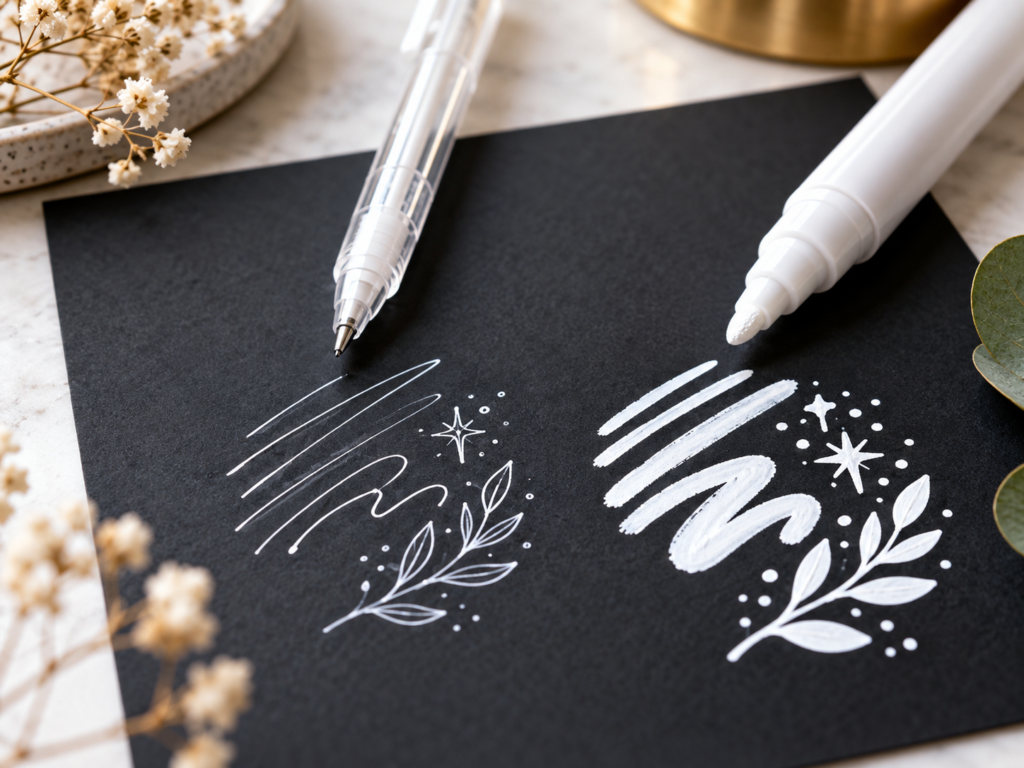
A white gel pen is a controlled tool for tiny highlights on suitable paper; an opaque paint marker covers larger marks but can overwhelm fine details.
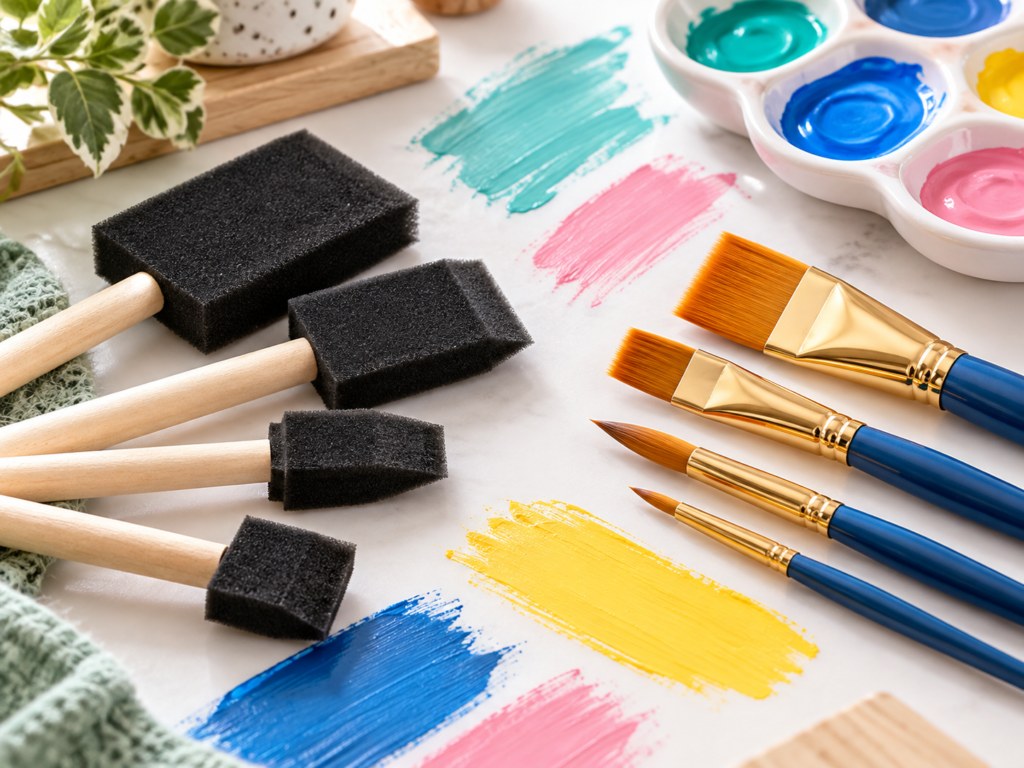
Foam brushes are handy for broad inexpensive coverage; bristle brushes give more control for edges, textures and repeated use.
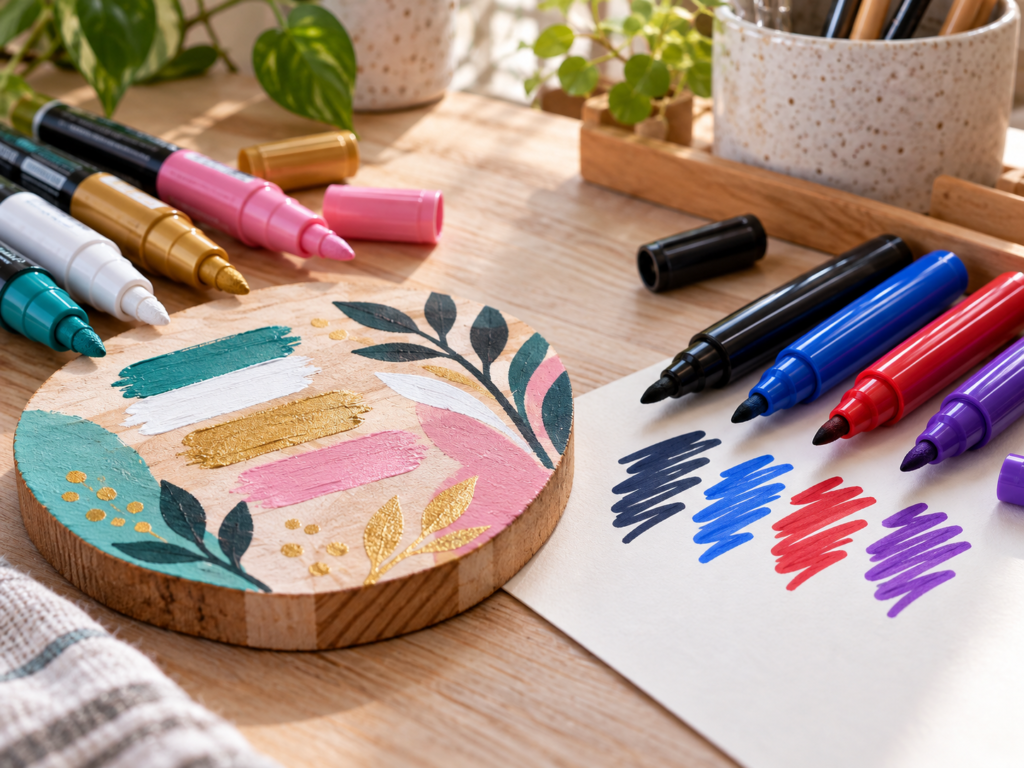
Paint markers can give opaque coverage on compatible primed craft surfaces; permanent markers are often simpler for fine outlines, but colour and permanence depend on the surface.