How I Organize My Pen Collection So I Actually Use It
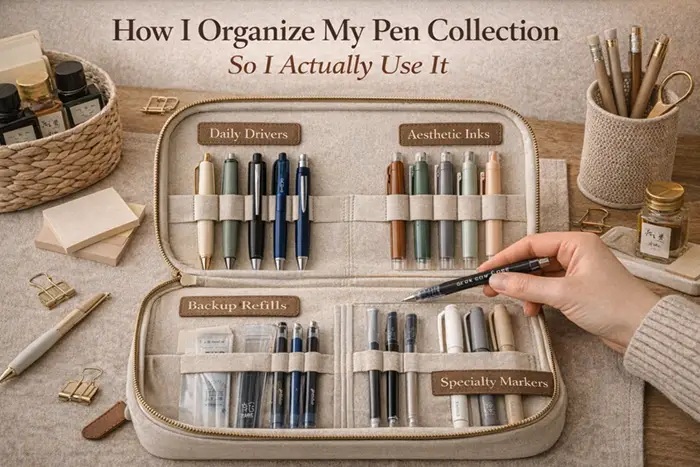
There was a point where I owned more pens than I could realistically justify — and somehow still reached for the same two every day. The rest lived in a cluttered pouch, half-forgotten, tangled together in a colorful but chaotic mess. It wasn’t that I didn’t like them. I just couldn’t see them clearly enough to use them.

Organization changed that.

Not in a hyper-productive, label-everything kind of way. Just a simple structure that made each pen easier to reach for. Once I stopped storing them randomly and started grouping them by purpose, my writing habits shifted almost immediately.

The first category I created was “daily drivers.” These are the pens that live at the front of my case. Smooth ink. Reliable flow. Neutral colors. The ones I grab without thinking. They deserve easy access because they carry most of the work. When they’re buried under specialty markers, I default to whatever’s closest instead of what feels best.

Behind them sit what I call “aesthetic inks.” These are the dusty browns, soft blues, muted greens — the colors I use when journaling slowly or marking something meaningful. They don’t need to be front and center, but they need visibility. When I can see them, I’m more likely to switch colors intentionally instead of writing everything in default black.

Then there are backup refills. This was the biggest upgrade. Instead of tossing refills into a drawer somewhere, I keep them in a small zip compartment inside the case. When a pen runs dry, I don’t abandon it — I refill it. That small shift keeps favorites in rotation longer and prevents clutter from building up.

Finally, specialty markers. Highlighters. Brush pens. Metallic inks. These don’t belong in the same space as daily tools. I moved them to a secondary pouch that sits beside my desk instead of inside my main pen case. That separation matters. It reduces visual noise. It keeps the primary case focused.

I didn’t realize how much I needed this until I slowed down long enough to use it.

The real benefit isn’t neatness. It’s accessibility. When everything has a loose category, I use more of what I already own. I rotate colors. I experiment. I refill instead of replace.

And maybe most importantly — I stop buying duplicates because I can finally see what I have.

Pen collections don’t need to be minimalist to be functional. They just need a little structure.


📦 Buy on Amazon USA

Large Capacity Canvas Pen Case with Compartments

MZebra Sarasa Clip Gel Pens (Assorted Colors)

uni Jetstream Ballpoint Pens (Black & Blue Set)

Zebra Mildliner Highlighters (Muted Set)

Universal Pen Refills (Multi-Pack)


🌿 Final Thoughts

Organizing your pens isn’t about aesthetics alone. It’s about reducing friction. When tools are easy to find, they’re easier to use.

A simple system — daily drivers, aesthetic inks, backups, specialty tools — keeps your collection intentional instead of overwhelming. It turns a pile into a toolkit.

And once your pens are organized, something unexpected happens: writing feels lighter. Not because you bought more — but because you’re finally using what you already have.


📦 Buy on Amazon Canada

Large Capacity Canvas Pen Case with Compartments

Zebra Sarasa Clip Gel Pens (Assorted Colors)

uni Jetstream Ballpoint Pens (Black & Blue Set)
Zebra Mildliner Highlighters (Muted Set)

Universal Pen Refills (Multi-Pack)

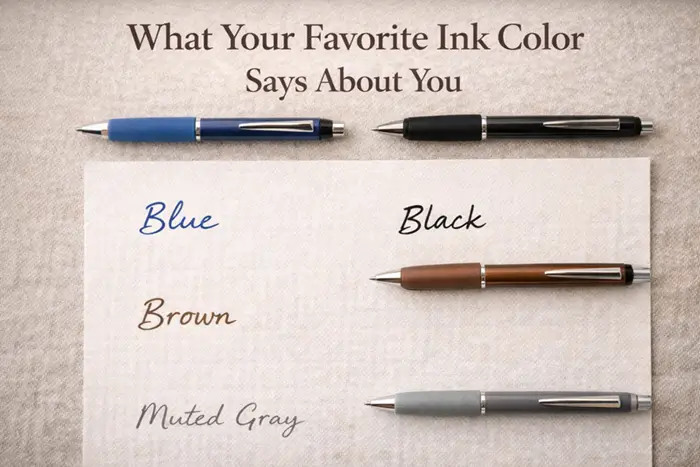
What Your Favorite Ink Color Says About You

I used to think ink color was purely practical. Blue for everyday writing. Black for official things. That was it. But the more I paid attention to what I reached for — especially when no one was telling me what to use — the more I realized color isn’t random. It reflects mood. Energy. Even identity in subtle ways.

When you choose an ink color, you’re choosing tone before you’ve written a single word.

Blue ink feels open. Approachable. It carries clarity without feeling severe. When I write in blue, my thoughts feel conversational. Less formal. It’s the color I use when I want space to think without pressure. It invites flow. Blue says, “This is allowed to evolve.”

Black ink is decisive. Structured. There’s weight to it. When I journal in black, my handwriting sharpens slightly. My sentences feel more intentional. It’s grounding — especially on days when I need clarity. Black doesn’t whisper. It anchors. But in the wrong mood, it can feel a little rigid.

Brown ink surprised me. It’s softer than black but more grounded than blue. There’s warmth in it — a subtle vintage tone that makes the page feel calmer. When I use brown, I slow down naturally. It feels reflective. Thoughtful. Less rushed. Brown says, “Take your time.”

Muted gray ink is the quietest of them all. It almost blends into the page. I reach for it when my mind feels overstimulated. It reduces contrast. Lowers visual intensity. Writing in gray feels private, gentle, less performative. I didn’t realize how much I needed this until I slowed down long enough to use it.

What fascinates me is how the same words feel different depending on the ink. The page doesn’t change dramatically — but the mood does. And mood shapes momentum.

There’s no “right” color. But there is a right color for the moment you’re in. Sometimes I want clarity. Sometimes softness. Sometimes warmth. The pen becomes a small emotional adjustment tool.

If you’ve never paid attention to the ink you use, try switching it intentionally for a week. Notice how your handwriting shifts. Notice how your pace changes. Notice how you feel when you open the notebook.

You might find that your favorite color says more about your current season of life than you expected.


📦 Buy on Amazon USA

uni Jetstream Ballpoint Pens (Black, Blue, Brown Set)

Zebra Sarasa Clip Gel Pens (Assorted Colors)

Pilot G2 Gel Pens (Blue & Black Set)

Muji-Style Gel Pens (Muted Gray Pack)


🌿 Final Thoughts

Ink color isn’t just aesthetic. It subtly shapes tone, energy, and even the way your thoughts land on the page.

Blue offers openness. Black provides structure. Brown brings warmth. Gray softens intensity. None are better — they simply support different states of mind.

Next time you sit down to write, pause for a second before choosing your pen. The color you reach for might be telling you exactly what you need that day.


📦 Buy on Amazon Canada

uni Jetstream Ballpoint Pens (Black, Blue, Brown Set)

Zebra Sarasa Clip Gel Pens (Assorted Colors)

Pilot G2 Gel Pens (Blue & Black Set)

Muji-Style Gel Pens (Muted Gray Pack)

How to Create a Cozy Writing Corner in a Small Apartment

Winter in an apartment can feel smaller than it actually is. The walls seem closer. The windows darker. I used to think I needed a whole separate room to have a “real” writing space — a desk by a big window, shelves lined with books, maybe even a fireplace crackling somewhere in the background. But the truth is, I didn’t need more square footage. I needed a corner that felt intentional.

The first shift was light. Overhead lighting can be harsh and flatten everything. I brought in a warm desk lamp instead — something with a soft glow that pools onto the page rather than flooding the room. The difference was immediate. The light felt like a quiet invitation instead of a spotlight. In the evenings especially, that warmth creates a little pocket of calm inside the apartment.

Then came the lap desk. In a small space, flexibility matters. A simple wooden lap desk let me move between the couch and the corner chair without losing structure. I could wrap up in a throw blanket, settle in, and still have a steady surface for writing. It made journaling feel less like sitting “at work” and more like leaning into something comforting.

I added a small journal basket beside the chair — nothing elaborate, just a woven container holding my current notebook, a couple of smooth pens, and a muted highlighter. Having everything within reach changes the friction level. If I have to search for a pen, I’m less likely to start. When it’s right there, I sit down more often.

A simple pen holder on a nearby shelf keeps the extras organized. I rotate ink colors with the seasons — deeper browns and soft blues during colder months. It sounds aesthetic, but it’s more about mood than appearance. The tone of the tools subtly shapes how the page feels.

And then there’s the blanket. A soft throw isn’t just decoration. It signals comfort. I didn’t realize how much I needed this until I slowed down long enough to use it. Wrapping up before opening my notebook creates a transition — from the day’s noise to a quieter headspace.

The corner doesn’t need to be large. It needs to feel claimed. Even in a small apartment, that claim makes a difference. A lamp. A lap desk. A basket. A few chosen tools. Suddenly, the space feels less like “just where you live” and more like somewhere you create.

Winter doesn’t have to shrink your world. Sometimes it just asks you to build a warmer one inside.


📦 Buy on Amazon USA

Adjustable Warm LED Desk Lamp

Bamboo Lap Desk with Cushion Base

Woven Storage Basket (Medium Size)

Zebra Sarasa Clip Gel Pens (Fine Point)

Leuchtturm1917 Medium A5 Notebook (Ivory Paper)

Soft Knit Throw Blanket (Neutral Tone)


🌿 Final Thoughts

Cozy isn’t about excess. It’s about intention. A small apartment can hold a meaningful writing ritual if you carve out even a modest corner and treat it with care.

The right light softens the room. A stable surface invites you to sit longer. A basket of ready tools lowers resistance. None of it is complicated — but together, it creates momentum.

You don’t need more space to write. You just need a corner that feels like it’s waiting for you.


📦 Buy on Amazon Canada

Adjustable Warm LED Desk Lamp

Bamboo Lap Desk with Cushion Base

Woven Storage Basket (Medium Size)

Zebra Sarasa Clip Gel Pens (Fine Point)

Leuchtturm1917 Medium A5 Notebook (Ivory Paper)

Soft Knit Throw Blanket (Neutral Tone)

The Most Comfortable Pens for Long Writing Sessions

There’s a particular kind of frustration that comes from wanting to write — and feeling your hand give up before your thoughts do. I’ve had afternoons where the ideas were flowing, but my fingers started tightening, my wrist felt heavy, and my grip slowly shifted from relaxed to strained. That quiet ache can make you stop earlier than you want to.

Hand fatigue isn’t dramatic. It builds slowly. And the tools you use matter more than most people realize.

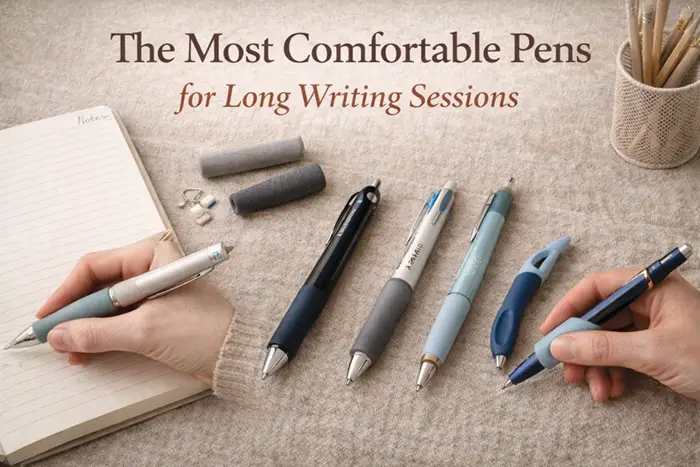
The first change I made was switching to pens with thicker barrels. Slim, lightweight pens look elegant, but they require more grip tension. When I moved to a slightly wider body with a soft grip, the difference was immediate. My fingers didn’t need to clamp down as hard. The pen rested in my hand instead of being pinched.

Ink flow plays a role too. If a pen skips or drags, you subconsciously press harder. That pressure adds up over pages. Smoother gel or hybrid inks reduce resistance, which means less force. The motion becomes gliding rather than pushing. It’s subtle — but over a long session, it changes everything.

I also experimented with grip cushions — small silicone or foam sleeves that slide over standard pens. They look simple, but they widen the grip area and distribute pressure more evenly across your fingers. For longer journaling sessions, that extra padding makes writing feel sustainable rather than taxing.

Paper matters here as well. Rougher paper increases friction, which increases effort. When I switched to smoother, slightly thicker paper, my handwriting relaxed. I didn’t have to fight the surface. I didn’t realize how much I needed this until I slowed down long enough to use it.

What surprised me most is how quickly discomfort can shape creativity. When my hand hurts, I rush. When the tools feel comfortable, I linger. I write more thoughtfully. I don’t count the pages.

Comfortable writing tools don’t make you more disciplined. They remove a barrier. And sometimes removing friction is more powerful than adding motivation.


📦 Buy on Amazon USA

Pilot Dr. Grip Center of Gravity Ballpoint Pen

uni Jetstream SXN-150 Smooth Hybrid Ink Pen

Zebra Sarasa Clip Gel Pens (Fine Point)

Foam Pencil & Pen Grip Cushions (Assorted Pack)

Leuchtturm1917 Medium A5 Notebook (Ivory Paper)


🌿 Final Thoughts

Writing should feel sustainable. If your hand tires quickly, it doesn’t mean you lack focus — it may simply mean your tools aren’t supporting you.

A thicker barrel. A smoother ink. A softer grip. These are small adjustments, but they protect your energy. Over time, that protection allows you to write longer without thinking about discomfort.

The goal isn’t to push through fatigue. It’s to design a setup that lets you keep going comfortably — and enjoy the process while you do.


📦 Buy on Amazon Canada

Pilot Dr. Grip Center of Gravity Ballpoint Pen

uni Jetstream SXN-150 Smooth Hybrid Ink Pen

Zebra Sarasa Clip Gel Pens (Fine Point)

Foam Pencil & Pen Grip Cushions (Assorted Pack)

Leuchtturm1917 Medium A5 Notebook (Ivory Paper)

I Spent 24 Hours Using Only Paper Instead of My Phone — Here’s What Happened

It started as a quiet experiment. Not dramatic. Not rebellious. Just a simple decision: one full day without using my phone for planning, organizing, or note-taking. No calendar app. No reminders. No quick voice memos. Just paper.

I didn’t expect it to feel so… different.

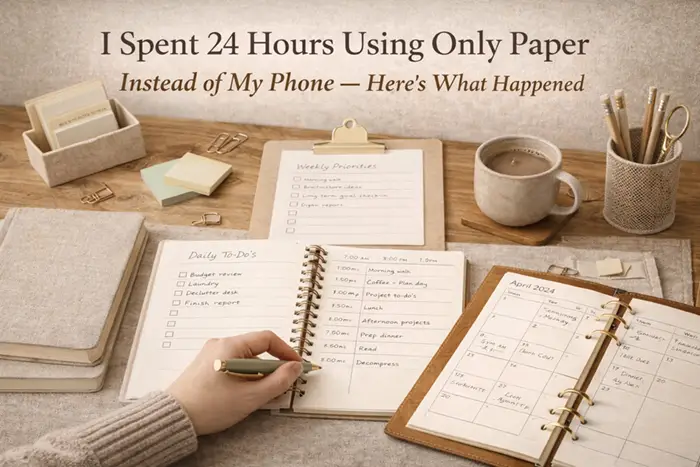
The night before, I set up a notebook on my desk. Creamy pages. A smooth pen resting across the top. I wrote tomorrow’s date at the corner and listed the basics — appointments, errands, a few loose priorities. It felt slower than typing. But also more intentional. When you write something by hand, you have to choose the words carefully. There’s no backspace.

Morning arrived and I instinctively reached for my phone. Habit is fast. Paper is patient. I caught myself and turned back to the notebook instead. There was something grounding about seeing the day laid out physically in front of me. No notifications blinking. No shifting screens. Just ink.

Throughout the day, I noticed how often I normally interrupt myself. Quick checks. Small scrolls. Micro-distractions that don’t feel disruptive but quietly fracture attention. With paper, the friction of switching tasks was higher. If I wanted to add something, I had to open the notebook, find the page, write it down. That small pause created space to reconsider whether it was important at all.

There were inconveniences, of course. I couldn’t set automatic reminders. I had to glance at my notebook more deliberately. But the tradeoff was clarity. My thoughts felt less scattered. Planning felt tangible. When I crossed something off, I felt the scratch of the pen. That physical act carried more satisfaction than tapping a screen.

Mid-afternoon, I sat at my desk with a muted highlighter and reorganized the remaining tasks. The motion was slow. Gentle. I didn’t realize how much I needed this until I slowed down long enough to use it.

By evening, something unexpected had happened. The day felt fuller. Not busier — fuller. I remembered moments more clearly. I felt less pulled. There was no constant digital hum in the background.

Was it perfect? No. Digital tools are efficient for a reason. But the experiment revealed something important: I don’t need to live entirely on one side. Paper doesn’t have to replace technology. It can balance it.

The “No Digital” day wasn’t about rejecting my phone. It was about remembering that planning can be tactile. That focus can be quiet. That sometimes the most productive thing you can do is reduce input instead of increasing output.


📦 Buy on Amazon USA

Leuchtturm1917 Medium A5 Notebook (Ivory Paper)

Moleskine Classic Notebook (Ruled)

Zebra Sarasa Clip Gel Pens (Fine Point)

Zebra Mildliner Highlighters (Muted Set)


🌿 Final Thoughts

A single day won’t reset your habits entirely. But it can reveal them. And sometimes awareness is enough to change how you move forward.

Paper slows you down in a way that feels inconvenient at first — and calming later. It removes the background noise and replaces it with something steady. Tangible.

You don’t have to abandon digital tools. But giving yourself one quiet, paper-only day might remind you that focus isn’t something you download. It’s something you cultivate.


📦 Buy on Amazon Canada

Leuchtturm1917 Medium A5 Notebook (Ivory Paper)

Moleskine Classic Notebook (Ruled)

Zebra Sarasa Clip Gel Pens (Fine Point)

Zebra Mildliner Highlighters (Muted Set)

The Calming Stationery I Reach for When My Mind Won’t Slow Down

There are evenings when my thoughts won’t line up neatly. They loop. They overlap. They hum louder than they should. On those days, I’ve learned not to fight it with more screens or more noise. I reach for paper instead — not just any paper, but the kind that feels steady in my hands.

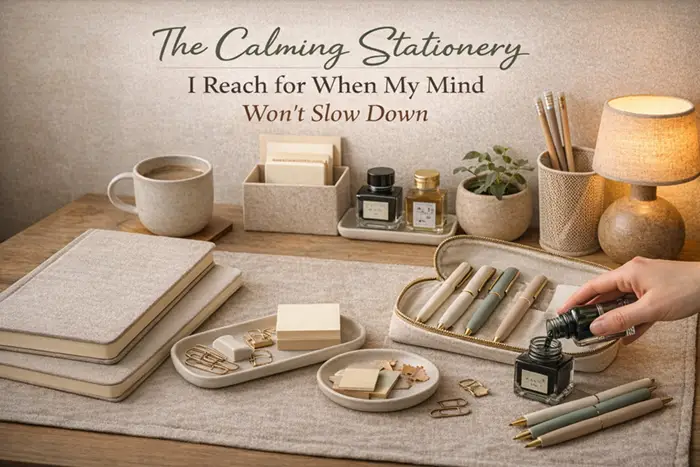
I used to think stationery was neutral. Functional. Interchangeable. But I’ve noticed something over time: certain tools calm me down faster than others. A smooth pen that doesn’t skip. Thick paper that doesn’t buckle under ink. Colors that feel muted instead of urgent. It sounds small — but small sensory cues shape how your nervous system responds.

The first thing I reach for is a pen with effortless glide. If the tip drags or scratches, my thoughts get sharper. When the ink flows smoothly, my handwriting softens. There’s less tension in my grip. My breathing slows without me consciously trying. It becomes a physical release as much as a mental one.

Paper weight matters more than I expected. Thin sheets that ghost or bleed through make me feel rushed, like I have to hurry before the page fails me. Thicker, creamy paper feels secure. Stable. I can press down a little harder without worrying about ruining the next page. That subtle reassurance changes how freely I write.

Then there’s color. I avoid neon when I’m anxious. I gravitate toward soft sage, dusty blue, pale lavender — tones that don’t demand attention. Even my planner pages feel gentler when the palette is calm. It’s not about aesthetic trends. It’s about lowering visual intensity. Bright contrast can feel stimulating. Muted tones feel grounding.

Sometimes I don’t even write full sentences. Just single words. Or small lines that trail off. I didn’t realize how much I needed this until I slowed down long enough to use it.

The act itself is simple: pen to paper, thoughts externalized. But when the materials cooperate instead of distract, the effect is amplified. The tools don’t solve anxiety — they create a softer landing place for it.


📦 Buy on Amazon USA

Zebra Sarasa Clip Gel Pens (Fine Point)

Leuchtturm1917 Medium A5 Notebook (Ivory Paper)

Archer & Olive Thick Paper Notebook (160gsm)

Zebra Mildliner Highlighters (Muted Set)


🌿 Final Thoughts

Calm doesn’t always come from big interventions. Sometimes it comes from sensory cues that signal safety and steadiness. Smooth ink. Sturdy pages. Gentle color. Those details create an environment where your mind can loosen its grip.

Stationery won’t replace therapy or deep rest. But it can become a small anchor — something tactile and predictable when your thoughts feel scattered.

If your mind won’t slow down, try changing the surface you write on. The shift might be quieter than you expect — and more effective than you realize.


📦 Buy on Amazon Canada

Zebra Sarasa Clip Gel Pens (Fine Point)

Leuchtturm1917 Medium A5 Notebook (Ivory Paper)

Archer & Olive Thick Paper Notebook (160gsm)

Zebra Mildliner Highlighters (Muted Set)

The 15-Minute Sunday Desk Reset That Changes Your Whole Week

Sunday evenings used to feel heavy to me. Not dramatic — just a low hum of unfinished thoughts and the quiet pressure of Monday waiting in the background. My desk would sit there cluttered from the week, pens scattered, pages half-used, sticky notes curling at the edges. Nothing catastrophic. Just messy enough to make starting again feel harder than it needed to be.

Then I started giving myself fifteen minutes.

Not to overhaul everything. Not to reorganize my entire life. Just to reset the desk.

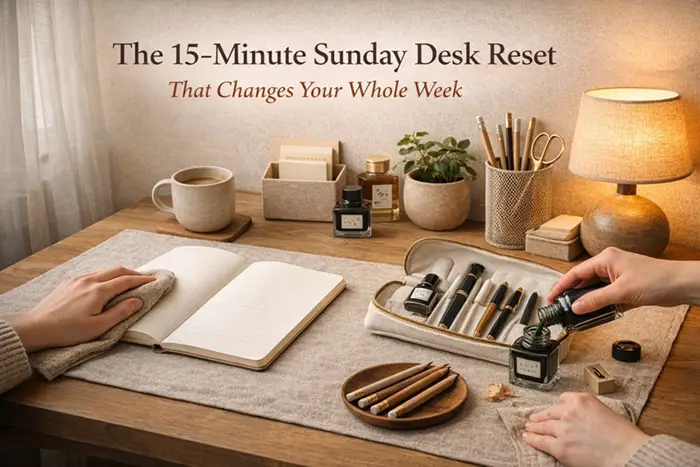
I clear the surface first. Every notebook stacked neatly. Loose papers either tucked inside or recycled. I wipe the desk slowly, almost deliberately, as if I’m erasing the mental static of the week along with the dust. The space immediately feels lighter. There’s something calming about seeing clean lines again.

Then I open my pen case. I test each pen on a scrap page — quick loops and lines. If one is running dry, it gets replaced. If the ink color feels tired, I swap it out. Sometimes I move from black ink to a deep navy or a muted brown just for the change in tone. That small shift alters the mood of my writing more than I expect. Fresh ink feels like a fresh start.

I sharpen pencils next. The quiet grind of the blade. The clean point revealed. There’s something grounding about that sound. It’s such a small, tactile act, but it signals care. Intention. A readiness to begin again.

Highlighters get lined up. Sticky tabs restocked. My main notebook moved to the center of the desk instead of buried under other things. It’s subtle staging — but it matters. I didn’t realize how much I needed this until I slowed down long enough to use it.

By the time those fifteen minutes are up, nothing dramatic has changed. My goals haven’t shifted. My responsibilities haven’t vanished. But the energy around them feels different. Monday doesn’t feel like a collision. It feels like an opening.

This ritual isn’t about perfection. It’s about signaling to yourself that your thoughts deserve a clean surface to land on.


📦 Buy on Amazon USA

Leuchtturm1917 Medium A5 Notebook (Ivory Paper)

Zebra Sarasa Clip Gel Pens (Fine Point)

Zebra Mildliner Highlighters (Muted Set)

Metal Pencil Sharpener (Dual Size)


🌿 Final Thoughts

Rituals work because they create rhythm. When something repeats gently and predictably, it lowers resistance. The Sunday desk reset isn’t productivity theater. It’s a quiet reset that makes showing up easier.

Fifteen minutes won’t transform your entire week — but it can soften the way it begins. A clean desk. Refilled pens. Sharpened pencils. Those small acts compound into calm momentum.

Sometimes the difference between dread and readiness is simply a clear space and a fresh page waiting in the center of it.


📦 Buy on Amazon Canada

Leuchtturm1917 Medium A5 Notebook (Ivory Paper)

Zebra Sarasa Clip Gel Pens (Fine Point)

Zebra Mildliner Highlighters (Muted Set)

Metal Pencil Sharpener (Dual Size)

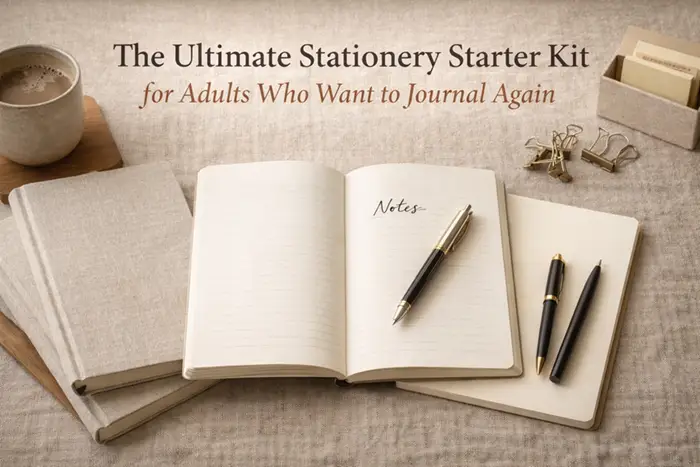
The Ultimate Stationery Starter Kit for Adults Who Want to Journal Again

There’s a certain kind of quiet that only comes from sitting down with a notebook and realizing no one is grading you anymore. No assignments. No deadlines. No red ink in the margins. Just you and a blank page. The first time I picked up a notebook again as an adult, it felt strangely vulnerable — like reopening a door I’d quietly shut years ago.

Getting back into journaling isn’t about productivity. It’s about rediscovery. The smell of paper. The slow drag of a pen across a fresh page. The small pause before the first sentence. It doesn’t need to be perfect. It just needs to feel inviting.

If you’re starting again, the key isn’t buying everything — it’s choosing a few pieces that feel intentional. A notebook with creamy, forgiving pages. Nothing overly structured. Something that welcomes messy thoughts. When the paper is too bright or too thin, I hesitate. But when it feels warm and substantial, I lean in.

A pen matters more than people admit. Too scratchy, and you stop mid-sentence. Too inky, and the page feels chaotic. A smooth gel pen or a fine ballpoint with steady flow creates rhythm. That rhythm builds momentum. You stop thinking about the tool and start thinking about the words.

A simple pencil pouch or tray helps too — not for aesthetics alone, but for ritual. When everything has a place, sitting down feels deliberate. A soft highlighter in a muted tone can mark a sentence that surprised you. A sticky tab can flag a page you want to revisit. These are small details, but they make journaling feel like something you return to, not something you squeeze in.

I didn’t realize how much I needed this until I slowed down long enough to use it.

The biggest surprise wasn’t what I wrote — it was how I felt afterward. Lighter. Clearer. Less mentally crowded. The notebook became less of a “project” and more of a quiet companion. And that shift made all the difference.


📦 Buy on Amazon USA

Leuchtturm1917 Medium A5 Notebook (Ivory Paper)

Moleskine Classic Notebook (Ruled)

Zebra Sarasa Clip Gel Pens (Fine Point)

Zebra Mildliner Highlighters (Muted Set)


🌿 Final Thoughts

Starting again as an adult carries a different kind of weight. There’s history. Hesitation. Maybe even the feeling that you should be “past” something as simple as journaling. But writing isn’t childish. It’s grounding.

The right stationery doesn’t make you a better writer — it makes you more willing to show up. And showing up is where the change happens. A smooth pen. Warm paper. A quiet corner of the day. That’s enough.

You don’t need an elaborate system. Just a small kit that makes you want to open the page again tomorrow.


📦 Buy on Amazon Canada

Leuchtturm1917 Medium A5 Notebook (Ivory Paper)

Moleskine Classic Notebook (Ruled)

Zebra Sarasa Clip Gel Pens (Fine Point)

Zebra Mildliner Highlighters (Muted Set)

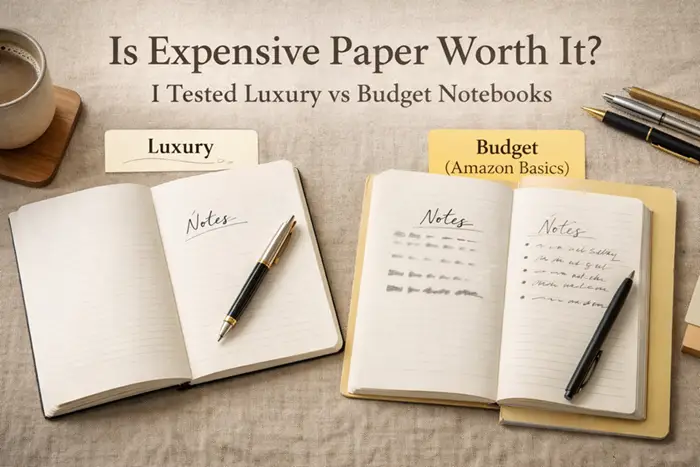
Is Expensive Paper Worth It? I Tested Luxury vs Budget Notebooks

There’s something quietly persuasive about a beautiful notebook. The weight of it. The texture of the cover. The subtle cream tone of the pages. I’ve stood in front of shelves more than once, holding a premium notebook in one hand and a budget one in the other, wondering if I’d actually feel the difference — or if I just wanted to.

So I tested it.

I bought a higher-end notebook — thick, ivory-toned pages, stitched binding, the kind that feels almost too nice to “waste” on everyday notes — and I paired it with a simple budget option. Nothing fancy. Clean. Functional. Affordable. Then I used them both the same way for a week. Morning pages. To-do lists. Random thoughts. Same pen. Same desk. Same lighting.

The first difference I noticed wasn’t dramatic — it was subtle. The premium paper had a softness to it. My pen didn’t drag. It glided. There was a gentle resistance that felt controlled, almost cushioned. The budget paper was thinner, brighter white, and just slightly more textured. Not rough — but not buttery either. It wasn’t unpleasant. Just… different.

Bleed-through was the real test. With gel pens and slightly heavier ink, the luxury notebook handled it beautifully. Minimal ghosting. No visible dots on the reverse side. The budget notebook held up surprisingly well, but under heavier strokes I could see shadowing. Not enough to ruin the page — but enough that I probably wouldn’t use both sides with wetter pens.

Texture matters more than I expected. The premium pages felt warmer in tone, easier on the eyes. Writing for longer stretches felt less tiring. The budget paper was perfectly usable, especially for quick notes or planning, but when I slowed down and wrote reflectively, I preferred the thicker stock. I didn’t realize how much I needed this until I slowed down long enough to use it.

But here’s the honest part: the difference isn’t always about quality — it’s about intention. When I picked up the luxury notebook, I wrote more carefully. I thought longer before putting words down. It felt deliberate. The budget notebook felt free. Low pressure. Messy was okay. Crossing things out didn’t sting.

So does expensive paper matter? Yes — if the sensory experience motivates you. If pen glide, tone, and minimal bleed-through genuinely improve how you feel at your desk. But if you just need a place to think, plan, and capture ideas, a budget notebook does the job more than well enough.

In the end, I realized I don’t need every notebook to be luxurious. But I do like having at least one that feels special.


📦 Buy on Amazon USA

Leuchtturm1917 Medium A5 Notebook (Ivory Paper)

Moleskine Classic Notebook (Ruled)

Amazon Basics Classic Notebook (Ruled, 240 Pages)

Zebra Sarasa Gel Pens (Fine Point)


🌿 Final Thoughts

Paper isn’t just paper when you spend time with it. It shapes how your pen moves, how your eyes rest, and how long you stay at your desk. That difference may be small — but small things add up over time.

Luxury notebooks aren’t necessary. But they can change the tone of your writing sessions in ways that are hard to quantify and easy to feel. Budget notebooks, on the other hand, remove hesitation. They give you permission to be imperfect.

Maybe the real answer isn’t choosing one over the other. Maybe it’s knowing when you want softness and when you want freedom — and keeping both within reach.


📦 Buy on Amazon Canada

Leuchtturm1917 Medium A5 Notebook (Ivory Paper)

Moleskine Classic Notebook (Ruled)

Amazon Basics Classic Notebook (Ruled, 240 Pages)

Zebra Sarasa Gel Pens (Fine Point)

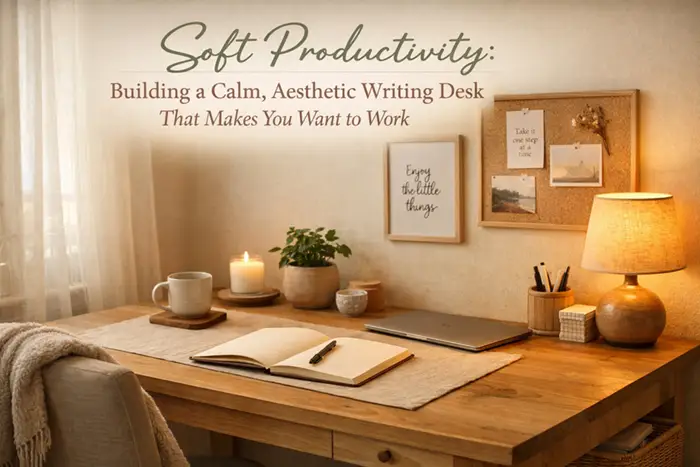
Soft Productivity: Building a Calm, Aesthetic Writing Desk That Makes You Want to Work

There was a time when my desk felt like a command center — sharp lighting, harsh lines, stacked reminders of everything I hadn’t finished. It worked, technically. But it didn’t feel good. Lately, I’ve been drawn toward something softer. A desk that invites me in instead of demanding output. A space that whispers instead of shouts. Soft productivity isn’t about doing less — it’s about creating an environment that feels gentle enough to return to every day.

Muted highlighters were the first shift. Not neon. Not loud. Just subtle washes of dusty rose, sage, pale lavender. When I underline something now, it doesn’t scream for attention — it glows quietly. Pair that with a creamy paper notebook, the kind where the pages are warm rather than stark white, and the whole experience changes. The pen glides differently. The contrast is easier on the eyes. The page feels inviting, not intimidating.

Lighting might be the biggest transformation. I swapped a bright overhead bulb for a warm desk lamp that pools light onto the page instead of flooding the room. The edges of the desk fade softly into shadow. It creates a small world — just me, the paper, and the task at hand. There’s something about warm light that slows your breathing without you noticing. It makes the work feel less urgent and more intentional.

Pastel planners complete the atmosphere. Soft covers, rounded corners, layouts that don’t overwhelm with rigid grids. Instead of packing every square with obligations, I leave space. Margins. Breathing room. The goal isn’t to optimize every minute. It’s to create a rhythm I can sustain. I didn’t realize how much I needed this until I slowed down long enough to use it.

Soft productivity doesn’t mean you stop caring about getting things done. It means you design a space that makes you want to sit down again tomorrow. And the next day. And the next.


📦 Buy on Amazon USA

Zebra Mildliner Double-Ended Highlighters (Muted Set)

Leuchtturm1917 Medium A5 Notebook (Ivory Paper)

Simple Warm LED Desk Lamp (Adjustable Brightness)

Papier Pastel Daily Planner


🌿 Final Thoughts

A desk doesn’t need to look dramatic to be effective. Sometimes the quietest setups are the ones that last. Soft tones, warm light, creamy paper — these details don’t shout for attention, but they subtly shape how you feel when you sit down to work.

What surprised me most is how much resistance faded when the space felt kinder. I stopped negotiating with myself about starting. I simply sat down. That alone felt like progress.

If productivity has started to feel heavy, maybe the solution isn’t pushing harder. Maybe it’s softening the environment around you — and letting that gentle shift carry the momentum forward.


📦 Buy on Amazon Canada

Zebra Mildliner Double-Ended Highlighters (Muted Set)

Leuchtturm1917 Medium A5 Notebook (Ivory Paper)

Simple Warm LED Desk Lamp (Adjustable Brightness)

Papier Pastel Daily Planner