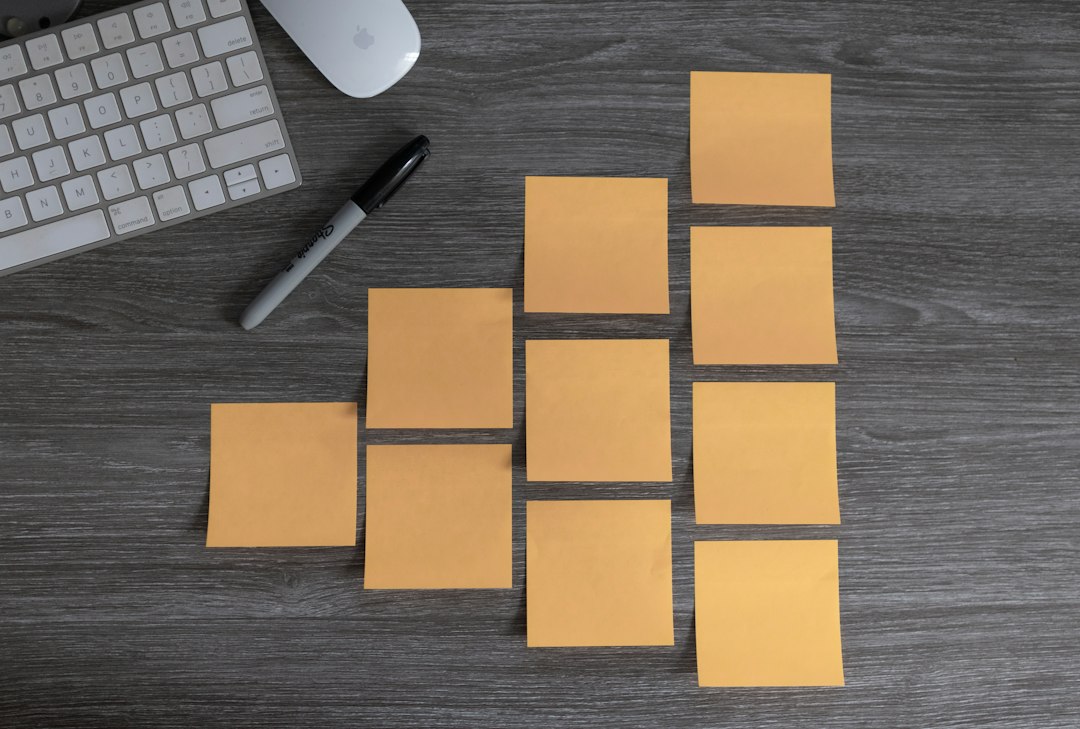
Quick verdict: Sticky notes are great for temporary visual reminders and moving tasks around a board. Index cards are better for portable flashcards, reusable reference stacks and ideas you intend to keep. A combination can work, but buying both in bulk is unnecessary until you know your system.
A task list on a monitor, a study deck in a pocket and a storyboard on a wall each require different stationery. Adhesive, card stiffness and reusability are practical differences that deserve more attention than pretty colours.
At a Glance
| Option | Typical buyer |
|---|---|
| sticky notes | Buy when you need this format’s particular convenience |
| index cards | Buy when the second format solves your main limitation |
sticky notes: Benefits and Limitations
Adhesive notes attach to desks, books and planning surfaces without extra clips. Their removable nature makes them useful for prioritization: shift a note between ‘to do’, ‘doing’ and ‘done’ as plans change. Adhesive can weaken with repeated moves or leave traces on delicate surfaces; not all brands and finishes behave alike.
Who should buy: People who value its particular advantages. Who should skip: Anyone whose primary use needs the second format’s strengths.
index cards: Benefits and Limitations
Index cards provide a firmer writing surface and can be shuffled, sorted and carried as a deck. Ruled cards work well for facts, vocabulary and meeting prompts; blank cards offer more freedom for diagrams. Since ordinary cards lack adhesive, you’ll need a board, holder or clip to display them vertically.
Who should buy: Readers whose requirements match the advantages above. Who should skip: Those who would pay more for capabilities they do not use.
Common Mistakes to Avoid
Do not attach adhesive notes to valuable paper, painted walls or fragile finishes without a surface test. Don’t use a giant card deck as a substitute for reviewing: divide information into small questions and practise recalling answers rather than reading cards passively.
Buying Checklist
Compare note size, adhesive strength, paper opacity, card thickness, ruling and storage options. For studying, prioritize cards that are easy to shuffle and write on both sides. For visual planning, choose adhesive notes large enough to read at arm’s length.
Is the Upgrade Worth It?
Spend more for reliable re-stick performance on an approved surface or durable flashcards that survive frequent handling. If you only need a reminder next to the laptop, budget sticky notes are fine. Digital reminders may be more appropriate for important time-sensitive obligations.
FAQ
Can sticky notes work as flashcards?
Yes, but they curl and wear more easily than sturdier cards. They’re better for a few short-lived prompts.
Are index cards better for memorization?
The card format can support retrieval practice, but the method matters more than the material. Frequent self-testing beats rereading.
Related Reading
Our related guide to book darts versus sticky page flags covers another useful buying decision.
Final Verdict
Sticky notes win for movable, visible tasks. Index cards win for physical study decks and long-lived ideas. Pick one that fits the habit you will maintain.
Shop the Options — USA and Canada
Choose your country and the option that fits your needs.
Compare sticky notes — Amazon USA Compare sticky notes — Amazon Canada
Compare index cards — Amazon USA Compare index cards — Amazon Canada
Affiliate disclosure: Scribblet may receive a commission on qualifying Amazon purchases through U.S. and Canadian affiliate links, at no extra cost to the reader. Research-based guidance; no firsthand testing is claimed.