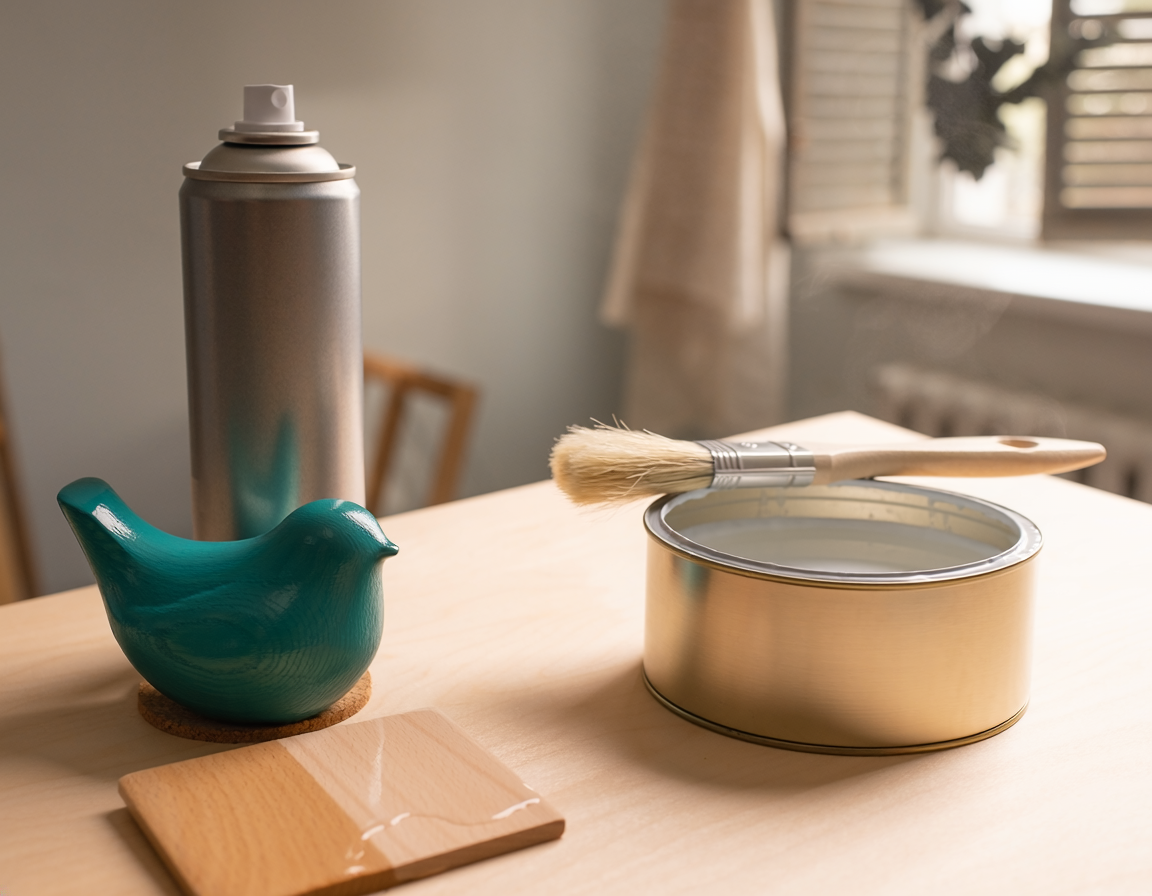
Quick verdict: Brush-on water-based coatings are usually more manageable for small indoor projects; sprays can help with hard-to-reach detailed surfaces when used safely.
This guide compares spray acrylic varnish and brush-on acrylic varnish by real project needs. It is researched buying guidance, not a claim that we have personally tested a specific product.
What Actually Changes Between Them?
spray acrylic varnish: Spray application can produce a thin even coat on textured or intricate objects.
brush-on acrylic varnish: Brush-on varnish offers controlled placement without aerosol overspray.
The better option depends on the material, frequency of use, desired finish and the tools already in your craft drawer. Do not choose solely because a marketplace listing looks more professional.
Who Should Buy Each Option?
Choose spray acrylic varnish if you want intricate texture with safe spray setup. Choose brush-on acrylic varnish for flat crafts and precise indoor application. If this is a one-off project, try your existing supplies first and spend money only on a limitation you can clearly name.
Materials, Compatibility and Safety
Spray products need manufacturer-specified ventilation and protective precautions. Finish compatibility, recoat time and yellowing resistance vary by product.
Double-check official manufacturer instructions for the precise product, and prioritize the maker’s label over social-media demonstrations. Different formulations and versions can perform very differently even when the packaging looks similar.
A Small Test Before Buying a Large Kit
Do not varnish uncured work. Test on scrap and follow directions for coat thickness, humidity and surface preparation.
Record whether the result is even, whether cleanup is reasonable, and whether the project still looks right after the stated drying or curing period. A small sample is a better decision tool than speculative ratings.
When Is an Upgrade Worth Paying For?
Pay more if the better tool clearly improves precision, time, ease of handling or finish on work you repeat. If not, an inexpensive single item is better value than a premium multipack. Consider shipping, replacement consumables, storage and any special equipment required.
Buying Checklist
- Confirm the model and intended materials in the official listing.
- Check size, product compatibility, safety warnings and instructions.
- Compare the real final price including accessories, shipping and taxes.
- Check multiple independent ownership experiences for repeated problems.
- Choose the smallest amount needed for your next project.
Related Scribblet Reading
For cutting and layout work, see our craft ruler comparison; it covers another common question about selecting practical tools instead of simply buying a larger kit.
Final Winner and Value Verdict
Brush-on water-based coatings are usually more manageable for small indoor projects; sprays can help with hard-to-reach detailed surfaces when used safely. The winner is the product that solves your actual project problem at the lowest sensible total cost—not necessarily the more expensive listing.
Shopping Options — United States and Canada
These are Amazon search buttons for comparison, not verified recommendations for a specific listing. Confirm current specifications and country availability before ordering.
Compare spray acrylic varnish — Amazon USA Compare spray acrylic varnish — Amazon Canada
Compare brush-on acrylic varnish — Amazon USA Compare brush-on acrylic varnish — Amazon Canada
Affiliate disclosure: Scribblet may earn from qualifying Amazon purchases at no extra cost to you. AI or stock images, when used, are illustrations rather than evidence of hands-on testing.