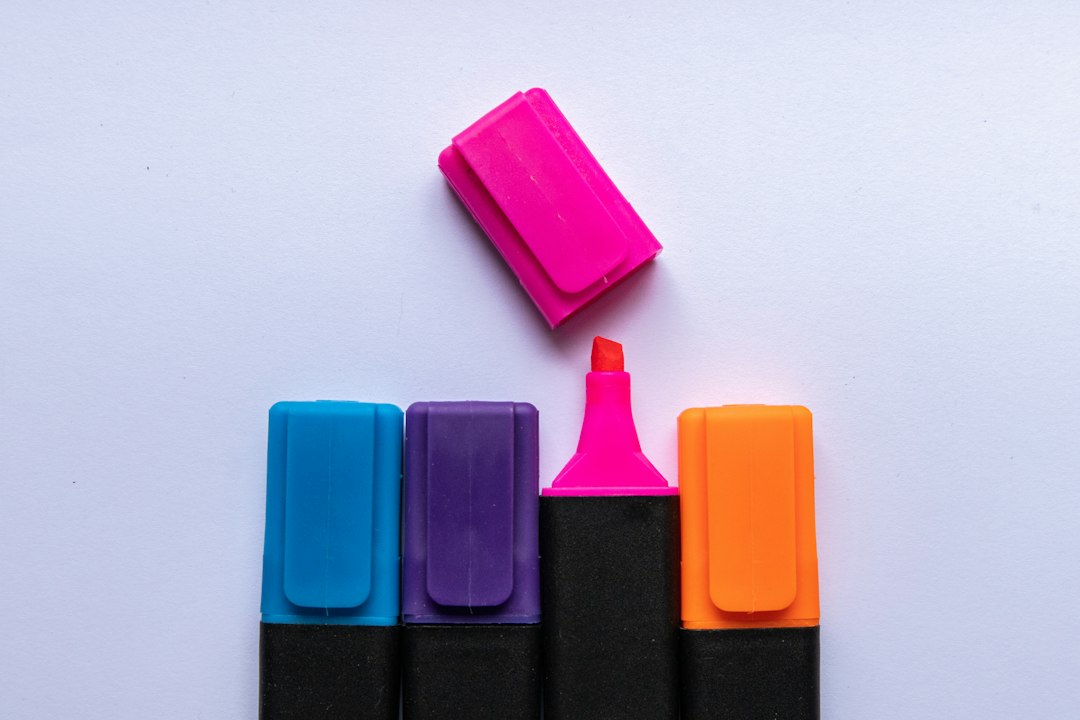
Quick verdict: Choose chisel tips for varied stroke widths, highlighting and broad lettering. Bullet tips are easier for consistent lines, small labels and neat notes.
Before buying another piece of stationery or craft equipment, consider your most frequent task. Price and popularity alone don’t settle whether one option will save time, avoid waste or improve the finished work. This guide separates real functional differences from upgrades that may not matter to you.
At a Glance
| Option | Why consider it | Before you buy |
|---|---|---|
| chisel tip markers | A chisel nib makes broad strokes with its flat face and thinner marks from an edge. | Confirm suitability for your everyday task |
| bullet tip markers | A bullet nib produces more consistent rounded marks with less attention to angle. | Check compatibility and real upkeep costs |
chisel tip markers: Advantages and Limitations
A chisel nib makes broad strokes with its flat face and thinner marks from an edge. It is helpful for bold headings and structured highlighting, but changing angle takes practice and worn corners can create uneven lines.
Who should buy: Anyone who needs the first option’s particular strengths on a regular basis. Who should skip: Buyers who chiefly need the second option’s capabilities, or who already have a reliable alternative.
bullet tip markers: Advantages and Limitations
A bullet nib produces more consistent rounded marks with less attention to angle. It suits lists, doodles and short annotations, although wide filled areas take longer. Fine bullet nibs are not automatically suitable for very absorbent paper.
Who should buy: People whose typical workload fits the second option. Who should skip: Someone who would mainly pay for unused features or extra storage.
Common Mistakes
Ink formula matters as much as nib shape. Alcohol-based markers can bleed through many notebooks; water-based markers vary in smearing and paper feathering. Test on the actual journal before decorating both sides.
Practical Buying Checklist
Check nib replacement options, ink chemistry, line width, cap seal and whether your paper can handle the intended marks. Do not buy a huge marker set simply because it has attractive colours.
- Identify your main application before selecting materials or features.
- Check dimensions, specifications and replacements on the exact listing.
- Read the seller’s returns terms in your country before ordering.
- Test a small quantity before committing to a bulk purchase.
- Keep any manufacturer maintenance and safety instructions.
Is the Upgrade Worth It?
A dual-tip marker is worth considering if you regularly need both heading and detail strokes. Otherwise, one well-chosen shape makes a perfectly good daily tool.
Frequently Asked Questions
Do I need both types?
Not necessarily. Start with the option suited to the task you do most often, and add the alternative only if it solves a specific repeated limitation.
Is the more expensive one always better?
No. Materials, reliability, compatibility and the intended use are more meaningful than price alone. Check current manufacturer details for particular products.
Related Reading
See our related guide on pastel versus fluorescent highlighters for another practical buying choice.
Final Verdict
Choose chisel tips for varied stroke widths, highlighting and broad lettering. Bullet tips are easier for consistent lines, small labels and neat notes. A sensible purchase solves an actual problem instead of filling a drawer with supplies you rarely use.
Shop the Options — USA and Canada
Choose your country and preferred option.
Compare chisel tip markers — Amazon USA Compare chisel tip markers — Amazon Canada
Compare bullet tip markers — Amazon USA Compare bullet tip markers — Amazon Canada
Affiliate disclosure: Scribblet may earn a commission from qualifying purchases through Amazon USA or Amazon Canada links at no extra cost to the reader. This researched guide does not claim firsthand testing.