Planning & Productivity

Simple planning systems, routines, organization tips, and calm ways to get more done.

Could You Survive a Week Without Electricity?

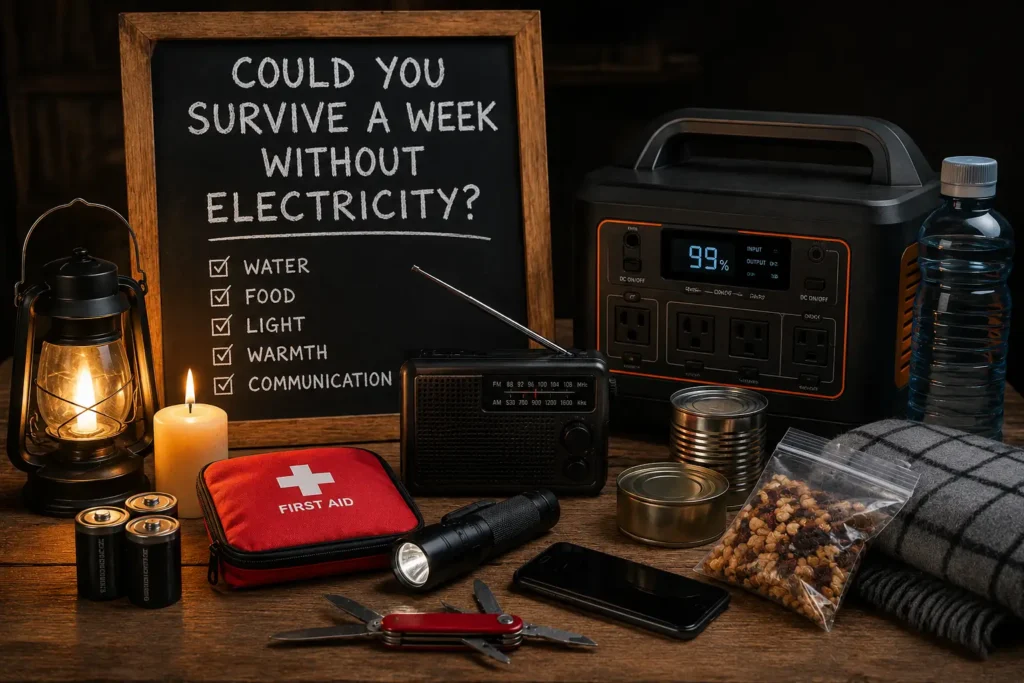
Imagine the power suddenly goes out—and stays out for an entire week. No lights, no Wi-Fi, no refrigerator, and no way to charge your phone. Would you be ready? Most of us rely on electricity far more than we realize, but a few simple items can make a huge difference during an extended outage.

Life Changes Fast
Without electricity, everyday tasks become much harder. Cooking, staying warm or cool, getting information, and keeping devices charged all require a backup plan.

Light Is Your First Priority

Once the sun goes down, a dependable lantern or flashlight quickly becomes your most valuable piece of equipment. Having extra batteries or rechargeable lighting can make evenings much safer and more comfortable.

Staying Connected

If cell towers or internet service become unreliable, a battery-powered or hand-crank emergency radio can provide weather updates, emergency alerts, and important news.

Backup Power

Portable power stations have become one of the best emergency tools available. They can recharge phones, power small appliances, run medical devices, and keep essential electronics working during an outage.


Buy on Amazon USA

🔦 LED Emergency Lanterns
Bright, reliable lighting to keep your home safe during power outages.

đź“» Emergency Weather Radios
Stay informed with weather alerts and emergency broadcasts when other communication fails.

🔋 Portable Power Stations
Keep phones, laptops, and small appliances running when the power goes out.

🔦 High-Powered Flashlights
A dependable flashlight is an essential part of every emergency kit.

đź§° Emergency Preparedness Kits
Get many survival essentials together in one convenient package.


Final Thoughts

Most of us hope we’ll never face a week without electricity, but being prepared brings peace of mind. A few well-chosen emergency supplies can make a stressful situation far more manageable and help keep you and your family safe until power is restored.


Buy on Amazon Canada

🔦 LED Emergency Lanterns
Bright, reliable lighting to keep your home safe during power outages.

đź“» Emergency Weather Radios
Stay informed with weather alerts and emergency broadcasts when other communication fails.

🔋 Portable Power Stations
Keep phones, laptops, and small appliances running when the power goes out.

🔦 High-Powered Flashlights
A dependable flashlight is an essential part of every emergency kit.

đź§° Emergency Preparedness Kits
Get many survival essentials together in one convenient package.

The Morning Planning Routine That Takes Less Than 5 Minutes

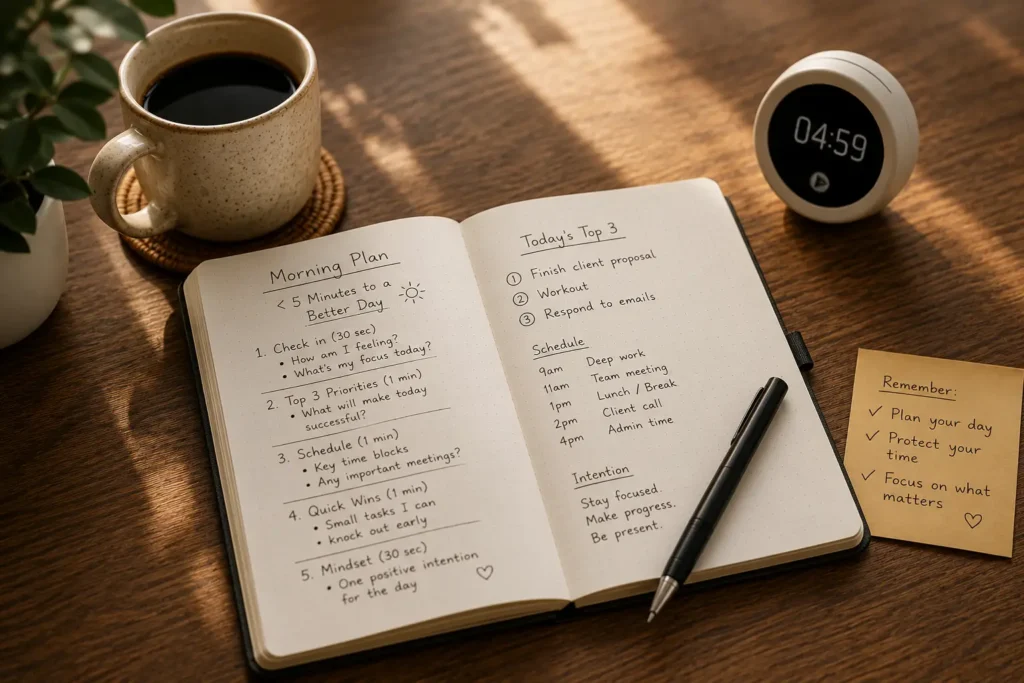
Many people think effective planning requires a complicated system or a long morning routine. In reality, you can set yourself up for a productive day in less than five minutes.

The key is to focus on what matters most instead of trying to plan every detail.

Step 1: Write Down Your Top Three Priorities

Start by identifying the three most important things you want to accomplish today. Keeping the list short helps you stay focused and prevents overwhelm.

Step 2: Check Your Schedule

Take a quick look at your calendar or appointments for the day. Knowing what’s coming up helps you plan your time more effectively and avoid surprises.

Step 3: Make a Simple To-Do List

Write down any smaller tasks that need attention. These can be completed after your top priorities are finished.

Step 4: Review Yesterday’s Notes

Spend a minute looking at unfinished tasks, ideas, or reminders from the previous day. This helps ensure nothing important gets forgotten.

Step 5: Get Started

Once your plan is written down, stop planning and start doing. The goal is progress, not perfection.

Amazon USA

Leuchtturm1917 A5 Notebook

Rocketbook Core Smart Notebook

Pilot G2 Gel Pens

Final Thoughts

A simple five-minute planning routine can help you stay organized, reduce stress, and focus on what matters most. You don’t need a complicated productivity system—just a notebook, a pen, and a few minutes of intentional planning each morning.

Amazon Canada

Leuchtturm1917 A5 Notebook

Rocketbook Core Smart Notebook

Pilot G2 Gel Pens

Why Writing Things Down Still Beats Using an App

Apps are great for reminders and scheduling, but when it comes to remembering ideas, making plans, or staying focused, writing things down still has an edge.

Putting pen to paper helps you slow down and think. You’re less likely to get distracted by notifications, emails, or social media. A notebook is always ready, never needs charging, and lets you see your thoughts all in one place.

Many people find they remember information better when they write it by hand. Whether it’s a grocery list, a journal entry, meeting notes, or your next big idea, handwriting helps make it stick.

That’s why notebooks remain popular with students, writers, professionals, and creative thinkers. Sometimes the simplest tool is still the best one.

Amazon USA

Hardcover Notebook – Buy on Amazon USA

Gel Pen Set – Buy on Amazon USA

Dotted Journal – Buy on Amazon USA

Final Thoughts

Technology has its place, but a notebook offers something apps can’t: simplicity. When you want to focus, remember more, and organize your thoughts, pen and paper still get the job done.

Amazon Canada

Hardcover Notebook – Buy on Amazon Canada

Gel Pen Set – Buy on Amazon Canada

Dotted Journal – Buy on Amazon Canada

Why Writing Things Down Still Feels Better Than Using Your Phone

There’s something oddly comforting about sitting down with a notebook and a good pen ✍️📓

Even with smartphones doing almost everything these days, writing things down by hand still feels better in a way that’s hard to explain until you actually do it. I noticed it again recently while trying to organize ideas for websites and daily tasks. The second I grabbed a notebook instead of my phone, everything felt calmer, clearer, and somehow more focused.

Phones are amazing for convenience, but they’re also full of distractions. One notification turns into checking emails, then social media, then videos, and suddenly the original thought is gone. A notebook doesn’t interrupt you. It just sits there quietly waiting for your next idea 🌙✨

There’s also something more personal about handwriting. Notes on a phone can feel temporary, but handwritten pages feel real. Whether it’s journaling, planning your week, sketching ideas, or writing goals down, it creates a stronger connection between your thoughts and what’s actually on the page.

I’ve also found that creativity flows differently on paper. When I brainstorm blog ideas or organize projects by hand, the ideas seem to stick better. Maybe it’s because writing slows your brain down just enough to actually think instead of constantly reacting to a screen 💭🖋️

And honestly, there’s something satisfying about crossing things off a real list. Digital apps still haven’t replaced that feeling.

That’s probably why notebooks, planners, desk accessories, and stationery have become popular again lately. People are craving something quieter and more intentional in a world filled with nonstop scrolling.

Sometimes the simplest tools still work the best ✨📚


📦 Buy on Amazon USA

✍️ Moleskine Classic Notebook

🖊️ Pilot G2 Premium Gel Pens

📚 Clever Fox Planner

đź’ˇ LED Desk Lamp for Study & Journaling


🌄 Final Thoughts

The funny thing about writing by hand is that it doesn’t just help organize your thoughts — it slows life down a little. In a world filled with screens, notifications, and endless scrolling, even a simple notebook can feel peaceful. There’s something grounding about putting pen to paper and focusing on one idea at a time ✨

I still use my phone constantly, but when I really want to think clearly, plan something meaningful, or get creative, I almost always reach for a notebook first. It feels more personal, more intentional, and honestly more human đź““đź’­

Maybe that’s why handwritten notes still survive no matter how advanced technology becomes. Some things simply feel better the old-fashioned way 🌙🖊️


📦 Buy on Amazon Canada

✍️ Moleskine Classic Notebook

🖊️ Pilot G2 Premium Gel Pens

📚 Clever Fox Planner

đź’ˇ LED Desk Lamp for Study & Journaling

How to Create a Cozy Writing Corner in a Small Apartment

Winter in an apartment can feel smaller than it actually is. The walls seem closer. The windows darker. I used to think I needed a whole separate room to have a “real” writing space — a desk by a big window, shelves lined with books, maybe even a fireplace crackling somewhere in the background. But the truth is, I didn’t need more square footage. I needed a corner that felt intentional.

The first shift was light. Overhead lighting can be harsh and flatten everything. I brought in a warm desk lamp instead — something with a soft glow that pools onto the page rather than flooding the room. The difference was immediate. The light felt like a quiet invitation instead of a spotlight. In the evenings especially, that warmth creates a little pocket of calm inside the apartment.

Then came the lap desk. In a small space, flexibility matters. A simple wooden lap desk let me move between the couch and the corner chair without losing structure. I could wrap up in a throw blanket, settle in, and still have a steady surface for writing. It made journaling feel less like sitting “at work” and more like leaning into something comforting.

I added a small journal basket beside the chair — nothing elaborate, just a woven container holding my current notebook, a couple of smooth pens, and a muted highlighter. Having everything within reach changes the friction level. If I have to search for a pen, I’m less likely to start. When it’s right there, I sit down more often.

A simple pen holder on a nearby shelf keeps the extras organized. I rotate ink colors with the seasons — deeper browns and soft blues during colder months. It sounds aesthetic, but it’s more about mood than appearance. The tone of the tools subtly shapes how the page feels.

And then there’s the blanket. A soft throw isn’t just decoration. It signals comfort. I didn’t realize how much I needed this until I slowed down long enough to use it. Wrapping up before opening my notebook creates a transition — from the day’s noise to a quieter headspace.

The corner doesn’t need to be large. It needs to feel claimed. Even in a small apartment, that claim makes a difference. A lamp. A lap desk. A basket. A few chosen tools. Suddenly, the space feels less like “just where you live” and more like somewhere you create.

Winter doesn’t have to shrink your world. Sometimes it just asks you to build a warmer one inside.


📦 Buy on Amazon USA

Adjustable Warm LED Desk Lamp

Bamboo Lap Desk with Cushion Base

Woven Storage Basket (Medium Size)

Zebra Sarasa Clip Gel Pens (Fine Point)

Leuchtturm1917 Medium A5 Notebook (Ivory Paper)

Soft Knit Throw Blanket (Neutral Tone)


🌿 Final Thoughts

Cozy isn’t about excess. It’s about intention. A small apartment can hold a meaningful writing ritual if you carve out even a modest corner and treat it with care.

The right light softens the room. A stable surface invites you to sit longer. A basket of ready tools lowers resistance. None of it is complicated — but together, it creates momentum.

You don’t need more space to write. You just need a corner that feels like it’s waiting for you.


📦 Buy on Amazon Canada

Adjustable Warm LED Desk Lamp

Bamboo Lap Desk with Cushion Base

Woven Storage Basket (Medium Size)

Zebra Sarasa Clip Gel Pens (Fine Point)

Leuchtturm1917 Medium A5 Notebook (Ivory Paper)

Soft Knit Throw Blanket (Neutral Tone)

How a Simple Writing Ritual Changed My Mornings

My mornings used to feel like something to push through. Coffee first, then screens, then a low-level rush that followed me into the day. Nothing was wrong exactly — it just felt scattered. The writing ritual didn’t start as a fix. It started as a pause. A cup of tea instead of refilling coffee. A cleared corner of the desk. One notebook opened to the next blank page, waiting without expectation.

What changed wasn’t the amount I wrote, but the way the morning held together afterward. Sitting down with pen and paper before anything else created a soft edge to the day. The kettle clicking off. Steam rising. The quiet scratch of ink on paper. Those few minutes anchored me. They didn’t demand productivity or insight — they simply marked the beginning of the day as something intentional instead of reactive.

The ritual stayed simple on purpose. Same mug. Same pen. Same notebook. Repetition made it easier to show up without thinking about it. Some mornings I wrote a paragraph. Other mornings it was a sentence or two. Occasionally it was just a list of things I didn’t want to forget. What mattered was the consistency of the act, not the content. Writing became less about expression and more about orientation — a way of checking in before moving outward.

I noticed the effect later in the day. Fewer rushed decisions. Less mental noise. A quieter sense of direction. The morning writing didn’t solve problems, but it softened them. It reminded me that I didn’t need to earn clarity — sometimes it arrives simply by slowing down. I didn’t realize how much I needed this until I slowed down long enough to use it.

Now the ritual feels less like a habit and more like a kindness I offer myself each morning. A small, steady moment that doesn’t ask for improvement — just presence.


📦 Buy on Amazon USA

Leuchtturm1917 Medium Dotted Notebook

Midori MD Notebook A5

Pilot Metropolitan Fountain Pen


🌿 Final Thoughts

A writing ritual doesn’t need to be elaborate to be meaningful. Its power comes from repetition and gentleness — from returning to the same quiet moment each morning without pressure to perform or produce.

There’s comfort in starting the day with something tactile and slow. Tea cooling. Paper waiting. Words forming at their own pace. That calm often carries forward, shaping the rest of the day in subtle ways.

If your mornings feel rushed or unfocused, you don’t need a complete overhaul. Sometimes all it takes is one small ritual that reminds you the day is yours before it belongs to anything else.


📦 Buy on Amazon Canada

Leuchtturm1917 Medium Dotted Notebook

Midori MD Notebook A5

Pilot Metropolitan Fountain Pen

Why My Best Ideas Never Start on a Screen

I’ve noticed a pattern over time, and it’s one I can’t ignore anymore. My best ideas never show up when I’m staring at a screen. They don’t arrive while I’m typing, scrolling, or trying to organize my thoughts digitally. Screens seem to demand structure too early. They ask me to decide what something is before I’ve even figured out what it’s becoming.

When I sit in front of a screen, my mind shifts into editing mode almost immediately. I reread sentences before they’re finished. I delete things before they’ve had a chance to breathe. Even when I’m alone, the act of typing feels like I’m preparing something for later use. The idea never gets to be raw. It’s filtered too soon.

Paper gives me a different kind of space. When I write by hand, thoughts arrive unfinished and slightly awkward, and that’s exactly how they need to arrive. There’s no cursor blinking at me, no temptation to clean things up mid-thought. The pen moves slower than my impulses, and that slowness gives ideas room to stretch out and reveal themselves.

I’ve also realized that ideas don’t like being rushed into usefulness. On paper, they’re allowed to wander. A sentence can drift into a margin. A thought can trail off and pick up again later. That looseness often leads me somewhere unexpected. By the time an idea is ready for a screen, it already knows what it wants to be.

Screens are great for building and refining. Paper is where things begin. It’s where ideas feel safe enough to show up incomplete. And for me, that’s the only way they ever turn into something worth keeping.


📦 Buy on Amazon USA

đź““ Simple Lined Notebook
đź““ Minimalist Writing Journal
🖊️ Smooth Writing Pen (Black Ink)


🌱 Final Thoughts

I’ve stopped trying to force ideas to appear where they don’t belong. Screens are efficient, but efficiency isn’t where creativity starts for me. It starts in a slower, quieter place.

Paper gives my thoughts weight before they have direction. It lets me explore without committing. That freedom has made all the difference in how ideas form and grow.

Now, when something matters, I don’t open an app. I reach for a notebook. That’s where my ideas still feel most honest.


📦 Buy on Amazon Canada

đź““ Simple Lined Notebook
đź““ Minimalist Writing Journal
🖊️ Smooth Writing Pen (Black Ink)

How Writing One Page Each Morning Changed My Focus

I didn’t start with a plan to improve my focus. I wasn’t trying to fix anything. I just noticed that my mornings felt scattered, like my attention was already split before the day really began. One morning, instead of reaching for a screen, I opened a notebook and wrote a single page. Not a journal entry. Not goals. Just whatever was already floating around in my head.

What I wrote didn’t matter much. Some days it was practical—things I needed to remember, small worries, half-made decisions. Other days it was repetitive, even dull. But finishing that one page did something subtle. It felt like closing open tabs in my mind. Nothing dramatic changed, but the noise softened. When I stood up from the desk, I felt more present than usual.

Over time, that one page became a boundary between before and after. Before the page, my thoughts were loose and reactive. After it, they felt quieter, more settled. I wasn’t suddenly more productive, but I was less distracted by unfinished thoughts. Writing them down gave them somewhere to go, so they stopped following me around all morning.

What surprised me most was how little effort it took. One page isn’t ambitious. It doesn’t invite perfection. Some mornings the writing was neat, other mornings it barely filled the space properly. That inconsistency turned out to be important. It removed pressure. I showed up because the task was small, and because it didn’t ask me to be “good” at it.

Now, the page isn’t about reflection or insight. It’s about clearing space. I don’t reread it often. I don’t organize it. I just write, stop, and move on. And somehow, that simple act has made the rest of the day feel more focused—not sharper, but calmer. Like I’m starting from a quieter place.


📦 Buy on Amazon USA

đź““ Simple Lined Notebook
🖊️ Smooth Writing Pen (Black)


🌱 Final Thoughts

Writing one page each morning didn’t change how much I do, but it changed how it feels to do it. There’s a steadiness that comes from starting the day by putting thoughts somewhere tangible instead of carrying them all at once.

I’ve learned that focus doesn’t always come from trying harder. Sometimes it comes from unloading what’s already there. One page is enough to do that, at least for me.

It’s a small habit, but it’s one I return to because it gives me something rare in the morning: a sense of quiet direction before the day begins.


📦 Buy on Amazon Canada

đź““ Simple Lined Notebook
🖊️ Smooth Writing Pen (Black)

Why I Write the Same Things Over and Over — And Why That’s Okay

I used to catch myself mid-sentence and stop. I’d think, haven’t I written this before? The same reminder. The same thought about slowing down. The same note about what matters and what doesn’t. For a while, that made me feel lazy, like I was failing some invisible creativity test. Eventually, I realized something quieter was happening instead.

The truth is, I don’t write things down because they’re new. I write them down because they’re easy to forget. The repetition isn’t a lack of ideas — it’s a reflection of being human. The same thoughts come back because the same pressures come back. The same worries. The same small reminders I need to hear again. Writing them once doesn’t make them permanent. Writing them often makes them stick.

There’s comfort in seeing familiar lines appear on a fresh page. It’s not about saying something clever. It’s about anchoring myself. Some days the words land differently. Other days they feel almost copied, but even then, the act of writing slows me down just enough to notice where I am. I’ve stopped trying to force novelty and started paying attention to usefulness instead.

Over time, I’ve noticed that repetition brings clarity, not boredom. The ideas that matter most are the ones that survive being written again and again. They change slightly. They soften. They become more honest. A notebook doesn’t judge that. It doesn’t ask for originality. It just holds space for what keeps returning.

I’ve come to think of repeated writing as maintenance, not failure. Like tidying the same drawer or making the same cup of coffee every morning. Some things don’t need improvement — they just need to be revisited. And that’s more than okay.


📦 Buy on Amazon USA

đź““ Simple Lined Notebook
đź““ Softcover Journal for Daily Writing
✏️ Smooth Black Ink Pens


🌱 Final Thoughts

Rewriting the same ideas has taught me that growth isn’t always visible. Sometimes it looks like circling the same thought until it finally feels settled. Other times it’s just a reminder that I’m still paying attention.

There’s relief in letting go of the need to constantly say something new. Familiar words can still be meaningful, especially when they meet you in a slightly different place each time.

If a thought keeps returning, maybe it’s asking to be written again — not because it’s unfinished, but because it matters.


📦 Buy on Amazon Canada

đź““ Simple Lined Notebook
đź““ Softcover Journal for Daily Writing
✏️ Smooth Black Ink Pens

What the Blank Page Taught Me About Perfection

For a long time, a blank page felt like a test I was already failing. I’d open a notebook and immediately feel the pressure to get it right — the first sentence, the handwriting, the direction of the thoughts. The emptiness wasn’t peaceful; it was demanding. It asked me to be clear before I was ready, confident before I had warmed up. And more often than not, that pressure kept me from writing anything at all.

What changed wasn’t a breakthrough idea or a new system. It was noticing how patient the page actually is. The blankness doesn’t rush you. It doesn’t care if your first line is messy or forgettable. It just waits. Once I stopped treating the page like something that needed to be impressed, the tension eased. I started allowing myself to write badly on purpose — crooked letters, incomplete thoughts, sentences I knew I’d never come back to.

There’s a strange relief in realizing that perfection isn’t a requirement for beginning. The blank page doesn’t ask for polish; it asks for honesty. When I let go of the need to make the page look a certain way, I felt freer to explore what I was actually thinking. The writing became more human, less rehearsed. And oddly enough, that’s when it started to feel more meaningful.

I’ve learned that perfection often disguises itself as preparation. We tell ourselves we’re waiting for the right words, the right mood, the right clarity. But the blank page taught me that clarity usually comes after you start, not before. Letting go of perfection wasn’t about lowering standards — it was about trusting the process enough to begin imperfectly.

Now, when I open a new page, I don’t try to fill it beautifully. I try to fill it honestly. The page doesn’t need me to be finished or certain. It just needs me to show up. And that small shift has made writing feel lighter, kinder, and far more sustainable.

🖊️ The blank page didn’t ask me to be perfect — it asked me to be present.


📦 Buy on Amazon USA

đź““ Leuchtturm1917 Medium A5 Notebook

đź““ Moleskine Classic Softcover Notebook

🖊️ Pentel EnerGel Liquid Gel Pens


🌿 Final Thoughts

Perfection has a way of keeping us stuck at the starting line, convincing us that readiness comes before action. A blank page quietly challenges that belief. It offers space without expectation, reminding us that beginnings don’t need to be polished to be valid.

There’s freedom in allowing yourself to write something unfinished, something flawed, something real. When perfection loosens its grip, creativity has room to move. The page becomes a place of exploration instead of evaluation.

If you’ve been hesitating to begin, consider what the blank page might already know. Letting go doesn’t mean giving up — sometimes it’s simply choosing to start without asking for permission first.


📦 Buy on Amazon Canada

đź““ Leuchtturm1917 Medium A5 Notebook

đź““ Moleskine Classic Softcover Notebook

🖊️ Pentel EnerGel Liquid Gel Pens