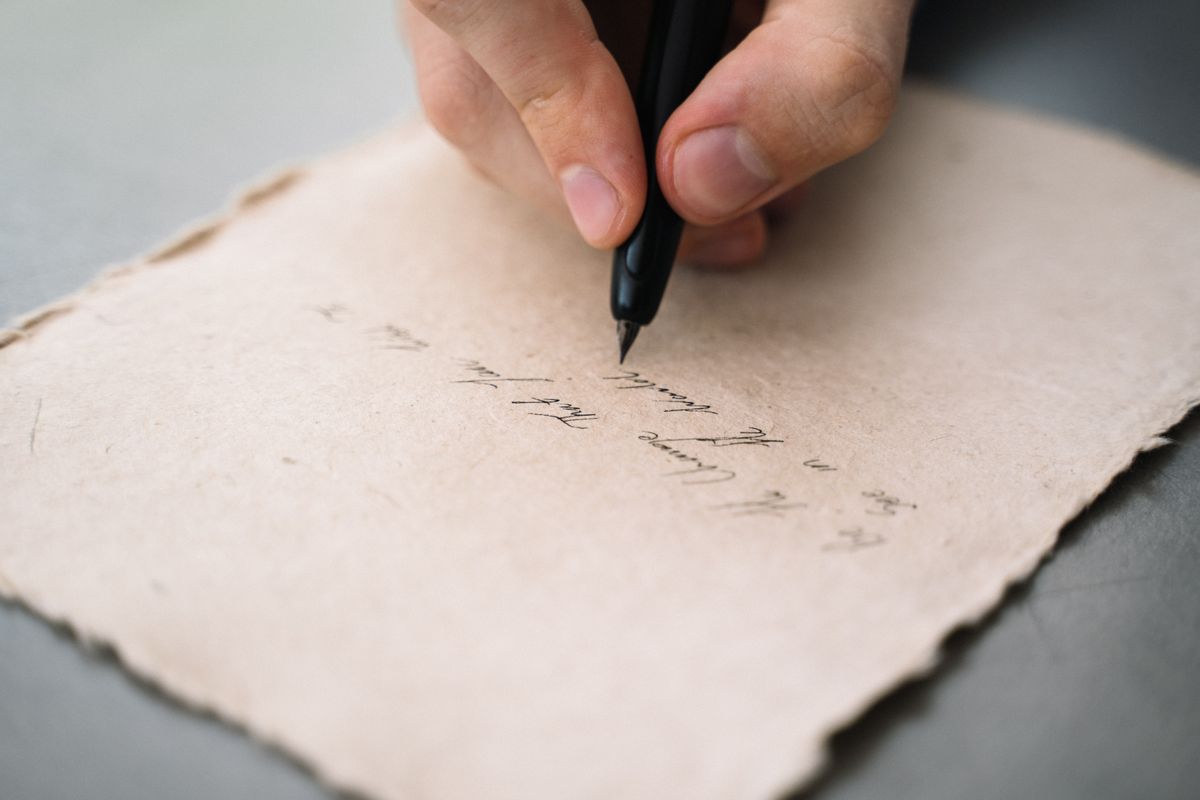
Quick verdict: Smooth paper favours consistent everyday handwriting; textured sheets add character to special correspondence. Ink behaviour depends on the exact paper rather than appearance alone.
When choosing supplies, focus on the task you complete most frequently, how the material handles, and any ongoing costs. A good purchase solves a particular problem; a larger feature list is not necessarily more useful.
At a Glance
| Option | Main reason to consider it |
|---|---|
| smooth letter writing paper | The first workflow’s strengths match your needs |
| textured letter writing paper | The second option better suits your everyday use |
smooth letter writing paper: Strengths and Trade-offs
Smooth sheets can help fountain pens, rollerballs and gel pens glide evenly, but some smooth papers still feather or bleed. The paper’s sizing and coating matter. For long letters, legibility and comfortable writing may be more valuable than an unusual texture.
Who should buy: Readers who value these advantages regularly. Who should skip: Those for whom the alternative would solve more problems.
textured letter writing paper: Strengths and Trade-offs
Laid, linen and other textured finishes give stationery a tactile character suited to invitations and personal notes. Raised fibres can catch fine nibs or make very small handwriting less even, while bold pen strokes and pencil can look attractive. Matching envelopes may affect the total cost.
Who should buy: People whose workflow fits the second approach. Who should skip: Those who don’t need its main features.
Common Mistakes
Don’t assume that cotton, high GSM or luxury packaging guarantees fountain-pen compatibility. Test your actual pen and ink for feathering, ghosting and drying. If you’ll print addresses or text, check printer support too.
Buying Checklist
Choose a few sample sheets before buying a large set. Compare size, colour, opacity, finish, matching envelopes and whether ink is visible on the back. Standard letter and A4 dimensions are not identical.
- Verify exact dimensions and material compatibility.
- Read the manufacturer’s product-specific instructions.
- Check return policies for U.S. and Canadian purchases.
- Test a small purchase before buying in bulk.
Is the Upgrade Worth It?
For routine handwritten notes, reliable smooth paper is often the better value. Pay for texture when the presentation is central to the occasion.
FAQ
Do I need both options?
Usually not. Choose the one that best suits your common use, then consider the other if a specific shortcoming appears.
Does higher price guarantee quality?
No. Pay attention to suitability, durability and replacement availability. Expensive features you never use don’t add value.
Related Reading
For more guidance, see this related Scribblet comparison.
Final Verdict
Smooth paper favours consistent everyday handwriting; textured sheets add character to special correspondence. Ink behaviour depends on the exact paper rather than appearance alone. Select the option that fits your real needs rather than buying extra equipment by default.
Shop the Options — USA and Canada
Choose your country and preferred option.
Shop smooth letter writing paper — Amazon USA Shop smooth letter writing paper — Amazon Canada
Shop textured letter writing paper — Amazon USA Shop textured letter writing paper — Amazon Canada
Affiliate disclosure: Scribblet may earn a commission on qualifying Amazon USA and Amazon Canada purchases at no additional cost. This is researched guidance, not a claim of firsthand testing.