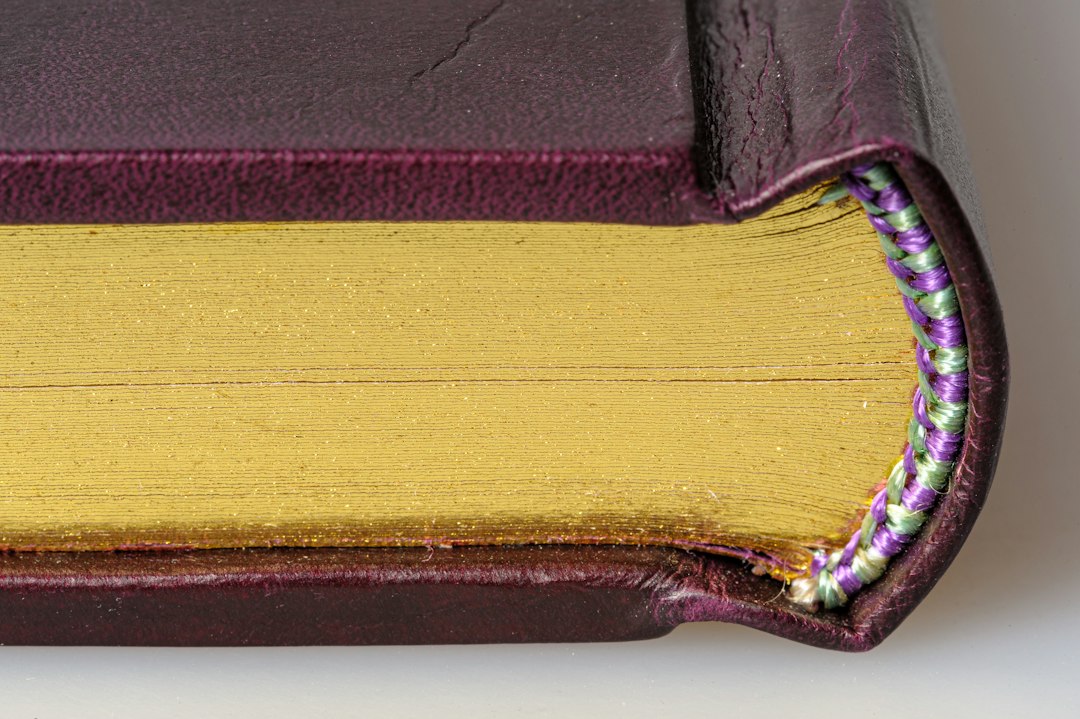
Illustrative photograph by Burkard Meyendriesch / Unsplash, not a spool product photograph.
Quick verdict: For a first hand-sewn journal, a suitable linen bookbinding thread is a reliable starting material. Lightly waxed linen is convenient because it resists tangling as you stitch; unwaxed linen gives more control when you want to apply your own beeswax. Use thread that suits the thickness of your paper signatures. Very thick decorative cord can swell the spine and prevent the finished book from closing neatly.
This comparison uses published Lineco product specifications and the practical differences between sewn binding materials. It is not a claim that we personally tested every thread or can predict how long a handmade book will survive.
Quick Comparison
| Thread type | Best for | Compromise |
|---|---|---|
| Waxed linen | Beginners, pamphlet stitching, exposed-spine journals | Wax amount varies and can feel tacky |
| Unwaxed linen | Controlling your own wax coating and tension | More likely to tangle before waxing |
| Cotton embroidery floss | Decorative low-stakes projects | Thickness and structure can be inconsistent |
| Polyester sewing thread | Light temporary craft stitching | Very thin thread may cut into paper |
| Thick decorative cord | Visible bindings on sturdy covers | Bulky spines and oversized holes |
1. Lineco Books by Hand Waxed Linen — Best Beginner Option
Lineco specifies a lightly waxed five-ply natural linen thread for bookbinding and crafts. The vendor offers spools in different colours; check the exact listing because kits and packaging can change. The light waxing reduces drag and the need to add wax yourself, though it doesn’t remove the need to use a correctly sized needle and puncture holes.
Buy if: you want to stitch a simple notebook without handling loose unwaxed fibre first. Skip if: you’re binding very thin papers and need a finer thread than a particular five-ply option provides, or are undertaking professional conservation on valuable volumes.
Check U.S. options on Amazon | Check Canadian options on Amazon
2. Lineco Unwaxed 35/3 Linen — Best for Custom Waxing
The manufacturer lists an unbleached, unwaxed 35/3 linen thread in 50-yard spools, marketed to book artists and binders. That lets you determine how much wax to apply and whether it belongs in your project. Unwaxed linen may require extra care with twisting or knots; don’t over-wax to compensate, because extra material can gather in the stitch.
Buy if: you’ve already sewn a few signatures and want control over thread finish. Skip if: you just need a straightforward beginner kit without additional supplies.
Check U.S. options on Amazon | Check Canadian options on Amazon
3. Cotton Embroidery Floss — Best for Decorative Experiments
Cotton embroidery floss comes in many colours and may already be in your craft drawer. It can be fun for a one-off exposed stitch when structural durability is not the top priority. But its strands may separate or wear differently from purpose-made binding thread. Don’t substitute a loosely twisted craft floss for a thread specified by a restoration or conservation process.
Buy if: appearance matters more than archival longevity in a personal card booklet. Skip if: the book will open thousands of times or must preserve irreplaceable content.
Check U.S. options on Amazon | Check Canadian options on Amazon
4. Polyester Thread — Best Only in Certain Light Craft Jobs
Polyester sewing thread is widely available and can resist stretching differently from natural fibres, but an ordinary fine machine-sewing strand may be unsuitable as the sole support for paper signatures. When pulled tight, narrow thread can concentrate pressure at the holes. Test it on a scrap signature instead of assuming all sewing supplies work for books.
Buy if: you’re constructing a light, short-lived craft piece and can evaluate the fit. Skip if: you want a conventional durable sewn book and can obtain appropriate linen.
Check U.S. options on Amazon | Check Canadian options on Amazon
5. Complete Tool Kit — Best When You Own No Needles or Awl
Lineco’s Bookbinding Tool Kit includes light and heavy awls, a bone folder, brush, needles, linen thread and beeswax. Buying the set can make sense if you’re starting entirely from scratch. If you already have an awl and bone folder, purchasing individual thread and compatible needles avoids duplicate tools.
Buy if: you want a complete first setup. Skip if: the only supply you need is a replacement spool of thread.
Check U.S. options on Amazon | Check Canadian options on Amazon
Why Ply and Thickness Matter
“Ply” refers to strands twisted together, but manufacturers also use size or gauge numbers that aren’t interchangeable across materials. Too much thread in a thin text block adds bulk at every signature fold. Too little thread may cut paper as you pull stitches tight. For a first notebook, follow the thread recommendation for the specific binding tutorial, then test a few sections on scrap paper rather than buying a giant spool based only on advertised strength.
Do You Have to Wax Bookbinding Thread?
No universal rule applies. Light waxing often reduces abrasion and tangling, especially with linen. Some bookbinders use unwaxed linen for particular methods, and heavily waxed thread can leave residue. Apply a little beeswax if the technique calls for it, and run your thread through a clean cloth to remove excess. Avoid unknown scented waxes that may transfer oils or colour onto paper.
How Much Thread Is Needed?
Measure your book’s spine height and the stitching pattern. Simple pamphlet stitches may use a few spine lengths, while multi-signature Coptic or long-stitch bindings require more. Follow the exact pattern and add enough extra for handling and knotting. A 20-yard spool can serve many small journals but may not be economical for a high-volume bindery; calculate before placing a bulk order.
Is Premium Linen Worth It?
For handmade books intended to be used repeatedly, purpose-made linen is a sensible place to spend modestly. For disposable paper crafts, common thread may be good enough. A preassembled kit is not automatically a deal if you already own every tool except thread. Compare yards per spool, ply, colour choices, actual material and shipping into Canada.
Common Buying Mistakes
- Buying thread so thick that the spine cannot close flat.
- Trying to punch stitching holes with a large blunt needle.
- Over-tightening stitches until paper holes tear.
- Using embroidery floss without accounting for strand separation.
- Applying too much beeswax and leaving residue.
- Purchasing an expensive starter kit when only thread is needed.
FAQs
Is waxed thread always better?
Not always. It is convenient for many hand-sewn bindings, but thickness and method matter more than wax alone.
Can I use dental floss?
It might hold a temporary craft, but it’s not a good default for quality bookbinding; material and long-term compatibility are not designed for the purpose.
Can I use ordinary sewing needles?
Some can work, provided the eye fits the thread and the needle suits the pre-punched holes. Dedicated binding needles may be easier with heavier linen.
Does natural linen mean archival?
No single material automatically certifies the entire book; binding method, adhesives, paper and storage conditions also matter.
Related Reading
Start with our beginner bookbinding kit guide, then compare paper surfaces for lettering when deciding what sheets to bind.
Affiliate disclosure: Scribblet may earn commissions through U.S. and Canadian Amazon links at no additional cost to you. These links lead to search results, not guaranteed current pricing. Product details are drawn from manufacturer descriptions; no personal testing is claimed.
Final Verdict
Best all-round beginner choice: lightly waxed linen. Best for experienced binders: appropriate unwaxed linen, waxed to preference. Best for one-off decorative work: compatible craft thread if durability is not the goal. Best value: buy the thread alone unless you really need the entire binding kit.