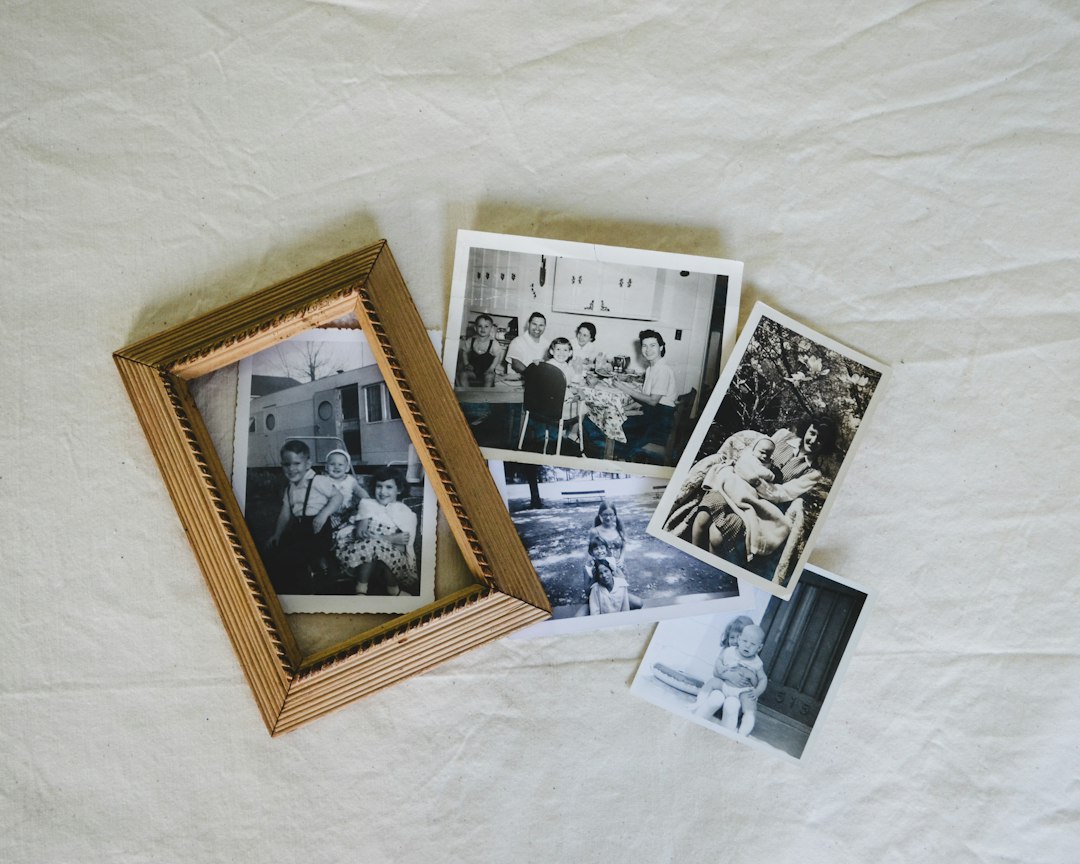
Illustrative photograph by Debby Hudson / Unsplash, not a product photograph.
Quick verdict: For ordinary family photo prints stored in a stable, dry room, choose appropriately sized sleeves made from uncoated polyester, polypropylene or polyethylene, preferably products with documented Photographic Activity Test (PAT) suitability. Avoid PVC and self-adhesive “magnetic” album pages. For brittle, flaking or unusually valuable originals, a suitable paper enclosure and advice from a conservator can be better than sliding the print into plastic.
This comparison prioritizes preservation guidance from the U.S. National Archives and Library of Congress, not unverified “archival” marketing on packaging. It does not claim that products were hands-on tested.
Quick Comparison
| Enclosure | Best for | Check before buying |
|---|---|---|
| Polypropylene photo sleeves | Affordable family-album pages | Uncoated, PVC-free, correct print size and PAT information |
| Polyester L-sleeves | Clear, supportive handling of select prints | Stiffness, edges and conservation suitability |
| Polyethylene sleeves | Simple individual print protection | Uncoated film and an easy fit |
| Archival paper envelopes | Light-sensitive or delicate materials | Appropriate paper and PAT certification |
| Ordinary PVC pages | None for valuable photos | Avoid for long-term storage |
1. Polypropylene Sleeves — Best Budget Family-Album Choice
Uncoated polypropylene is one of the stable plastics named by the National Archives for photographic enclosures. A binder page with individual pockets helps organize modern snapshots and reduces repeated touching. Compare pocket count, opening direction and exact inside dimensions: sleeves advertised for 4-by-6-inch prints should not squeeze a print or bend its corners.
Buy if: You want to flip through ordinary family prints regularly and keep them sorted by year. Skip if: The photograph has powdery or flaking material, is stuck to an existing mount, or you cannot verify the sleeve’s composition. “Acid-free” alone is not proof of full photo safety.
Check U.S. options on Amazon | Check Canadian options on Amazon
2. Polyester L-Sleeves — Best for Visible Individual Prints
Polyester film offers clarity and more stiffness than some other stable plastics. The Library of Congress describes polyester L-sleeves, sometimes paired with appropriate support board, as a practical protective option. Leave enough room to slide the print in without scraping an edge and handle the sleeve rather than the photograph.
Buy if: You need to inspect or show a few important, stable prints without touching their surfaces. Skip if: Static could lift loose or flaking image material, or if the photograph is extremely fragile. A preservation professional can advise on unusual historical processes.
Check U.S. options on Amazon | Check Canadian options on Amazon
3. Polyethylene Sleeves — Best Simple Individual Protection
Uncoated polyethylene is another stable material identified in preservation guidance. Flexible sleeves are useful for prints being grouped inside an appropriately sized archival box, provided they are clean, odorless, transparent and not coated with problematic additives. Very thin bags offer less protection against bending, so pair them with proper support when necessary.
Buy if: You want basic separation between prints at a reasonable cost. Skip if: The collection lives in persistently damp conditions; plastics can trap moisture and allow photographs to stick to them in high humidity. Environmental control is more important than a fancy sleeve.
Check U.S. options on Amazon | Check Canadian options on Amazon
4. PAT-Tested Paper Envelopes — Best Alternative to Plastic
Suitable paper enclosures keep out light and allow individual labeling without writing directly on the image. The National Archives photographs guidance notes that opaque enclosures can be used when they meet archival standards and pass the Photographic Activity Test. Look for specific supplier evidence, not just the word “archival.” Avoid adhesive seams that contact the image surface; keep the picture face away from a center seam.
Buy if: You rarely browse an old print and want protected, labeled storage. Skip if: You need a transparent page for frequent viewing and the photograph is stable enough for appropriate plastic. Different print processes may require different paper buffering choices.
Check U.S. options on Amazon | Check Canadian options on Amazon
5. Photo Storage Boxes — Best for a Larger Collection
A fitted preservation-quality box keeps sleeved or enveloped photographs upright or supported, shields them from light and makes groups easy to label. Don’t cram a hundred loose photographs into an oversized cardboard carton. The National Archives’ family storage guide recommends stable materials and warns against tape, rubber cement and sticky “magnetic” albums.
Buy if: You’re sorting generations of prints and want to preserve an existing collection rather than display every image. Skip if: You have only a few modern duplicate prints; a small album may be more convenient and less wasteful.
Check U.S. options on Amazon | Check Canadian options on Amazon
What Does the Photographic Activity Test Mean?
The PAT, associated with ISO 18916, evaluates the interaction of enclosure materials with photographic images. The Library of Congress FAQ recommends PAT-qualified products for photograph storage. It’s a more useful question to ask a seller than “is it acid-free?” Claims should identify the specific tested product or material. A sleeve that looks clear and smooth can still contain unknown coatings or plasticizers.
Who Should Skip Plastic Sleeves?
Do not put flaking emulsion, unstable or damp photographs into a tight plastic pocket. The Library of Congress cautions that static can affect vulnerable materials and that high humidity increases the risk of sticking. Very old film negatives, color slides and prints do not all share identical storage needs. When an original is rare, damaged, curled or physically stuck, stop handling it and consult a photograph conservator instead of forcing it flat.
How to Pick the Correct Size
- Measure the photograph, not the cardboard mount or decorative border alone.
- Check the seller’s internal pocket dimensions, not only nominal sizes.
- Leave enough ease to insert the print without curling an edge.
- Separate photos from paper records and negatives when their preservation needs differ.
- Store the sleeved collection in a cool, stable, dry living-area location, away from leaks, sunlight and heaters.
Is Premium Storage Worth the Upgrade?
Often only for irreplaceable images or materials used repeatedly. A documented PAT-tested sleeve or preservation box may justify spending more than an unverified discount album. On the other hand, a small set of modern replaceable prints does not require museum-scale packaging. Spend first on safe material, correct fit and a stable storage location—not decorative finishes.
Common Buying Mistakes
- Assuming a label that says “archival” guarantees PAT compliance.
- Using soft PVC pages for valuable family photographs.
- Trusting adhesive-backed magnetic albums.
- Filing curled or fragile originals into tight pockets.
- Keeping important prints in a damp basement or hot attic.
- Buying thousands of sleeves before measuring the collection.
Frequently Asked Questions
Is polypropylene photo-safe?
Pure, uncoated polypropylene is among the stable materials accepted in archive guidance, but suitability also depends on additives, the photograph and storage conditions.
Is “acid-free” enough?
No. Preservation authorities recommend materials suitable for photographic storage and, where applicable, documentation of PAT performance.
Should I laminate a precious old photograph?
No. Lamination is not a safe default for irreplaceable originals; choose removable protective housing rather than bonding plastic onto the photograph.
Can plastic protect photos from a flood?
A sleeve is not a substitute for keeping collections away from leaks and water-risk locations. Prioritize storage environment and proper enclosures together.
Related Reading
To keep important pages together, see our guide to binder sheet protectors. For digitizing originals so more relatives can enjoy them, see our document scanner comparison.
Affiliate disclosure: Scribblet may receive commissions from qualifying purchases through Amazon links, at no extra cost to you. The links lead to searches, not verified live stock or guaranteed pricing. This research-based guide is not a hands-on product test.
Final Verdict
Best value for everyday albums: genuinely uncoated polypropylene pages with suitable material documentation. Best for selectively showing stable originals: polyester L-sleeves. Best for delicate or rarely accessed prints: appropriate PAT-tested paper enclosures inside a proper storage box. Skip PVC and sticky magnetic albums.