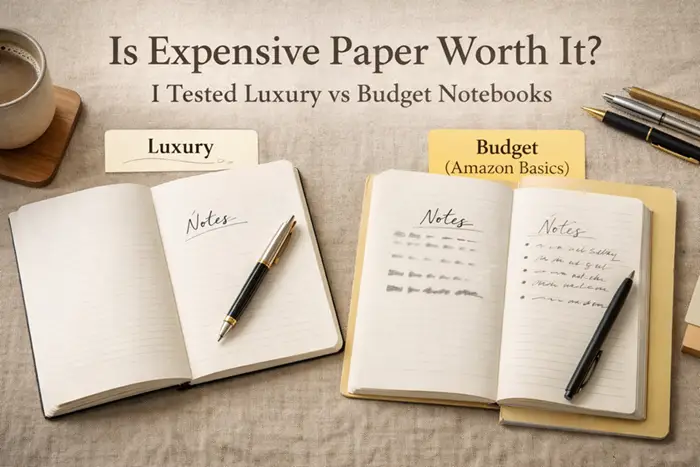
There’s something quietly persuasive about a beautiful notebook. The weight of it. The texture of the cover. The subtle cream tone of the pages. I’ve stood in front of shelves more than once, holding a premium notebook in one hand and a budget one in the other, wondering if I’d actually feel the difference — or if I just wanted to.
So I tested it.
I bought a higher-end notebook — thick, ivory-toned pages, stitched binding, the kind that feels almost too nice to “waste” on everyday notes — and I paired it with a simple budget option. Nothing fancy. Clean. Functional. Affordable. Then I used them both the same way for a week. Morning pages. To-do lists. Random thoughts. Same pen. Same desk. Same lighting.
The first difference I noticed wasn’t dramatic — it was subtle. The premium paper had a softness to it. My pen didn’t drag. It glided. There was a gentle resistance that felt controlled, almost cushioned. The budget paper was thinner, brighter white, and just slightly more textured. Not rough — but not buttery either. It wasn’t unpleasant. Just… different.
Bleed-through was the real test. With gel pens and slightly heavier ink, the luxury notebook handled it beautifully. Minimal ghosting. No visible dots on the reverse side. The budget notebook held up surprisingly well, but under heavier strokes I could see shadowing. Not enough to ruin the page — but enough that I probably wouldn’t use both sides with wetter pens.
Texture matters more than I expected. The premium pages felt warmer in tone, easier on the eyes. Writing for longer stretches felt less tiring. The budget paper was perfectly usable, especially for quick notes or planning, but when I slowed down and wrote reflectively, I preferred the thicker stock. I didn’t realize how much I needed this until I slowed down long enough to use it.
But here’s the honest part: the difference isn’t always about quality — it’s about intention. When I picked up the luxury notebook, I wrote more carefully. I thought longer before putting words down. It felt deliberate. The budget notebook felt free. Low pressure. Messy was okay. Crossing things out didn’t sting.
So does expensive paper matter? Yes — if the sensory experience motivates you. If pen glide, tone, and minimal bleed-through genuinely improve how you feel at your desk. But if you just need a place to think, plan, and capture ideas, a budget notebook does the job more than well enough.
In the end, I realized I don’t need every notebook to be luxurious. But I do like having at least one that feels special.
As an Amazon Associate, Scribble-it may earn from qualifying purchases. You pay the same price.
Shop on Amazon USA
🌿 Final Thoughts
Paper isn’t just paper when you spend time with it. It shapes how your pen moves, how your eyes rest, and how long you stay at your desk. That difference may be small — but small things add up over time.
Luxury notebooks aren’t necessary. But they can change the tone of your writing sessions in ways that are hard to quantify and easy to feel. Budget notebooks, on the other hand, remove hesitation. They give you permission to be imperfect.
Maybe the real answer isn’t choosing one over the other. Maybe it’s knowing when you want softness and when you want freedom — and keeping both within reach.